US Cancels South Korea Marine Drills: 5 Key Facts
The US cancels South Korea marine drills scheduled for next month as Washington faces growing demands on its military forces because of the ongoing war in Iran. The decision involves the large-scale Ssangyong amphibious landing exercise and comes only days after the United States ordered a separate reduction in annual military exercises with South Korea.
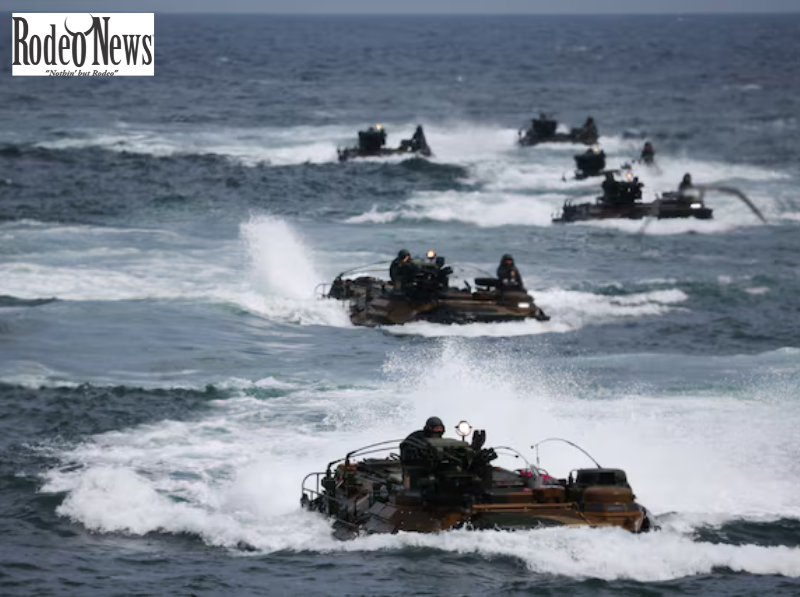
The latest cancellation adds another layer of uncertainty to the security relationship between Washington and Seoul. While South Korean and U.S. officials continue discussions about restarting the amphibious exercise, the decision highlights the growing pressure on American forces as the conflict in the Middle East absorbs military resources.
According to South Korea’s Marine Corps, the U.S. Marine Corps formally notified its South Korean counterpart in June that force availability would be limited for the division-level exercise. Seoul announced the cancellation on August 24.
Why the US Cancels South Korea Marine Drills
The immediate reason for the cancellation is the availability of U.S. forces.
The Ssangyong exercise is a major amphibious training operation involving American and South Korean forces. Such exercises require significant numbers of personnel, equipment and supporting assets. With the United States involved in the war in Iran, Washington has fewer forces available for exercises elsewhere.
A South Korean Marine Corps spokesperson said the U.S. Marine Corps had informed Seoul in June that force availability would be constrained. The two countries are still consulting over whether and how the exercise could eventually resume.
The decision therefore appears to be connected primarily to military resource constraints rather than a permanent end to the exercise.
However, the timing is significant.
The cancellation follows President Donald Trump’s decision to scale back another major U.S.-South Korean military exercise, the Ulchi Freedom Shield. That move generated concern in Seoul because the annual exercise is an important part of preparations for a potential North Korean crisis.
The latest decision means two major areas of joint training have now been affected in a short period.
What Is the Ssangyong Exercise?
The Ssangyong exercise is designed to strengthen the ability of U.S. and South Korean forces to conduct amphibious operations together.
Amphibious operations are complex military missions. They can require coordination between naval vessels, Marines, ground troops, aircraft and logistical units. Training allows allied forces to practice communications, command structures and battlefield coordination under realistic conditions.
For South Korea, this type of training has particular importance because of its geography and the continuing military threat from North Korea.
The Korean Peninsula is surrounded by strategically important waters. Any major conflict would likely require rapid movement of forces and equipment. Joint amphibious training therefore provides an opportunity for the allies to maintain operational familiarity.
The cancellation does not mean the two militaries have stopped cooperating. Instead, it removes one major training opportunity at a time when the United States is prioritizing forces for the Iran conflict.
1. Iran Is Affecting U.S. Military Planning in Asia
The biggest factor behind the decision is the expanding demand created by the war in Iran.
American military planners have been forced to balance commitments in multiple regions. The Middle East requires personnel and equipment, while Washington continues to maintain defense relationships across the Indo-Pacific.
That creates difficult choices.
When American forces are redirected toward an active conflict, planned exercises with allies can become harder to conduct. Training activities may have to be reduced, postponed or canceled if commanders cannot guarantee sufficient personnel and equipment.
The South Korean exercise is now one example of that broader pressure.
Recent reporting has also highlighted the movement of U.S. military assets toward the Middle East. Reuters reported that the U.S. has been shifting resources as the Iran conflict continues, creating concerns among some Asian allies about the potential effect on regional deterrence.
The Philippines, another U.S. ally, has said its defense cooperation with Washington remains unaffected despite the redeployment of some American assets.
That distinction is important.
The cancellation in South Korea does not automatically indicate that Washington is abandoning its Asian alliances. Instead, it shows how an active war can place competing demands on U.S. military resources.
2. The Decision Comes After Another Drill Was Reduced
The cancellation would have attracted attention on its own. But it comes after Washington already reduced another major exercise with South Korea.
On August 16, Trump instructed the Pentagon to substantially reduce joint military exercises with South Korea. He cited the cost of the drills and Seoul’s decision not to participate in military actions against Iran.
The Ulchi Freedom Shield exercise was subsequently shortened.
The move surprised officials in Seoul. South Korean Foreign Minister Cho Hyun said that both South Korean and U.S. officials had been caught off guard by Trump’s decision, raising questions about communication within the alliance.
That background makes the latest cancellation more politically sensitive.
Military exercises are not simply training events. They also send strategic messages to allies and potential adversaries.
For South Korea, large joint exercises demonstrate that American forces remain prepared to operate alongside its military. For North Korea, however, the exercises have long been portrayed as preparations for invasion.
Reducing them can therefore have both diplomatic and military consequences.
3. North Korea Is Watching the Changes
North Korea has consistently opposed U.S.-South Korean military exercises.
Pyongyang argues that the drills are rehearsals for an attack. Washington and Seoul have traditionally described them as defensive preparations designed to improve readiness.
The latest reductions have not resulted in an immediate breakthrough with North Korea.
In fact, North Korea fired 10 short-range ballistic missiles last week, according to reporting cited by Reuters, while continuing to criticize the exercises.
The missile launches demonstrate why military readiness remains a central concern for Seoul.
Even when Washington and Seoul reduce the scale of exercises, North Korea retains a significant missile and nuclear weapons program. The security environment therefore remains difficult.
At the same time, Trump has expressed interest in improving relations with North Korean leader Kim Jong Un. His administration’s approach has raised hopes of renewed diplomacy, but it has also generated concern among some U.S. allies that military deterrence could be weakened in pursuit of negotiations.
Reuters has reported that Trump’s outreach to Kim and the reduction of military exercises have fueled wider concerns among Asian allies about the reliability of U.S. security commitments.
4. Seoul Wants Stronger Defense Capabilities
The changes have also intensified South Korea’s discussion about its own military capabilities.
South Korean President Lee Jae Myung has supported stronger national defense capabilities while maintaining the country’s alliance with Washington. Reuters reported that Lee has backed greater South Korean defense independence, including progress toward transferring wartime operational control and strengthening military capabilities.
That debate is likely to continue if U.S. forces become increasingly occupied by conflicts outside East Asia.
South Korea already maintains one of the region’s most capable conventional militaries. However, the U.S. alliance remains a central pillar of its defense strategy.
The challenge for Seoul is therefore not simply replacing American forces.
Instead, it is ensuring that South Korean forces can operate effectively if U.S. support is temporarily constrained or if American priorities shift toward another theater.
The cancellation of Ssangyong could make that issue more urgent.
5. The U.S.-South Korea Alliance Is Still Active
Despite the cancellations, there is no indication that military cooperation between Washington and Seoul has ended.
The two countries continue to coordinate closely on security matters. The South Korean Marine Corps also said consultations were continuing over the future of the amphibious exercise.
That point is important when assessing the broader significance of the announcement.
A canceled exercise is not necessarily equivalent to a canceled alliance.
Military exercises can be postponed because of operational requirements, personnel shortages, diplomatic considerations or changes in strategic priorities. The key question is whether the cancellation becomes part of a longer-term pattern.
If the U.S. continues reducing military activity on the Korean Peninsula, Seoul and other regional allies could begin reassessing their assumptions about American military availability.
If the reductions are temporary and linked mainly to the Iran conflict, their strategic impact could be more limited.
Why the Cancellation Matters Beyond Korea
The decision has implications beyond the Korean Peninsula.
The United States is attempting to maintain military commitments across Europe, the Middle East and the Indo-Pacific while responding to new security challenges. An active war can place severe pressure on that strategy.
Every deployment creates opportunity costs.
For example, forces sent to the Middle East cannot simultaneously participate in exercises in East Asia. Equipment, transport capacity and command resources can also become constrained.
That creates a difficult balancing act for Washington.
China is closely watching U.S. force movements across the Indo-Pacific. Japan, Taiwan and other regional partners are also monitoring whether American commitments remain consistent.
Reuters reported that the redeployment of major U.S. military assets toward the Middle East has contributed to concern among Asian allies about the durability of American deterrence in the region.
The cancellation of Ssangyong therefore has symbolic importance in addition to its immediate military consequences.
What Happens Next?
The immediate focus will be on whether Washington and Seoul can find a way to restore the Ssangyong exercise.
South Korea’s Marine Corps has said discussions are continuing. However, the timing of any future exercise will depend heavily on U.S. force availability and the development of the Iran conflict.
If the war continues to demand large numbers of American forces, additional exercises could face similar challenges.
For Seoul, the priority will be maintaining military readiness despite changes in the availability of U.S. forces.
For Washington, the challenge will be balancing its commitments without allowing allies to conclude that American support is becoming unreliable.
For North Korea, meanwhile, the reduced exercises could provide an opportunity to test whether changes in U.S. policy create new diplomatic or military openings.
A New Test for the U.S.-South Korea Alliance
The decision to cancel Ssangyong comes at a sensitive moment for the U.S.-South Korea relationship.
The alliance remains intact, but it is facing several simultaneous pressures: the war in Iran, changes to U.S. military priorities, Trump’s push for lower-cost exercises, efforts to improve relations with North Korea and Seoul’s growing interest in greater defense autonomy.
The cancellation is therefore more than a scheduling issue.
It demonstrates how events in one part of the world can quickly affect military planning thousands of miles away. The United States must now manage the demands of an active Middle Eastern war while maintaining deterrence in Asia.
For South Korea, the lesson is equally clear. The country’s security strategy cannot depend entirely on the assumption that U.S. forces will always be available for every planned operation.
At the same time, Washington has a strong interest in preserving confidence among its Asian allies.
The next few months could show whether the cancellation of Ssangyong is a temporary consequence of the Iran war or part of a deeper change in how the United States approaches military exercises on the Korean Peninsula.
For now, both governments remain in consultation. But with North Korea continuing its weapons development and the United States managing a major overseas conflict, the future of joint military training will remain closely watched.
Source: Reuters, August 24, 2026. Read the original Reuters report
Suggested internal links: Add 2–3 relevant articles from your own website covering the Iran war, North Korea, U.S. military policy, or U.S.-South Korea relations