U.S. Cancels South Korea Drills in Major Blow
The U.S. cancels South Korea drills scheduled for next month as Washington faces growing military demands from the war with Iran, marking another significant change in joint U.S.-South Korean military cooperation. Seoul’s Marine Corps said Monday that the United States had informed South Korea that it could not provide the forces needed for the planned amphibious exercise.
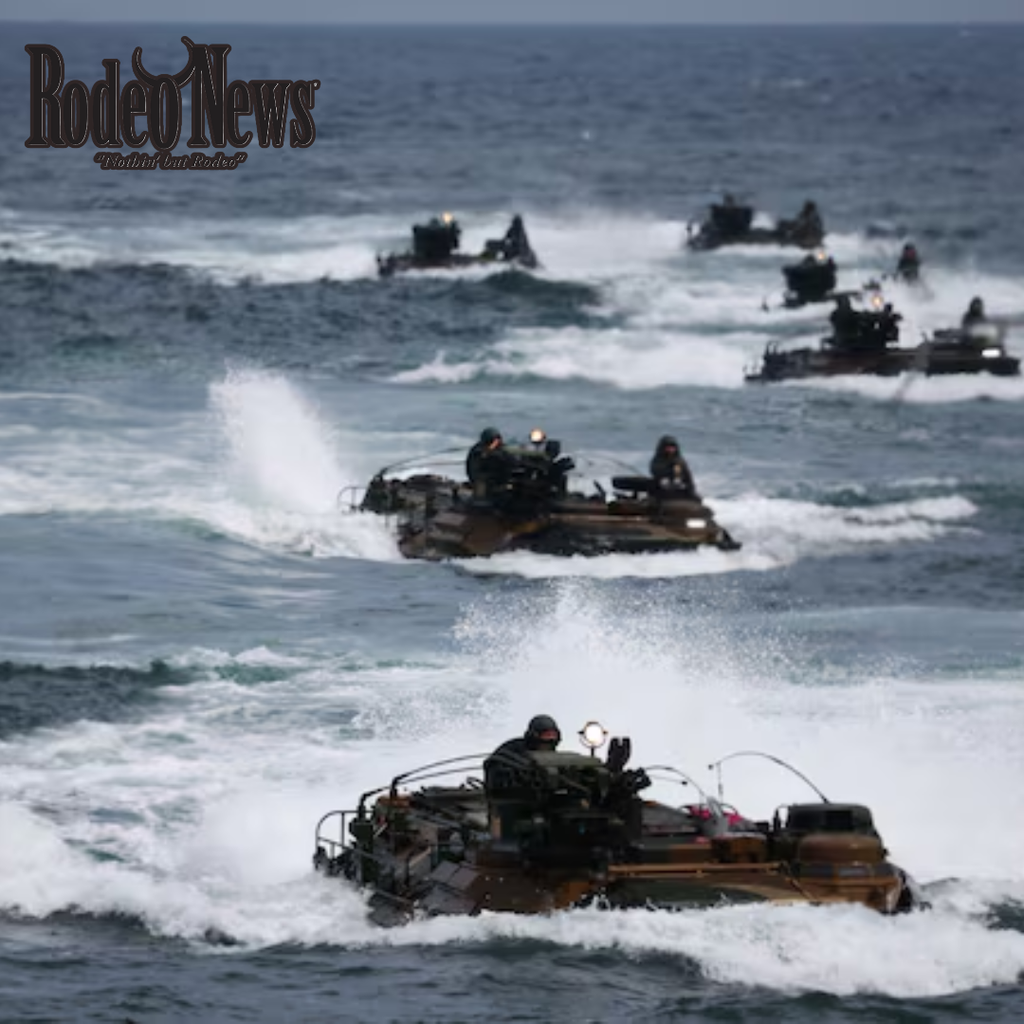
The cancelled exercise, known as Ssangyong, is a major joint amphibious landing drill involving American and South Korean forces. The decision comes only days after U.S. President Donald Trump ordered a reduction in another major annual military exercise with Seoul.
The developments are adding to concerns about the future of the U.S.-South Korea security alliance while Washington continues to focus significant military resources on the Middle East.
U.S. Cancels South Korea Drills as Iran War Strains Forces
South Korea’s Marine Corps said the United States notified Seoul in June that its forces would have limited availability because of commitments related to the Iran war.
The decision means the Ssangyong exercise, scheduled for next month, will not take place as originally planned. However, Seoul and Washington are continuing discussions about whether the amphibious exercise could be resumed at a later date.
The cancellation is particularly notable because amphibious exercises are designed to test the ability of allied forces to conduct complex operations involving naval vessels, aircraft, Marines and ground troops.
Such training is intended to strengthen interoperability between the two militaries. It also gives commanders an opportunity to test logistics, communications and operational coordination under realistic conditions.
The loss of the exercise therefore goes beyond a single training event.
It represents another reduction in the scale of visible U.S.-South Korean military cooperation at a time when North Korea remains a major security concern on the Korean Peninsula.
Trump Ordered Broader Cuts to Joint Military Exercises
The cancellation follows a separate decision by Trump to scale back the annual Ulchi Freedom Shield exercise.
Trump instructed the Pentagon to substantially reduce joint military exercises with South Korea, citing the financial cost of the drills and Seoul’s decision not to participate in U.S. actions related to Iran.
The annual Ulchi Freedom Shield exercise was subsequently shortened from its planned 11 days to five days.
Trump has also described the exercises as carrying what he considers an inappropriate or hostile message toward North Korea. His administration has been pursuing a different approach toward Pyongyang, including efforts to reopen dialogue with North Korean leader Kim Jong Un.
The combination of reduced exercises and the cancellation of Ssangyong has created a notable shift in the military posture surrounding the Korean Peninsula.
For Seoul, the issue is particularly sensitive because the U.S.-South Korean alliance has long relied on regular joint exercises to maintain readiness.
Why the Ssangyong Exercise Matters
The Ssangyong exercise is not simply a ceremonial military event.
Amphibious exercises involve some of the most complicated forms of military coordination. Forces must coordinate naval movements, landing operations, air support, logistics and ground maneuvering.
Training together allows the United States and South Korea to develop common procedures and ensure their forces can operate effectively alongside one another.
That capability is especially important on the Korean Peninsula, where any major military crisis could develop rapidly.
The cancellation does not mean that the U.S.-South Korean alliance has ended or that American forces are withdrawing from South Korea. Instead, it shows how the war in Iran is affecting Washington’s ability to maintain its normal military commitments in Asia.
The broader strategic question is whether such changes remain temporary or become part of a longer-term reduction in U.S. military activity in the region.
Iran War Forces Washington to Rebalance Military Resources
The Iran conflict has placed additional demands on U.S. military forces and equipment.
Reuters reported that American military assets have been shifted toward the Middle East as Washington responds to the ongoing conflict. The redeployment has raised questions among U.S. allies about how far the United States can simultaneously maintain commitments in multiple regions.
The challenge is not unique to South Korea.
The United States maintains security relationships with numerous countries across Asia, Europe and the Middle East. When a major conflict requires additional troops, ships and aircraft, military planners must decide which commitments can be maintained at full strength.
That makes the cancellation of a large exercise potentially significant even if it does not immediately change the balance of military power on the Korean Peninsula.
North Korea Watches the Changes Closely
North Korea has consistently opposed U.S.-South Korean military exercises, describing them as preparations for an invasion.
Pyongyang has responded to the recent reductions with a mixture of criticism and military activity.
North Korea fired 10 short-range ballistic missiles after the start of the scaled-back Ulchi Freedom Shield exercise, while Kim Yo Jong, the sister of North Korean leader Kim Jong Un, criticized Seoul’s response to Washington’s decision to reduce the drills.
The cancellation of Ssangyong could therefore be interpreted differently by the two sides.
Washington may see the move as a practical response to competing military demands and an opportunity to create conditions for diplomacy with Pyongyang.
North Korea, however, may view the reduction as evidence that U.S. military pressure on the peninsula is weakening.
At the same time, Pyongyang has shown little indication that simply reducing exercises will lead to an immediate return to negotiations.
Seoul Faces a Difficult Strategic Balance
South Korea now faces the challenge of maintaining military readiness while managing an increasingly complicated relationship with Washington.
President Lee Jae Myung has supported stronger South Korean self-defense capabilities and has indicated that military exercises with the United States are not intended to provoke North Korea. Reuters has reported that Seoul was caught off guard by Trump’s earlier decision to reduce the annual drills.
The latest cancellation adds another layer of uncertainty.
South Korea has traditionally relied heavily on the U.S. military presence and joint training to strengthen deterrence against North Korea. At the same time, Seoul has increasingly discussed developing greater independent defense capabilities.
That discussion could become more important if Washington continues to prioritize conflicts outside East Asia.
U.S.-South Korea Alliance Faces New Questions
The United States and South Korea remain treaty allies, and the cancellation of one exercise does not fundamentally change that relationship.
However, military exercises have symbolic importance as well as practical value.
Regular drills demonstrate that allied forces are prepared to work together. They also send a deterrence message to potential adversaries.
A repeated reduction in exercises could therefore have consequences beyond training schedules.
Regional governments in Japan, Taiwan and other parts of Asia are already watching Washington’s military decisions closely. Reuters reported that Trump’s recent changes have generated concerns among U.S. allies about the reliability of American security commitments.
For those governments, the central question is not simply whether one exercise has been cancelled.
It is whether the cancellation reflects temporary resource constraints caused by the Iran war or a broader strategic adjustment in U.S. policy.
Could the Marine Exercise Return?
South Korea and the United States remain in discussions about the possibility of resuming the amphibious exercise.
That leaves open the possibility that Ssangyong could return once U.S. military availability improves.
The timing will likely depend on developments in the Middle East, the availability of American forces and the wider direction of Trump’s Asia policy.
If the Iran war continues to demand significant U.S. resources, Washington could face additional pressure to prioritize the Middle East.
If the conflict moves toward a ceasefire or diplomatic settlement, American forces may become more available for exercises in Asia.
The future of Ssangyong could therefore become a useful indicator of whether the current reduction is temporary.
What the Cancellation Means for Asia
The immediate military impact of cancelling one exercise is limited.
South Korea still maintains a large and capable military, while thousands of U.S. troops remain stationed on the peninsula. The two countries also maintain extensive defense cooperation outside any single exercise.
Nevertheless, the political and strategic significance is greater.
The U.S. cancels South Korea drills at a moment when Washington is simultaneously fighting a major conflict in the Middle East and attempting to reopen diplomatic channels with North Korea.
Those competing priorities create a difficult strategic equation.
For Seoul, maintaining credible deterrence against North Korea remains essential. For Washington, managing military resources across multiple theaters has become increasingly demanding.
The cancellation demonstrates how decisions made far from the Korean Peninsula can have immediate consequences for security planning in East Asia.
A New Test for Washington and Seoul
The coming months could determine whether the latest changes become a temporary disruption or the beginning of a broader transformation in U.S.-South Korean military cooperation.
Much will depend on the Iran conflict, Trump’s diplomatic strategy toward North Korea and Seoul’s own plans to strengthen its defense capabilities.
For now, the cancellation of Ssangyong is another sign that the U.S. military’s global commitments are placing pressure on its longstanding training arrangements in Asia.
The alliance remains in place.
But the assumptions surrounding it are changing.
The United States is being forced to balance competing demands from the Middle East and Asia, while South Korea is confronting a more uncertain security environment.
Meanwhile, North Korea is closely watching every adjustment.
The next major exercise decision could therefore carry significance far beyond the training field.
Sources and further reading: Reuters reporting on the cancellation of the Ssangyong exercise and recent changes to U.S.-South Korean military drills.
Internal Link Suggestions:
- U.S. military strategy in Asia
- North Korea missile tests
- South Korea defense news
- Iran war latest developments
- U.S.-South Korea relations
Recommended Image: U.S. Marines and South Korean troops participating in a joint amphibious military exercise.
Image ALT Text: U.S. cancels South Korea drills as Iran war strains American military forces