Full Article
MTA Labor Negotiations Enter Critical Phase as Strike Threat Builds
MTA labor negotiations have entered one of their most consequential phases in years, with the possibility of simultaneous labor disputes affecting both commuter rail and subway workers across New York. The talks now carry major implications for riders, state officials, and the financial future of the region’s largest transit system.
The negotiations involve the Metropolitan Transportation Authority, which operates New York City’s subway, bus, and commuter rail networks. Officials are now confronting mounting pressure from labor groups representing both the Long Island Rail Road and the Transport Workers Union. The timing is especially sensitive because the current contract covering nearly 40,000 subway and bus workers is scheduled to expire on May 16. At the same time, a cooling-off period tied to Long Island Rail Road negotiations also ends that day, creating a rare convergence of labor risk.
Why the Current MTA Labor Negotiations Matter
The stakes are unusually high.
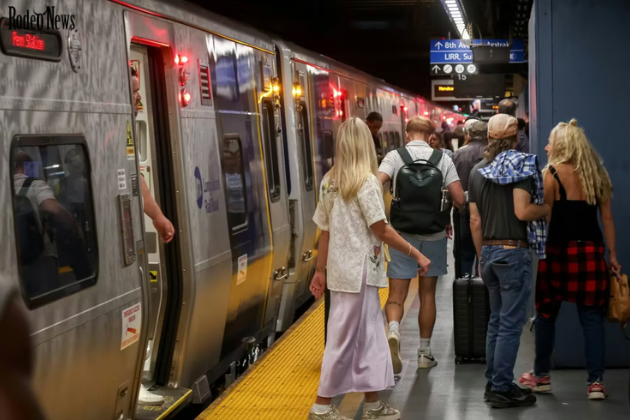
A work stoppage on the Long Island Rail Road could disrupt one of the busiest commuter corridors in the United States. Roughly 300,000 weekday riders rely on the service to travel between Long Island and New York City. If a strike were to occur, commuters would be forced to work remotely, drive, or seek alternative transit options.
Meanwhile, subway workers are prohibited from striking under New York state law. However, their contract negotiations are deeply connected to the outcome of the rail talks. Union leaders have made clear that whatever wage framework emerges from the rail negotiations will influence subway bargaining as well. That dynamic has turned this into a broader test of labor relations across the entire transit network.
Long Island Rail Road Workers Push for Higher Pay
One of the most immediate flashpoints involves more than 3,000 Long Island Rail Road employees.
The workers have reportedly gone nearly four years without a raise. Negotiations between union representatives and the MTA have already gone through two rounds of federal mediation. So far, no final agreement has been reached.
Both sides have agreed to a combined retroactive wage increase of 9.5% over three years. However, labor representatives are seeking a 5% increase beginning in 2026. The MTA has offered 3%.
That gap remains significant.
Transit officials argue that higher wage increases would require operational concessions. One example under discussion involves compensation rules that currently allow engineers to receive additional pay when operating both electric and diesel trains during the same day.
Labor groups have resisted that proposal, saying their goal is to secure wage growth without sacrificing existing work protections.
Subway Contract Talks Are Happening at the Same Time
Parallel negotiations with subway and bus employees add another layer of complexity.
Talks with the Transport Workers Union began in late April. Union leaders have already signaled strong opposition to several issues expected to emerge during bargaining.
Among the most contentious topics is staffing. Governor Kathy Hochul vetoed legislation last year that would have required two-person subway crews. That decision allows the MTA to continue pursuing one-person train operations in some cases.
Transit officials argue that smaller crews could reduce long-term operating costs. Critics, however, say the move raises concerns about worker safety, emergency response capacity, and rider protection.
Healthcare costs also remain a point of tension. The MTA is reportedly seeking higher employee healthcare contributions while also exploring changes that could make worker discipline and termination easier.
Union leaders have strongly opposed those ideas.
Why Timing Is Creating Extra Pressure
Traditionally, the MTA first reaches a deal with subway workers and then uses that agreement as a template when negotiating with smaller labor groups.
This time, the sequence is reversed.
That change matters because it gives the smaller Long Island Rail Road bargaining unit unusual leverage. MTA finance officials have described the situation as highly unusual because it could establish the wage pattern for 2026 before agreements are reached with larger employee groups.
That precedent could have significant budget consequences.
According to MTA financial projections, every additional one percentage point wage increase adds roughly $100 million in annual labor costs. At the same time, the agency is already facing a projected $160 million budget deficit next year, with larger gaps expected later in the decade.
Commuters Could Feel the Effects Quickly
For commuters, the concern is practical rather than political.
A Long Island Rail Road disruption would affect daily travel plans almost immediately. Crowded highways, heavier bus usage, increased demand for regional rail alternatives, and remote work adjustments could all follow.
Businesses in Manhattan could also feel secondary effects if commuting patterns suddenly change.
Transit systems remain central to the economic rhythm of New York. Even a short disruption could ripple through office attendance, retail activity, and regional mobility.
That is why transit analysts are watching the negotiations closely. Public transportation remains a core part of the city’s economic infrastructure, and any interruption would reach well beyond station platforms.
Political Pressure Is Rising Ahead of the Election
The labor dispute also arrives during a politically sensitive period.
Governor Kathy Hochul is seeking re-election later this year. Although MTA officials are conducting the direct negotiations, the governor’s influence over the state agency means political leadership could ultimately shape the outcome.
Her office has publicly emphasized that both sides should negotiate in good faith and avoid a strike that would harm both workers and riders.
That political dimension matters because labor negotiations often extend beyond economics. They also become tests of public leadership, fiscal discipline, and service reliability.
With inflation continuing to pressure household budgets, both transit workers and commuters are facing broader affordability challenges. Those economic pressures help explain why wage negotiations have become particularly intense this year.
What Happens Next in the MTA Labor Negotiations
The coming days may determine whether the region avoids major disruption.
If negotiators fail to reach an agreement before the current deadlines expire, the possibility of service interruption will become more immediate. For transit leaders, the challenge is balancing fiscal responsibility with workforce expectations. For unions, the priority is protecting purchasing power and working conditions.
That makes the current MTA labor negotiations far more than a standard contract dispute.
They represent a defining moment for transit operations, labor relations, and commuter confidence in New York.
For now, both riders and policymakers will be watching closely as May 16 approaches.
Broader Lessons for Public Transit Systems
The current dispute also reflects a larger national trend.
Public transit agencies across the United States are confronting similar questions about wages, staffing levels, service modernization, and long-term financial sustainability.
Rising labor costs, changing commuting habits, and political pressure are forcing transit authorities to rethink traditional bargaining models.
New York’s negotiations could therefore serve as an important signal for other major metropolitan systems.
In that sense, these talks may influence more than the future of one transit network. They may also shape how urban transportation agencies manage labor relations in the years ahead.