Gateway Issue Revealed: 5 Shocking Risks Exposed
The Gateway issue surrounding NASA’s planned lunar space station has taken a new turn, as manufacturers finally acknowledged a critical problem—yet stopped short of addressing what experts believe may be the most serious factor: corrosion. The development has sparked renewed scrutiny over transparency, engineering risks, and the future of deep-space infrastructure.
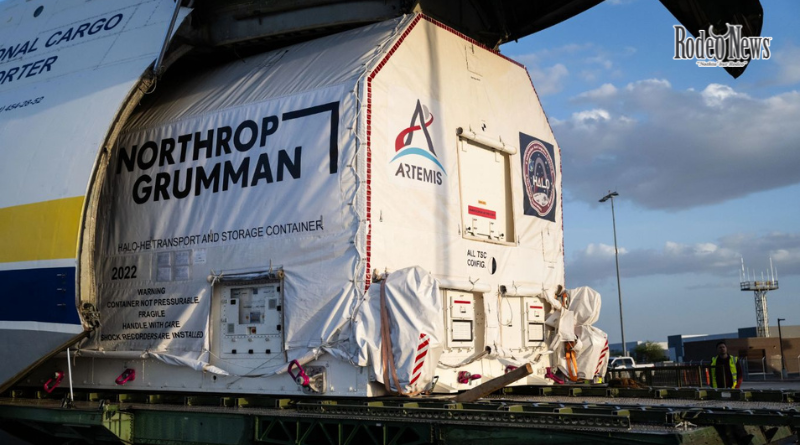
The Lunar Gateway, a key component of NASA’s Artemis program, is intended to orbit the Moon and support long-duration missions. However, recent disclosures suggest that its development may be facing deeper technical challenges than previously admitted.
What Is the Gateway and Why It Matters
The Lunar Gateway is designed as a small, modular space station that will orbit the Moon and act as a staging point for astronaut missions. One of its central components is the Habitation and Logistics Outpost (HALO), which will provide life support, storage, and operational capabilities. Habitation and Logistics Outpost
This station is expected to play a crucial role in enabling sustainable lunar exploration. It will support astronauts for extended stays, facilitate docking operations, and serve as a communications hub between Earth and the Moon.
Because of its importance, any flaw in its design or construction raises serious concerns—not only for mission timelines but also for astronaut safety.
Manufacturer Acknowledges the Gateway Issue
According to reporting from Ars Technica, the manufacturer responsible for a key Gateway module has finally acknowledged the existence of a technical issue. However, the statement was notably limited in scope.
While the company admitted that a problem exists, it avoided mentioning corrosion—despite mounting evidence suggesting that material degradation could be a central factor.
This omission has drawn criticism from analysts and space industry observers, who argue that transparency is essential in complex aerospace projects.
The Missing Word: Corrosion
Corrosion in space hardware is not a trivial matter. Even small material weaknesses can lead to catastrophic failures under the extreme conditions of space, where temperature fluctuations, radiation, and vacuum all contribute to structural stress.
Experts believe that corrosion—or corrosion-like degradation—may be affecting components of the Gateway module. However, the manufacturer’s reluctance to explicitly address this possibility raises important questions:
- Is the full extent of the Gateway issue being disclosed?
- Are there additional risks yet to be acknowledged?
- Could this delay the Artemis timeline?
The absence of clear answers has only intensified concerns.
Why Transparency Matters in Space Engineering
Space missions operate on razor-thin margins for error. Unlike terrestrial systems, there is little room for repair once hardware is deployed beyond Earth orbit.
Therefore, transparency is not just a matter of public trust—it is a critical engineering requirement. When issues are identified early and communicated clearly, teams can collaborate across agencies and countries to find solutions.
In the case of the Gateway issue, the lack of full disclosure may hinder problem-solving efforts. It also complicates coordination among international partners involved in the Artemis program.
Potential Impact on NASA’s Artemis Program
NASA’s Artemis program aims to return humans to the Moon and establish a sustainable presence there. The Gateway is central to this vision, acting as a bridge between Earth and lunar surface operations.
If the Gateway issue proves more serious than currently acknowledged, several consequences could follow:
1. Delays in Launch Schedules
Engineering revisions and additional testing could push back mission timelines.
2. Increased Costs
Fixing structural or material issues in advanced modules can significantly raise program expenses.
3. Safety Concerns
Any unresolved issue—especially one involving structural integrity—could pose risks to astronauts.
4. International Tensions
The Gateway involves multiple international partners. Lack of transparency could strain collaboration.
5. Loss of Public Confidence
Public trust is essential for long-term space exploration funding and support.
Industry Reaction and Expert Concerns
The aerospace community has responded cautiously to the news. While some experts emphasize that issues are common in complex engineering projects, others argue that the handling of this situation is problematic.
A key concern is not just the existence of the Gateway issue, but how it is being communicated. Partial disclosures can lead to speculation, misinformation, and reduced confidence among stakeholders.
Some analysts suggest that the reluctance to mention corrosion may stem from concerns about reputational damage or contractual implications. However, such omissions can ultimately have the opposite effect, amplifying scrutiny.
The Broader Challenge of Building in Space
The Gateway issue highlights a broader truth: building infrastructure in space is extraordinarily difficult.
Engineers must account for factors such as:
- Extreme temperature cycles
- High radiation exposure
- Micrometeoroid impacts
- Material fatigue over time
Even with advanced modeling and testing, unexpected issues can arise. This is why iterative design, testing, and transparent reporting are essential.
What Happens Next?
NASA and its partners will likely conduct further investigations to determine the root cause of the Gateway issue. This may include:
- Detailed material analysis
- Additional ground testing
- Design modifications
- Revised safety protocols
The outcome of these efforts will determine whether the Gateway can proceed as planned or requires significant redesign.
A Critical Moment for Lunar Exploration
The Gateway issue comes at a pivotal time for human space exploration. With renewed global interest in the Moon, the success or failure of the Gateway could shape the future of lunar missions for decades.
While technical challenges are expected, how they are managed—and communicated—will be just as important as the engineering solutions themselves.
Conclusion
The acknowledgment of a Gateway issue marks an important step toward addressing potential risks in NASA’s lunar space station. However, the failure to explicitly mention corrosion has raised serious questions about transparency and completeness.
As investigations continue, the focus will be on uncovering the full scope of the problem and ensuring that any risks are mitigated before astronauts rely on the system.
In space exploration, clarity is not optional—it is essential. The coming months will reveal whether this issue is a manageable setback or a deeper challenge that could reshape the path to the Moon.