Falcon Heavy Launch Revealed: 3 Key Facts Today
The long-awaited Falcon Heavy launch is finally happening, marking a major milestone for SpaceX and the global satellite industry. After an 18-month hiatus, the world’s most powerful operational rocket is returning to the spotlight with a mission that could reshape broadband connectivity across the Asia-Pacific region.
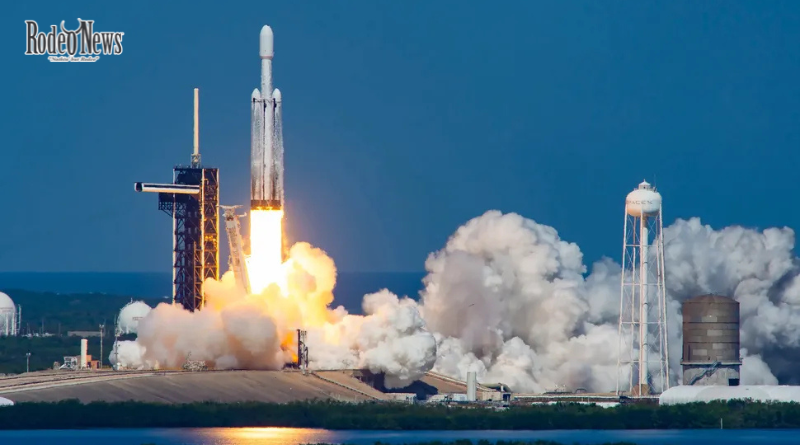
Scheduled for April 27, 2026, this launch carries the ViaSat-3 F3 satellite into orbit, completing a trio of next-generation communication satellites designed to deliver ultra-fast internet globally. The mission is not only technically significant but also strategically important for expanding digital access in underserved regions.
A Powerful Return After 18 Months
The upcoming Falcon Heavy launch represents the rocket’s first flight since October 2024, ending a lengthy pause in operations. SpaceX has used this time to refine its launch systems and prepare for a new wave of missions.
The rocket is scheduled to lift off from Kennedy Space Center in Florida during an 85-minute launch window opening at 10:21 a.m. EDT.
This mission will be Falcon Heavy’s 12th flight overall, reinforcing its role as one of the most capable heavy-lift launch vehicles currently in operation.
Falcon Heavy stands out due to its massive thrust—generated by three Falcon 9 boosters strapped together—producing more than 5 million pounds of force at liftoff.
This immense power allows it to carry extremely heavy payloads into orbit, making it ideal for missions like ViaSat-3 F3.
What Is the ViaSat-3 F3 Mission?
At the heart of this Falcon Heavy launch is the ViaSat-3 F3 satellite, the final piece of a global broadband constellation.
Built by Boeing and operated by Viasat, the satellite is designed to deliver high-speed internet across the Asia-Pacific region.
This region includes densely populated countries and remote island nations where reliable internet access remains limited.
The ViaSat-3 system consists of three satellites:
- F1: Americas
- F2: Europe, Middle East, Africa
- F3: Asia-Pacific
Each satellite is engineered to deliver more than 1 terabit per second of network capacity, a massive leap compared to older systems.
This means faster speeds, better reliability, and the ability to serve more users simultaneously.
Why This Launch Matters Globally
This Falcon Heavy launch is more than just another rocket mission—it represents a critical step in closing the global digital divide.
1. Expanding Internet Access
The Asia-Pacific region includes many rural and remote areas where traditional infrastructure is difficult or expensive to build. Satellite internet offers a practical solution.
With ViaSat-3 F3 in orbit, millions of people could gain access to high-speed connectivity for education, business, and communication.
2. Strengthening Commercial and Defense Networks
The satellite is not just for consumers. It will also support:
- Aviation connectivity (in-flight Wi-Fi)
- Maritime communications
- Government and defense operations
According to company officials, the mission is a “pivotal moment” in expanding secure and flexible broadband services worldwide.
3. Reinforcing SpaceX’s Market Leadership
By executing this high-profile Falcon Heavy launch, SpaceX continues to dominate the commercial launch market.
The company has already conducted hundreds of missions, and Falcon Heavy remains a key part of its heavy-lift strategy while the next-generation Starship system is still under development.
Technical Highlights of Falcon Heavy
The Falcon Heavy launch showcases some of the most advanced rocket engineering currently available.
Triple Booster Design
Falcon Heavy uses three modified Falcon 9 first-stage boosters:
- Two side boosters (reusable)
- One central core
This configuration allows the rocket to carry extremely heavy payloads into geostationary transfer orbit.
Reusability and Cost Efficiency
One of SpaceX’s biggest innovations is reusability. The side boosters are designed to return to Earth and land safely, reducing costs for future missions.
This approach has revolutionized the space industry by making launches more affordable and frequent.
Payload Capability
Falcon Heavy can deliver:
- Up to 63,800 kg to low Earth orbit
- Around 26,700 kg to geostationary transfer orbit
This makes it one of the most powerful rockets currently in service.
Launch Timeline and What to Expect
The Falcon Heavy launch follows a carefully planned sequence:
- T-15 minutes: Live broadcast begins
- T-0: Liftoff
- +2 minutes: Booster separation
- +8 minutes: Booster landings (if recovery attempted)
- +~30 minutes: Payload deployment sequence begins
The satellite will then spend several months traveling to its final position in geostationary orbit before entering service, expected by late summer 2026.
A Strategic Shift in Launch Plans
Interestingly, the ViaSat-3 F3 mission was originally planned for a different rocket.
Due to delays in Europe’s Ariane 6 program and shifting global launch availability, the mission was reassigned to Falcon Heavy.
This highlights SpaceX’s growing role as a reliable launch provider in an increasingly competitive and disrupted global market.
Challenges and Expectations
Despite the excitement, the Falcon Heavy launch comes with high expectations.
Earlier satellites in the ViaSat-3 series faced technical challenges, including reduced capacity due to deployment issues.
As a result, this mission is critical for restoring confidence and completing the constellation successfully.
Industry experts will be closely watching:
- Launch performance
- Satellite deployment accuracy
- Early operational testing
Any issues could have significant financial and technological implications.
The Future of Falcon Heavy and Beyond
While this Falcon Heavy launch is a major event, it also raises questions about the rocket’s future.
SpaceX is actively developing Starship, a fully reusable super-heavy rocket that could eventually replace Falcon Heavy for many missions.
However, Falcon Heavy remains essential for:
- High-value commercial satellites
- Government payloads
- Deep-space missions
Upcoming missions in 2026 include lunar landers and space telescopes, ensuring the rocket continues to play a vital role.
Conclusion: A Defining Moment in Space and Connectivity
The April 27 Falcon Heavy launch is more than a technical achievement—it is a defining moment for global connectivity, commercial spaceflight, and technological progress.
By delivering the ViaSat-3 F3 satellite into orbit, SpaceX is helping to expand internet access to millions while reinforcing its leadership in the space industry.
As the countdown begins, all eyes are on Florida, where one of the world’s most powerful rockets is set to ignite once again—ushering in a new era of communication from space.