The Rocky Horror Show Review conversation is dominating theater circles after the iconic musical returned to Broadway in 2026 with a star-studded cast and high expectations. However, early reactions suggest a revival that is visually striking yet surprisingly restrained—leaving critics and longtime fans divided.
Opening at Studio 54 on April 23, 2026, this new production attempts to reintroduce the cult classic to modern audiences. But while the performances are widely praised, the overall experience has sparked debate over whether the show still captures the rebellious spirit that made it legendary.
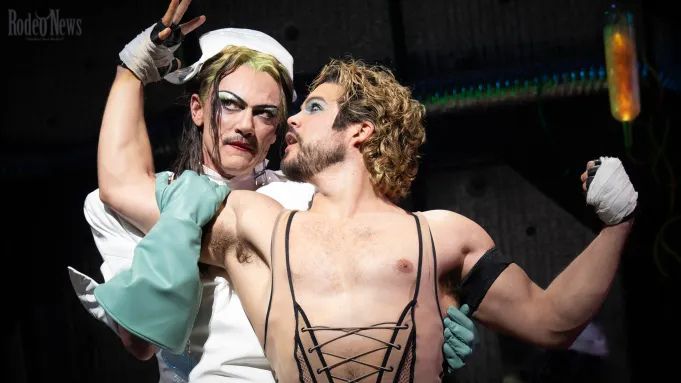
A Cult Classic Returns With Big Expectations
Originally created by Richard O’Brien in 1973, The Rocky Horror Show evolved into a global phenomenon, especially after its 1975 film adaptation became one of the longest-running theatrical releases in history.
The Broadway revival arrives with major buzz, led by actor Luke Evans as Dr. Frank-N-Furter. Directed by Tony Award winner Sam Pinkleton, the production promised to honor the original’s chaotic, boundary-breaking energy.
However, critics note that expectations were extremely high—perhaps too high for any revival to fully satisfy.
According to early reports, the show began previews on March 26 before officially opening in April, quickly drawing both curiosity and skepticism from audiences.
Strong Performances Lead the Show
One consistent highlight across nearly every Rocky Horror Show Review is the strength of its cast.
Luke Evans delivers a commanding vocal performance as Frank-N-Furter, with critics praising his charisma and stage presence. His rendition of key songs like “I’m Going Home” stands out as one of the production’s emotional peaks.
Stephanie Hsu, portraying Janet Weiss, has also been widely recognized for her energetic and playful performance. Meanwhile, Rachel Dratch brings humor and sharp timing to her role as the Narrator, often engaging directly with the audience.
Several reviewers noted that the cast’s commitment to the material helps elevate the production, even when other elements fall short.
Still, some critics argue that while the performances are strong individually, they don’t always translate into a cohesive, high-energy show.
The Biggest Issue: Missing Chaos and Energy
Despite its talented cast, the biggest criticism in this Rocky Horror Show Review cycle centers on one key issue: a lack of wild, unpredictable energy.
Traditionally, Rocky Horror is known for its anarchic spirit—complete with audience participation, spontaneous callouts, and a sense of joyful chaos. However, this revival appears to take a more controlled, polished approach.
Critics say the result is a production that feels “safe” rather than daring.
Some reviews suggest the show starts strong but gradually loses momentum, with staging that feels uneven and storytelling that becomes difficult to follow.
For longtime fans, this shift is particularly noticeable—and controversial.
Audience Participation Controversy Explained
One of the most talked-about elements in this Rocky Horror Show Review discussion is the limitation on audience participation.
Historically, Rocky Horror audiences are known for shouting lines, throwing props, and interacting heavily with the performance. But this Broadway revival has introduced restrictions aimed at preserving the integrity of a live theatrical experience.
While some audience members understand the reasoning, many feel it removes a core part of what makes the show special.
Reports indicate that traditional activities like throwing rice or yelling iconic lines have been discouraged, leading to mixed reactions from theatergoers.
Critics argue that this decision creates an awkward middle ground—neither fully immersive nor fully traditional theater.
Visuals and Design: A Mixed Success
Visually, the production delivers moments of brilliance.
The set design blends gothic aesthetics with futuristic elements, creating a striking backdrop for the story. Costumes remain faithful to the show’s campy roots, offering fans the bold, flamboyant style they expect.
However, some reviewers feel that while the design is impressive, it doesn’t fully compensate for the lack of energy in the staging.
In other words, the show looks great—but doesn’t always feel alive.
Balancing Nostalgia and Modern Theater
Another recurring theme in this Rocky Horror Show Review cycle is the challenge of balancing nostalgia with modern expectations.
The original Rocky Horror thrives on rebellion, subversion, and unpredictability. Translating that spirit into a structured Broadway production is no easy task.
This revival attempts to strike a balance by honoring the source material while adapting it for contemporary audiences. However, critics suggest it may lean too heavily toward caution.
Instead of reinventing the show, it often feels like a polished version of something that was never meant to be polished.
Critics vs Fans: A Divided Reaction
Interestingly, reactions to the show are not entirely negative.
Some critics argue that the revival successfully captures the essence of Rocky Horror while making it accessible to new audiences. Others appreciate the effort to bring clarity and structure to a traditionally chaotic experience.
At the same time, longtime fans—who often attend Rocky Horror for its interactive and rebellious nature—may feel disappointed by the toned-down approach.
This divide highlights a broader question:
Should Rocky Horror evolve with the times, or remain unapologetically chaotic?
What This Means for Broadway
The mixed response to this revival could have wider implications for Broadway.
As theaters continue to revive classic productions, they face increasing pressure to modernize without losing authenticity. The Rocky Horror Show Review debate shows how difficult that balance can be.
On one hand, Broadway productions require structure, safety, and consistency. On the other hand, certain shows—like Rocky Horror—are built on breaking those very rules.
This tension may influence how future revivals are staged and marketed.
Final Verdict: A Beautiful but Safer Rocky Horror
So, what’s the final takeaway from this Rocky Horror Show Review?
The 2026 Broadway revival is undeniably well-produced, featuring a talented cast and impressive visuals. However, it struggles to fully capture the raw, chaotic energy that defines Rocky Horror.
For newcomers, the show offers an entertaining and visually engaging experience. For longtime fans, it may feel like something essential is missing.
In the end, this revival is not a failure—but it’s also not the wild, unforgettable spectacle many were hoping for.
Conclusion: Should You Watch It?
If you’re curious about Broadway’s latest high-profile revival, The Rocky Horror Show is still worth seeing—especially for its performances and production design.
However, if you’re expecting the full, unfiltered madness of classic Rocky Horror, you may need to adjust your expectations.
Because this time, the Time Warp comes with rules.