Titan Waves Methane Seas Reveal Alien Ocean in Slow Motion
New scientific analysis has uncovered fascinating behavior in the titan waves methane seas, showing that Saturn’s largest moon Titan hosts alien-like oceans where waves move in extremely slow motion across thick, oily liquid surfaces.
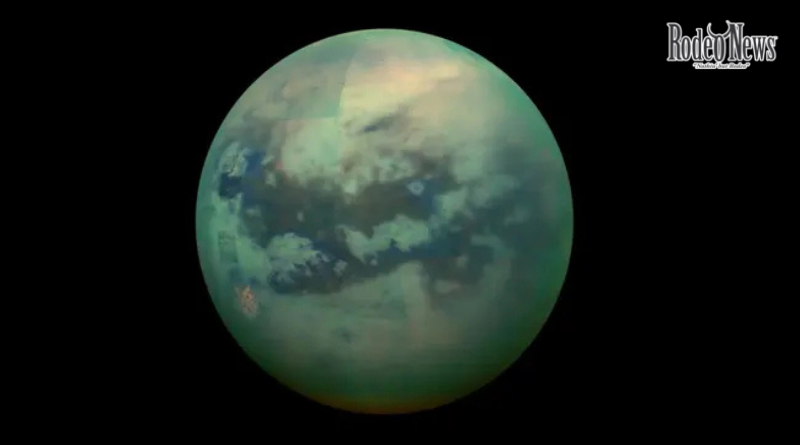
Unlike Earth’s oceans filled with water, Titan’s seas are made of liquid methane and ethane, creating a completely different kind of environment where waves behave in unusual and unexpected ways.
Researchers now believe these waves are not only present but actively shaping Titan’s coastlines, even though they move far more slowly than ocean waves on Earth.
Titan: A Moon with Alien Oceans
Titan, Saturn’s largest moon, is one of the most Earth-like worlds in the solar system—but in a very alien way.
It is the only moon known to have:
- A thick, nitrogen-rich atmosphere
- Stable liquid bodies on its surface
- A full methane-based weather cycle
These seas, lakes, and rivers are not made of water but of hydrocarbons such as methane and ethane.
Because of Titan’s extreme cold (around -179°C), water behaves like rock, while methane behaves like water does on Earth.
This creates a strange environment where it can literally “rain methane,” forming rivers that flow into large seas.
The Discovery of Titan’s Slow Motion Waves
For years, scientists debated whether Titan’s seas were completely still or if they had waves like Earth’s oceans.
Early Cassini spacecraft data suggested the surfaces were extremely smooth, leading some researchers to believe the lakes might be almost mirror-like.
However, newer studies have changed that picture.
Advanced radar analysis now suggests that waves do exist on Titan, especially in the largest seas near the moon’s north pole.
These waves are:
- Extremely small in height
- Slow in movement
- Heavily influenced by wind and temperature changes
In other words, Titan does have waves—but they move in a kind of “slow motion” compared to Earth’s oceans.
Why Titan Waves Move So Slowly
The strange behavior of titan waves methane seas is caused by a combination of environmental factors:
1. Extremely Cold Temperatures
At nearly -180°C, methane behaves as a thick, sluggish liquid compared to water on Earth.
2. Low Gravity
Titan’s gravity is only about 14% of Earth’s, which reduces wave energy and slows movement.
3. Thick Atmosphere
Titan has a dense atmosphere that dampens wind energy before it reaches the surface.
4. Oily Liquid Composition
Methane and ethane are less “fluid” than water in dynamic wave formation, making waves less energetic.
Together, these factors produce waves that are gentle, slow, and often barely visible.
How Big Are Titan’s Waves?
One study based on Cassini data suggests that some of Titan’s waves may be only:
- A few centimeters high
- About 20 centimeters long
These are incredibly small compared to Earth’s ocean waves.
Yet even these tiny waves are scientifically important because they show that Titan’s seas are not static—they are dynamic systems shaped by weather and wind.
Titan’s Methane Seas: Alien but Familiar
Despite being made of hydrocarbons, Titan’s seas behave in surprisingly Earth-like ways.
Scientists have observed:
- Coastline erosion similar to beaches on Earth
- Possible wave-driven sediment movement
- Seasonal weather patterns affecting liquid levels
Research even suggests that Titan’s shorelines may be shaped over time by wave action, similar to how Earth’s coastlines evolve.
This makes Titan one of the most Earth-like—and yet alien—environments in the solar system.
The Role of Cassini in Unlocking Titan’s Secrets
Most of what we know about Titan comes from NASA’s Cassini mission, which studied Saturn and its moons for over a decade.
Cassini:
- Took radar images of Titan’s surface
- Detected large hydrocarbon seas
- Observed seasonal atmospheric changes
- Provided the first evidence of liquid movement
Without Cassini, scientists would still assume Titan was a completely frozen, inactive world.
Instead, it revealed a planet-like system with rivers, lakes, rain, and now confirmed wave activity.
Why Titan Waves Matter for Science
The discovery of titan waves methane seas is more than just a curiosity—it has major scientific implications.
1. Understanding Alien Weather Systems
Titan is the only known world besides Earth with a full liquid cycle. Studying its waves helps scientists understand how weather works under completely different chemical conditions.
2. Clues About Prebiotic Chemistry
Titan’s methane-rich environment may resemble early Earth conditions in some ways, offering clues about how life could form elsewhere.
3. Future Space Missions
NASA’s upcoming Dragonfly mission will explore Titan’s surface and could directly study its seas and atmospheric chemistry.
Could You Surf on Titan?
In theory, yes—but it would not be like surfing on Earth.
On Titan:
- Waves are extremely slow
- Liquids are methane, not water
- Temperatures are lethal to humans
- Gravity is very low
A human would need advanced protective technology just to survive, and movement across the surface would feel almost dreamlike due to the slow physics of the environment.
Still, Titan remains one of the most exciting potential exploration targets in the solar system.
A Strange but Beautiful Alien Ocean World
The idea of titan waves methane seas paints a picture of a world that is both familiar and alien.
It has:
- Beaches and shorelines
- Rain and rivers
- Seas that ripple in slow motion
- Winds that reshape landscapes over time
But everything is built from chemicals that would be toxic and frozen solid on Earth.
Titan is essentially a frozen world with a functioning hydrocarbon ocean system—one that behaves like Earth’s oceans, but in slow motion and under extreme conditions.
Final Thoughts
The discovery of slow-moving waves on Titan reshapes how scientists view this distant moon. It is no longer just a frozen satellite of Saturn—it is a dynamic world with weather, seas, and active surface processes.
As future missions like Dragonfly prepare to explore its surface, Titan may become one of the most important places in the search for understanding planetary systems—and possibly even the origins of life itself.
The titan waves methane seas phenomenon is a reminder that even in the coldest corners of the solar system, nature still finds a way to create motion, change, and complexity.