At its core, The Fear of 13 is rooted in a harrowing miscarriage of justice. Nick Yarris spent 22 years on death row before DNA evidence proved his innocence.
This powerful narrative has already proven compelling in its original documentary form. However, translating that intensity to the stage is no easy task.
The Broadway adaptation, written by Lindsey Ferrentino and directed by David Cromer, leans heavily on storytelling rather than traditional dramatic structure.
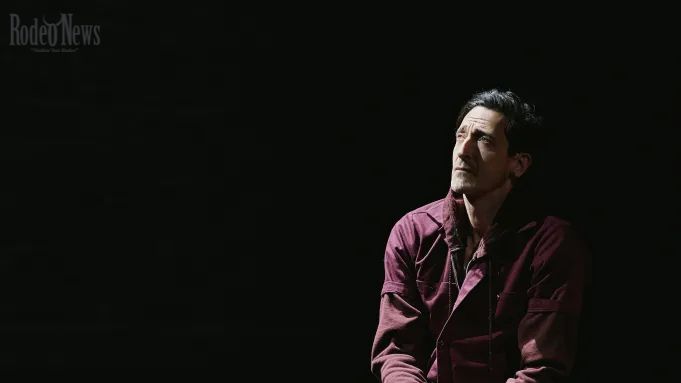
Adrien Brody’s Performance Steals the Spotlight
One of the most consistent highlights across every Fear of 13 review is the performance of Adrien Brody.
Critics widely agree that Brody brings emotional weight and intensity to the role of Nick Yarris. His portrayal captures the psychological toll of long-term incarceration, delivering moments that feel raw and authentic.
Some reviews describe his performance as “emotionally resonant” and “captivating,” even when the material itself struggles to maintain momentum.
This marks Brody’s Broadway debut, adding another layer of significance to his already acclaimed career.
Tessa Thompson Adds Warmth and Balance
Alongside Brody, Tessa Thompson plays Jacki, a volunteer who forms a deep connection with Yarris during his imprisonment.
Thompson’s performance has been praised for bringing warmth and humanity to the story. Critics note that she provides emotional grounding, especially in scenes where the narrative risks becoming too procedural.
However, some reviews suggest that her character’s development feels rushed or underexplored, limiting the emotional payoff.
Where the Play Falls Short
Despite its powerful premise, several critics highlight key weaknesses in the production.
1. Overly Talkative Structure
Many reviews point out that the play relies too heavily on narration. Instead of showing events through dynamic scenes, it often tells the story in a linear, almost documentary-like format.
2. Lack of Emotional Depth
While the subject matter is inherently emotional, some critics argue that the script fails to fully explore the psychological and relational complexities.
3. Predictable Storytelling
Even though the real-life story is shocking, the stage adaptation has been described as “safe” and conventional.
4. Underdeveloped Supporting Characters
Several characters appear briefly and then fade away, reducing the overall dramatic impact.
A Divided Critical Reception
The Fear of 13 review landscape is notably mixed.
On one hand, critics acknowledge the importance of the story and the strength of its lead performances. On the other, many feel the production lacks theatrical innovation.
Some reviews describe the experience as “underwhelming despite its compelling premise,” emphasizing that the storytelling approach limits engagement.
Others highlight that while the play raises awareness about flaws in the justice system, it doesn’t leave a lasting emotional impact.
The Power of the True Story Still Resonates
Even with its flaws, The Fear of 13 succeeds in one critical area: it keeps the conversation about wrongful convictions alive.
The production is connected to organizations like the Innocence Project, reinforcing its real-world relevance.
This connection adds weight to the narrative, reminding audiences that the events depicted are not just dramatic fiction but lived reality.
Broadway Debuts That Matter
Both Adrien Brody and Tessa Thompson make their Broadway debuts in this production, making it a milestone moment in their careers.
The play officially opened in April 2026 at the James Earl Jones Theatre, following previews in March.
This high-profile debut contributed to the buzz surrounding the show, drawing significant attention from both theater fans and mainstream audiences.
Audience Reactions vs Critics
Interestingly, audience reactions appear more positive than critical reviews.
Viewer feedback highlights the emotional impact of the performances and the gripping nature of the story. Many audience members describe the show as “moving” and “powerful,” even if slightly long.
This contrast suggests that while critics focus on structural flaws, general audiences connect more directly with the human story.
Why This Play Still Matters in 2026
In today’s cultural climate, stories about justice, systemic failure, and redemption carry significant weight.
The Fear of 13 arrives at a time when conversations about criminal justice reform are increasingly prominent. The involvement of public figures advocating for reform further amplifies its relevance.
Even if the theatrical execution isn’t groundbreaking, the message remains urgent and important.
Final Verdict: A Powerful Story, Imperfectly Told
So, what’s the final takeaway from this Fear of 13 review?
Strengths:
- Outstanding performance by Adrien Brody
- Strong emotional presence from Tessa Thompson
- Compelling real-life story
Weaknesses:
- Overly narrative-driven structure
- Limited emotional depth in script
- Uneven pacing and character development
Ultimately, The Fear of 13 is a production that matters more than it impresses. It may not redefine Broadway storytelling, but it succeeds in bringing attention to a deeply important issue.
For theatergoers interested in true stories and powerful performances, it remains a worthwhile experience—just not a flawless one.