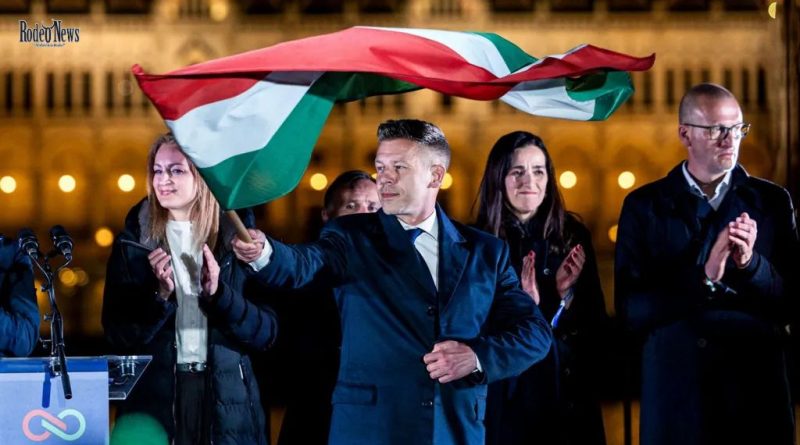
Hungary Election Orbán Defeat: A Historic Political Turning Point
The Hungary election Orbán defeat has sent shockwaves across Europe, marking the end of Prime Minister Viktor Orbán’s 16-year rule and ushering in a new political era led by opposition figure Péter Magyar. The stunning result of the 2026 parliamentary election represents one of the most significant political transformations in the European Union in recent years.
After more than a decade of dominant leadership, Orbán’s fall signals not only a domestic political shift but also a potential realignment of Hungary’s role within Europe. The landslide victory of Magyar’s Tisza Party reflects widespread voter dissatisfaction and a strong desire for change.
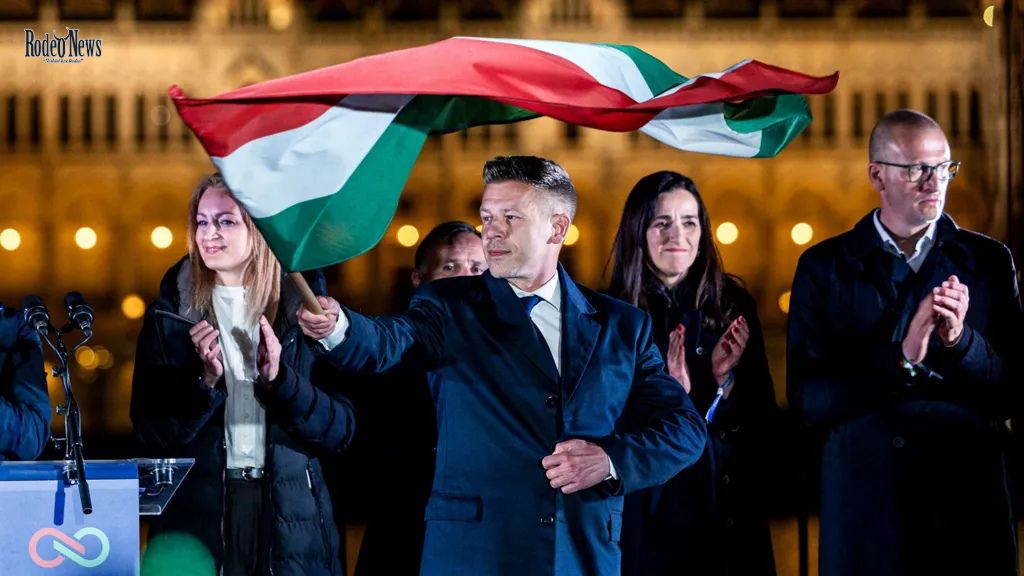
A Landslide Victory That Changed Hungary Overnight
The 2026 Hungarian parliamentary election, held on April 12, delivered a decisive outcome. Péter Magyar’s Tisza Party secured a commanding victory, ending Orbán’s long-standing grip on power.
Reports indicate that the opposition achieved a strong parliamentary majority, giving it the ability to enact sweeping reforms, including potential constitutional changes.
Voter turnout exceeded 79%, highlighting the significance of the election and the high level of public engagement.
This overwhelming participation reflects a population eager to shape the country’s future after years of political stagnation and controversy.
Who Is Péter Magyar?
Péter Magyar, a 45-year-old former insider of Orbán’s ruling Fidesz party, emerged as the central figure behind this political earthquake. Once aligned with the establishment, Magyar broke ranks in 2024, citing corruption and governance concerns.
He quickly gained popularity by positioning himself as a reformist leader focused on transparency, anti-corruption, and restoring democratic norms.
Magyar’s Tisza Party attracted a broad coalition of voters, ranging from conservatives to liberals, united by a shared desire to end Orbán’s rule.
Despite his rapid rise, analysts have described him as a “dark horse,” noting that while his message resonated strongly, many of his policies remain loosely defined.
Why Did Orbán Lose Power?
Several key factors contributed to the Hungary election Orbán defeat:
1. Economic Frustration
Hungarians have faced rising inflation and economic challenges in recent years. Many voters blamed the government for stagnating living standards and declining public services.
2. Corruption Allegations
Persistent accusations of corruption and misuse of public funds eroded trust in Orbán’s administration.
3. Desire for EU Alignment
Orbán’s increasingly strained relationship with the European Union became a major campaign issue. Magyar capitalized on this by promising to rebuild ties with Brussels.
4. Unified Opposition
Unlike previous elections, opposition forces rallied behind a single, compelling figure in Magyar, making it harder for Orbán to divide the vote.
5. Voter Fatigue
After 16 years in power, many citizens simply wanted change, regardless of political ideology.
Together, these factors created a perfect storm that ultimately led to Orbán’s downfall.
The End of an Era in Hungarian Politics
Viktor Orbán had been a dominant figure in Hungarian politics since 2010, promoting what he described as an “illiberal democracy.” His leadership style drew criticism from EU leaders and human rights organizations.
During his tenure, Hungary experienced what critics called democratic backsliding, including concerns over media freedom and judicial independence.
His defeat marks the first time in over a decade that Hungarian voters have successfully unseated his government, signaling a major shift in the country’s political direction.
Orbán conceded defeat shortly after the election results became clear, acknowledging the will of the voters.
What Happens Next for Hungary?
With a strong parliamentary majority, Magyar’s government is expected to pursue significant reforms. These may include:
- Strengthening democratic institutions
- Tackling corruption
- Improving relations with the European Union
- Unlocking frozen EU funds
Analysts believe that Hungary could regain access to billions of euros in EU funding if governance reforms are successfully implemented.
Markets have already reacted positively, with the Hungarian currency strengthening following the election outcome.
However, challenges remain. The new government must navigate entrenched political structures and deliver on its promises quickly to maintain public support.
Europe Reacts to Hungary’s Political Shift
The Hungary election Orbán defeat has broader implications for Europe. Orbán was widely regarded as one of the EU’s most controversial leaders, often clashing with Brussels over rule-of-law issues.
His departure is expected to ease tensions between Hungary and EU institutions, potentially improving cooperation on key issues such as:
- Economic recovery
- Support for Ukraine
- Regional stability
European leaders have welcomed the election result as an opportunity for renewed unity within the bloc.
A New Chapter — But Uncertainty Remains
While many Hungarians are celebrating what they see as a “return to Europe,” the road ahead is far from certain.
Magyar’s rapid rise means his leadership has yet to be fully tested. Questions remain about:
- His detailed policy plans
- His ability to manage a diverse political coalition
- His approach to foreign policy
Despite these uncertainties, the election outcome represents a clear mandate for change.
Conclusion: A Defining Moment in Modern Hungary
The Hungary election Orbán defeat is more than just a change in leadership—it is a defining moment in the country’s modern history.
After 16 years of Orbán’s rule, voters have chosen a new direction, one that promises reform, transparency, and renewed engagement with Europe.
Whether Péter Magyar can deliver on these expectations remains to be seen. However, one thing is certain: Hungary has entered a new political era, and its impact will be felt far beyond its borders.