
Resident Evil Movie Brings 5 Chilling Game Secrets to Life
The new Resident Evil movie is taking a different approach to adapting Capcom’s legendary survival-horror franchise. Rather than simply recreating a familiar game storyline or filling the screen with recognizable characters, director Zach Cregger has focused on something more fundamental: making audiences feel what it is like to actually play a Resident Evil game.
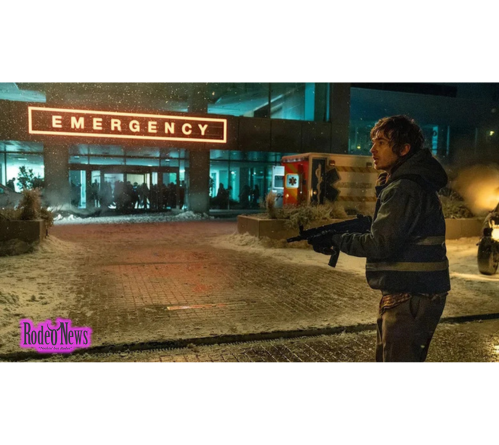
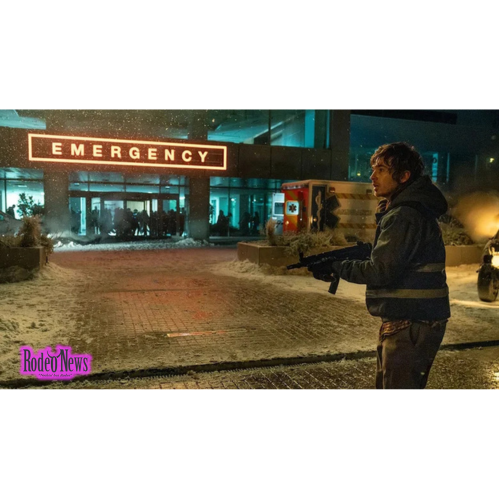
The 2026 film, directed and co-written by Cregger, stars Austin Abrams as Bryan, a medical courier who becomes trapped in a nightmare during a delivery to Raccoon City. Sony describes the movie as an original story and a reinvention of the franchise. It arrived in theaters on September 18, 2026.
That decision gives the film a different identity from previous live-action adaptations.
Instead of treating Resident Evil primarily as an action franchise, Cregger emphasizes dread, limited resources, exploration, puzzles and the uneasy feeling that something terrifying could be waiting around the next corner.
Those elements are central to why the games became so influential in the survival-horror genre.
Resident Evil Movie Understands What Makes the Games Scary
One of the biggest challenges facing any video-game adaptation is translating an interactive experience into a passive one.
In a game, players control when a character opens a door, enters a room or investigates a suspicious noise. They also control ammunition, health items and weapons. That creates a unique kind of tension because the player is personally responsible for every decision.
The Resident Evil movie cannot provide that same interactivity.
Cregger instead attempts to recreate the emotional experience through cinematography and pacing.
Engadget’s review highlights how the movie repeatedly places viewers behind Bryan or directly over his shoulder, echoing the perspective used by several Resident Evil games. The film also occasionally switches into first-person shots, putting viewers closer to Bryan’s experience as he investigates dangerous locations.
It is a relatively simple idea, but it helps establish the feeling that the audience is controlling Bryan.
The effect is particularly important because Bryan is not introduced as an elite soldier or experienced monster hunter.
He is an ordinary person who suddenly finds himself in an extraordinary situation.
That makes his fear more believable.
1. The Resident Evil Movie Uses Scarce Ammo as Horror
One of the most recognizable mechanics in classic Resident Evil games is resource management.
Players rarely feel completely comfortable. Even when they acquire powerful weapons, ammunition can remain limited. Every bullet can become a decision.
Should the player fight the monster?
Should they run away?
Is it worth spending ammunition on an enemy that might be avoidable?
The Resident Evil movie translates that mechanic into Bryan’s journey.
According to Engadget, Bryan becomes increasingly aware of exactly how much ammunition he has. Although he obtains guns during his journey, having a weapon does not automatically make him feel safe.
That is an important difference from many conventional horror-action films.
In a typical action movie, acquiring a shotgun usually means the protagonist has become more powerful.
In Resident Evil, a shotgun can create another problem: ammunition.
The weapon might be useless if there are no shells available.
Cregger reportedly wanted that feeling to remain central to the movie. In an interview with PlayStation Blog, he explained that one of the aspects of the games that attracted him was resource conservation, including having to think carefully about bullets and healing items.
That philosophy is visible throughout the film.
Bryan finds weapons, searches for ammunition and repeatedly has to make choices about what resources are available.
The result is a horror story where survival depends not only on physical strength but also on managing limited supplies.
2. The Resident Evil Movie Turns Exploration Into a Threat
Another major part of Resident Evil is exploration.
The games often make ordinary spaces feel dangerous.
A hallway might look empty.
A locked door might suggest that a puzzle is nearby.
A seemingly harmless room could contain an enemy.
That design philosophy gives players a constant sense of uncertainty.
The new Resident Evil movie uses a similar technique.
Bryan moves through unfamiliar environments while viewers are encouraged to study the frame for possible threats. Instead of immediately revealing every danger, the film often allows tension to build through what the audience cannot see.
This is one of the most important aspects of survival horror.
Fear does not always come from seeing the monster.
Sometimes it comes from knowing that something could be there.
Cregger has previously discussed his admiration for the franchise’s use of dread. In a PlayStation interview, he described the slow, deliberate movement through threatening environments and the anxiety created by limited resources as key elements he wanted to bring into the movie.
That approach also helps the film stand on its own.
Someone unfamiliar with the games can still understand why Bryan is frightened.
Fans, meanwhile, can recognize the familiar gameplay structure underneath the story.
3. Classic Resident Evil Puzzles Become Part of the Story
The games are famous for puzzles.
Players frequently encounter locked doors, unusual objects and environmental obstacles that force them to search for solutions.
The new film incorporates that idea without turning the entire story into a literal recreation of a video game level.
Engadget notes that Bryan encounters a ladder puzzle and other obstacles during his journey. He also enters a farmhouse where a shotgun is available but cannot immediately be used effectively because he needs ammunition.
These moments may seem small, but they reinforce the game’s structure.
The character is not simply running from one monster to another.
He has to explore.
He has to search.
He has to make mistakes.
And sometimes, the answer to a problem is hidden somewhere nearby.
That is exactly the type of gameplay rhythm that made early Resident Evil titles distinctive.
The film’s willingness to embrace these mechanics also separates it from adaptations that merely use the franchise’s name and characters.
4. The Resident Evil Movie Includes Familiar Game Details
Cregger has not attempted to overload the movie with references.
Instead, some details are incorporated naturally into the environment.
One of the clearest examples is a typewriter.
In the games, typewriters are associated with saving progress and often appear in areas that provide players with a brief opportunity to recover from the surrounding danger.
Engadget notes that a typewriter appears in the movie, while TheWrap identifies it as one of several recognizable game references.
Other details include weapons, ammunition, healing items, locked doors and familiar visual motifs.
TheWrap’s breakdown identifies nine game-related references, including ammunition packaging, guns, healing items, dogs, locks, first-person perspective, typewriters and Umbrella.
The important part is that these elements do not necessarily stop the story to announce themselves.
They are part of the environment.
For longtime fans, recognizing them can add another layer of enjoyment.
For newcomers, they simply function as parts of the horror story.
5. Raccoon City Returns as a Major Setting
The Resident Evil movie also returns to Raccoon City, one of the franchise’s most recognizable locations.
Sony’s official description says Bryan’s journey eventually takes him into the city during a horrifying night of chaos.
Cregger has explained that his story is not a direct retelling of one particular game.
Instead, it is an original story that exists within the world of Resident Evil.
In the PlayStation Blog interview, Cregger described the movie as following a different person during a terrible night in Raccoon City while incorporating situations and mechanics familiar from the games.
That distinction is important.
The film does not need to reproduce a specific campaign to feel connected to the games.
Instead, it uses their structure.
Bryan has a mission.
He has limited supplies.
He encounters increasingly dangerous creatures.
He searches for objects.
He solves problems.
And the journey becomes progressively more difficult.
That is essentially the rhythm of a survival-horror game translated into movie form.
Zach Cregger’s Resident Evil Strategy Is Different
Cregger’s previous horror work, including Barbarian and Weapons, gives him experience with suspense and unsettling environments. Sony identifies both films in its official description of the filmmaker.
But his connection to Resident Evil goes beyond simply directing another horror movie.
Cregger is also a longtime fan of the games.
In his PlayStation interview, he recalled playing Resident Evil 2 and described resource conservation as one of the mechanics that immediately stood out to him. He also cited the dollhouse sequence from Resident Evil Village as one of his memorable scares from the franchise.
That knowledge appears to have influenced how the movie was constructed.
Rather than asking, “Which characters should we put into this movie?” the approach seems closer to asking, “What does it feel like to play this game?”
That is a subtle but significant difference.
Austin Abrams’ Bryan Is the Audience’s Stand-In
The decision to make Bryan an ordinary person is also central to the film.
He is a medical courier rather than an experienced action hero.
Sony’s official synopsis describes him as someone who unexpectedly finds himself in a chaotic fight for survival during one horrifying night.
That makes his progression particularly important.
He does not begin with the skills necessary to survive a biological nightmare.
Instead, he learns through experience.
He makes mistakes.
He wastes resources.
He encounters weapons he does not immediately know how to use.
And he has to figure out what to do while under enormous pressure.
Game Informer’s review describes Bryan as someone who reacts like a player dropped into a Resident Evil scenario, including searching rooms, making mistakes and dealing with the consequences of poor decisions.
That characterization can make the movie’s horror more relatable.
The audience is not watching an unstoppable hero defeat monsters.
They are watching someone struggle to survive.
The Resident Evil Movie Doesn’t Depend on Fan Service
There is an important distinction between fan service and faithful adaptation.
A movie can include famous characters, logos and recognizable monsters without understanding why the original property worked.
Cregger’s film takes a different path.
The story reportedly contains relatively few overt references to the broader franchise, while the structure of the experience is deeply influenced by the games. Game Informer notes that the film uses relatively few obvious references while capturing the highs, failures, exploration and tension associated with playing Resident Evil.
That approach could make the movie more accessible.
Someone who has never played a Resident Evil game does not need to understand decades of franchise history to follow Bryan’s story.
At the same time, experienced players can recognize the design language.
A locked door becomes a puzzle.
A shotgun becomes a resource-management problem.
A dark corridor becomes a warning.
A typewriter becomes a familiar object from another world.
These details allow the film to communicate with fans without excluding everyone else.
Why the First-Person Shots Matter
The Resident Evil movie also makes strategic use of first-person cinematography.
The franchise itself experimented with first-person gameplay beginning with Resident Evil 7, while earlier entries are strongly associated with fixed camera angles or third-person perspectives.
The film uses first-person shots selectively rather than presenting the entire movie from that viewpoint.
That gives the technique greater impact.
When the camera moves into Bryan’s perspective, viewers are temporarily denied the wider information normally available from a conventional cinematic shot.
That can make a threat feel closer.
It can also recreate a small part of the uncertainty that players experience while exploring a game.
TheWrap specifically identifies the movie’s POV sequences as one of its major connections to the games.
It is not interactive, but it can still imitate the feeling of controlling a character through an unfamiliar environment.
The Movie Blends Horror With Dark Humor
The Resident Evil movie is not presented as completely humorless horror.
That is another important connection to the games.
The franchise has always contained absurd situations alongside genuine scares.
Game Informer’s review notes that Bryan’s reactions can be frantic and funny, with the character behaving like an overwhelmed player rather than an effortlessly competent horror protagonist.
That balance can prevent the film from becoming relentlessly grim.
A character screaming, making a mistake or realizing that he has wasted ammunition can be frightening and funny at the same time.
That combination is part of the identity of Resident Evil.
The series has never been purely realistic horror.
Its appeal often comes from the collision between terrifying monsters, strange puzzles, exaggerated situations and the player’s very practical concern about surviving with limited resources.
How the New Resident Evil Movie Differs From Previous Films
The new movie arrives after several different attempts to bring the franchise to theaters.
Previous live-action films starring Milla Jovovich leaned heavily toward action, while the 2021 Resident Evil: Welcome to Raccoon City attempted a closer connection to the games.
Engadget argues that many previous adaptations missed the core survival-horror experience by emphasizing action instead of the dread and resource management found in the games.
Cregger’s version takes a different route.
It does not attempt to recreate every major character or storyline.
Instead, it focuses on the basic ingredients that make a Resident Evil game feel like Resident Evil.
That includes limited ammunition, exploration, puzzles, escalating threats and the constant suspicion that the next room could contain something dangerous.
Early Reviews Highlight the Game-Like Experience
Early critical reactions have also focused heavily on the movie’s relationship with the games.
RogerEbert.com’s review describes the film as strongly inspired by the video-game experience, pointing to dwindling supplies and a mission-based structure as important parts of its identity.
Game Informer similarly argues that the film captures the emotional experience of playing a Resident Evil game rather than simply reproducing surface-level details.
Engadget’s review makes a similar point, emphasizing Cregger’s use of perspective, resource scarcity and environmental details to recreate the tension associated with the games.
These are descriptions of individual critics’ responses rather than a universal assessment, but they point toward a consistent theme: the film’s biggest connection to Resident Evil may be its gameplay-inspired structure rather than its plot.
What Makes the Resident Evil Movie Stand Out
The strongest idea behind the Resident Evil movie is relatively straightforward.
Cregger has attempted to translate the feeling of playing a survival-horror game rather than simply translating a game’s storyline.
That means the audience spends time worrying about ammunition.
It means exploring unfamiliar rooms matters.
It means puzzles can slow the story down instead of being removed for convenience.
It means the protagonist can make mistakes.
And it means the camera sometimes behaves more like a player’s viewpoint than a traditional movie camera.
Those choices create a different type of video-game adaptation.
Instead of asking viewers to remember a particular game scene, the movie asks them to recognize a familiar feeling.
Final Takeaway
The 2026 Resident Evil movie represents a notable attempt to bring the core mechanics of survival horror into a live-action film.
Zach Cregger’s approach avoids simply copying one game. Instead, the movie uses familiar elements such as limited ammunition, environmental puzzles, dangerous exploration, typewriters, weapons, healing items, first-person perspectives and Raccoon City to recreate the atmosphere of playing the franchise.
Austin Abrams’ Bryan also gives the story an everyman perspective. He is not a perfectly prepared action hero. He is someone trying to survive a situation that becomes increasingly impossible.
That makes the tension more personal.
For longtime fans, the appeal comes from recognizing the mechanics and visual language of the games.
For newcomers, the movie can work as a standalone horror story about an ordinary person trapped in an extraordinary nightmare.
The biggest question for the franchise now is whether this approach can establish a new direction for Resident Evil on the big screen.
The early reviews suggest that Cregger has placed the survival-horror experience at the center of his adaptation. Whether audiences agree will ultimately depend on how successfully the film balances game-inspired details with the demands of a feature-length horror movie.
For now, the movie’s central idea is clear: you do not need to recreate the game to make audiences feel like they are playing one.