ran War G7 Tensions Revealed: 7 Key Global Risks
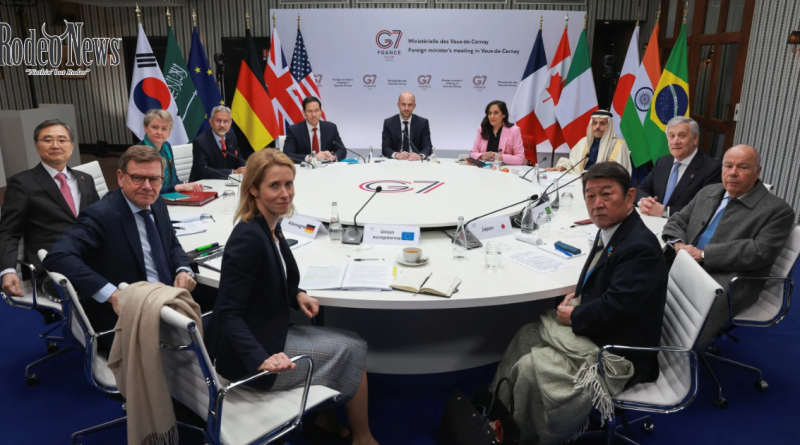
The Iran war G7 tensions have reached a critical turning point as global leaders gather in France amid deep divisions over U.S. strategy. What was once a unified alliance is now showing visible cracks, with diplomacy, military action, and global economic stability all hanging in the balance.
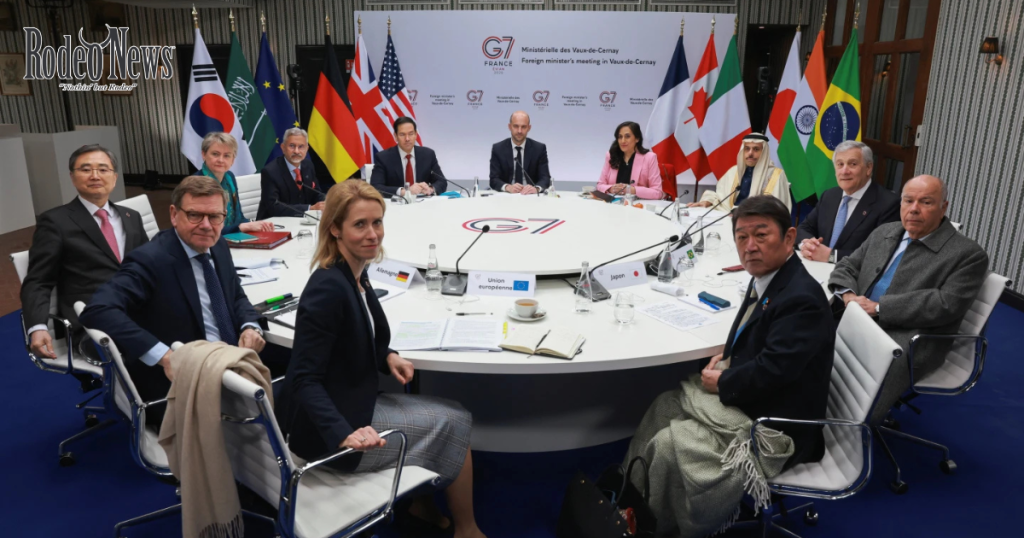
At the center of the storm is U.S. Secretary of State Marco Rubio, who is attempting to rally skeptical allies behind Washington’s approach to the ongoing conflict with Iran. However, resistance from key nations signals that the crisis is no longer just a regional war—it is a global geopolitical test.
1. G7 Allies Deeply Divided Over Iran War Strategy
The latest G7 meeting in France exposed serious disagreements among the world’s leading economies. While the United States continues to defend its military actions alongside Israel, several allies—including France, Germany, and the United Kingdom—have expressed clear hesitation.
Many European leaders are pushing for diplomacy instead of escalation. According to reports, they were frustrated by not being fully consulted before military operations began.
This growing divide highlights a fundamental issue: the lack of unified strategy within the G7 could weaken the group’s global influence at a time of crisis.
2. Rubio Faces Tough Task Selling U.S. Strategy
Marco Rubio arrived at the G7 meeting with a difficult mission—to convince allies that the U.S. approach is both necessary and effective.
However, his tone has been firm. He made it clear that his priority is American interests, not appeasing international partners.
This stance reflects a broader shift in U.S. foreign policy under President Donald Trump, where national priorities often outweigh multilateral consensus. While this may appeal domestically, it risks further alienating long-time allies.
3. Trump’s Criticism of Allies Fuels Tensions
Adding fuel to the fire, President Trump has openly criticized NATO and G7 allies for their lack of support in the Iran war.
He questioned their commitment, suggesting that allies benefit from U.S. protection without offering enough in return.
Such remarks have not gone unnoticed. Diplomats at the G7 meeting reportedly viewed these comments as damaging to trust and cooperation, further complicating already fragile negotiations.
4. Strait of Hormuz Crisis Disrupts Global Economy
One of the most urgent issues driving the Iran war G7 tensions is the closure of the Strait of Hormuz—a critical oil shipping route.
Iran’s blockade has significantly disrupted global energy markets, pushing oil prices higher and raising fears of prolonged economic instability.
This narrow waterway handles a substantial portion of the world’s oil supply. Any sustained disruption could trigger:
- Global fuel shortages
- Rising inflation
- Economic slowdowns in major economies
As a result, restoring stability in the Strait has become a top priority for G7 leaders.
5. Allies Prioritize Diplomacy Over Military Escalation
Despite ongoing military operations, many G7 nations are urging a diplomatic solution.
France and other European countries have emphasized that the war is not theirs and have signaled reluctance to participate in offensive actions.
Instead, they are advocating for:
- Immediate ceasefire discussions
- Multilateral negotiations
- De-escalation measures
This approach contrasts sharply with the U.S. position, highlighting the widening strategic gap within the alliance.
6. Broader Global Conflicts Complicate the Situation
The Iran war is not happening in isolation. It overlaps with other major global crises, particularly the ongoing conflict in Ukraine.
G7 leaders are now forced to divide attention and resources between multiple high-stakes conflicts.
This creates several challenges:
- Strained military resources
- Conflicting strategic priorities
- Increased geopolitical uncertainty
Additionally, concerns about Russia’s potential involvement in supporting Iran add another layer of complexity to the situation.
7. Uncertain Path Forward Raises Global Risks
As the war enters its fourth week, the future remains highly uncertain.
While diplomatic efforts are ongoing, significant gaps remain between U.S. demands and Iran’s position. Meanwhile, military escalation continues to loom as a real possibility.
The stakes are enormous:
- A prolonged war could destabilize the Middle East
- Global energy markets may face sustained disruption
- International alliances could weaken further
At the same time, public opinion—especially in the United States—has shown growing skepticism toward the conflict, adding domestic pressure on policymakers.
A Fragile Moment for Global Unity
The Iran war G7 tensions reveal more than just disagreement over a single conflict—they expose deeper fractures in the global order.
For decades, the G7 has represented a unified front on major international issues. Today, that unity is being tested like never before.
On one side stands the United States, pursuing a strategy that combines military pressure with limited diplomacy. On the other, European allies are advocating restraint and negotiation.
This divide raises a critical question: can the G7 still function as a cohesive force in times of crisis?
What Happens Next?
Looking ahead, several scenarios could unfold:
Best Case: Diplomatic Breakthrough
Negotiations succeed, leading to a ceasefire and reopening of the Strait of Hormuz.
Moderate Case: Prolonged Stalemate
The conflict continues at a lower intensity, with ongoing economic and political consequences.
Worst Case: Full-Scale Escalation
Military operations expand, drawing in more countries and triggering a broader regional war.
Each outcome carries significant implications—not just for the Middle East, but for the entire world.
Conclusion: A Defining Test for Global Leadership
The current crisis represents a defining moment for international diplomacy and cooperation.
The Iran war G7 tensions are not just about military strategy—they are about trust, leadership, and the future of global alliances.
As leaders continue discussions in France, the world watches closely. The decisions made in the coming days could shape global stability for years to come.