US Stock Futures Rise as Investors Track Iran Conflict and Await Key Fed Decision
U.S. stock futures moved higher early Monday as investors kept a close eye on the escalating conflict involving Iran while preparing for a crucial Federal Reserve policy meeting that could shape the outlook for interest rates and the broader economy.
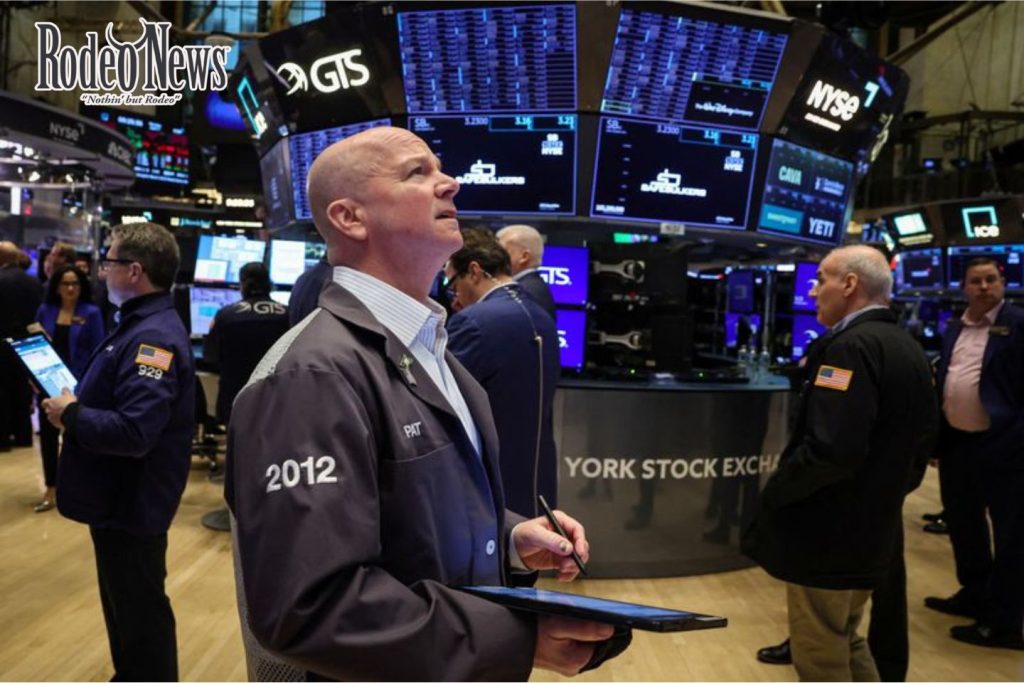
The cautious gains in futures trading suggest that markets are attempting to stabilize after a volatile period driven largely by geopolitical tensions and surging energy prices.
Markets Attempt to Stabilize After Turbulent Weeks
Wall Street has faced a difficult stretch in recent weeks, with the major U.S. indexes struggling under the weight of rising oil prices and uncertainty tied to the conflict in the Middle East.
Benchmark indexes such as the S&P 500, Dow Jones Industrial Average, and Nasdaq Composite have all experienced sharp swings as investors attempt to gauge how long the geopolitical tensions might last and how deeply they could impact global economic growth.
The latest futures gains come after several sessions marked by heavy volatility and a broader decline in market sentiment. The S&P 500 recently recorded a three-week losing streak as concerns over the Iran conflict rattled investors and pushed risk appetite lower.
Oil Prices Remain a Key Market Driver
Energy markets have been at the center of investor attention during the crisis.
Crude oil prices surged above $100 per barrel amid fears that the conflict could disrupt supply routes through the Persian Gulf, particularly the Strait of Hormuz, one of the world’s most critical oil shipping lanes.
The spike in oil prices has fueled worries about renewed inflation pressures in the United States and globally. Higher energy costs can ripple through the economy by increasing transportation expenses, raising production costs for businesses, and pushing consumer prices higher.
Market analysts warn that if oil prices remain elevated for a prolonged period, it could slow economic growth and complicate efforts by central banks to bring inflation under control.
Federal Reserve Meeting in Focus
Against this backdrop, investors are now shifting their attention to the Federal Reserve’s upcoming policy meeting, scheduled for March 17–18.
The central bank’s interest-rate decisions are expected to play a major role in shaping market sentiment for the months ahead. While many economists expect the Fed to hold rates steady for now, policymakers face a complicated balancing act.
Rising energy prices tied to geopolitical tensions could drive inflation higher again, potentially limiting the Fed’s ability to cut interest rates later this year.
Market expectations for rate cuts have already shifted dramatically since the conflict intensified. Investors who previously anticipated multiple rate reductions in 2026 are now increasingly uncertain whether any cuts will happen at all.
Investors Brace for Continued Volatility
The combination of geopolitical risk and monetary policy uncertainty has created an unpredictable environment for investors.
Market strategists say the trajectory of the conflict will likely remain the dominant factor driving short-term market movements. Any escalation that threatens global oil supplies could trigger additional volatility in equities.
Conversely, signs of de-escalation or diplomatic progress could quickly lift sentiment and trigger a rebound in risk assets.
Oil Shock Raises Broader Economic Concerns
Economists warn that prolonged high oil prices could create broader economic consequences.
Historically, sharp increases in energy costs have weighed on economic growth while simultaneously pushing inflation higher — a difficult combination for policymakers often referred to as stagflation.
Analysts estimate that a significant increase in oil prices could shave measurable amounts off U.S. GDP growth while also squeezing corporate profits and consumer spending.
Industries particularly sensitive to fuel costs — including airlines, logistics companies, and transportation firms — may face heightened pressure if crude prices remain elevated.
Wall Street Watches Geopolitics Closely
Financial markets are increasingly tied to geopolitical developments as the conflict unfolds.
Investors are watching closely for signs of disruption to oil infrastructure or shipping routes in the Persian Gulf, which could dramatically affect global energy supply.
The situation has also prompted governments and international organizations to consider measures aimed at stabilizing energy markets and preventing supply shortages.
At the same time, the uncertainty has reinforced the importance of central bank policy decisions as a stabilizing force for global markets.
A Week That Could Shape Market Direction
With tensions in the Middle East still evolving and the Federal Reserve preparing to deliver its latest policy update, investors expect the coming days to be pivotal for global financial markets.
For now, the modest rise in U.S. stock futures suggests cautious optimism among traders. But analysts caution that volatility could remain elevated until there is greater clarity about both the geopolitical situation and the trajectory of interest rates.
As markets navigate the twin challenges of geopolitical risk and monetary policy uncertainty, the path forward for Wall Street may depend as much on global events as it does on economic data.