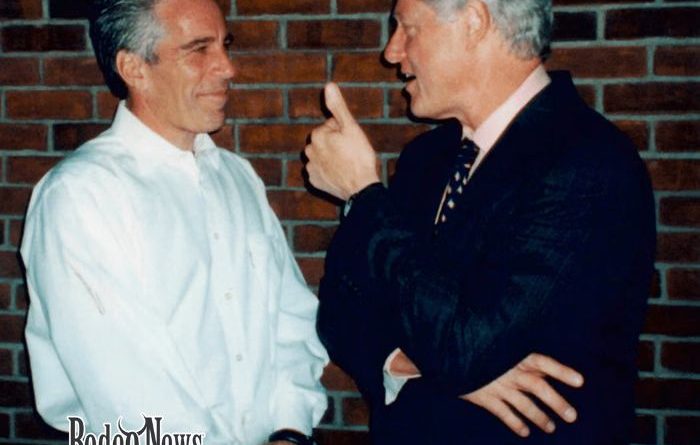
Bill Clinton to Testify Before House Committee in Epstein Investigation
Former U.S. President Bill Clinton is scheduled to testify Friday before a House committee investigating his past association with the late financier Jeffrey Epstein, intensifying a politically charged inquiry that has already drawn sharp criticism from Democrats.
The deposition comes just one day after former Secretary of State Hillary Clinton appeared before the same panel, dismissing the proceedings as “partisan political theater” and “an insult to the American people.” Her testimony, conducted behind closed doors, lasted several hours and briefly stalled after a Republican lawmaker disclosed an image from the session.
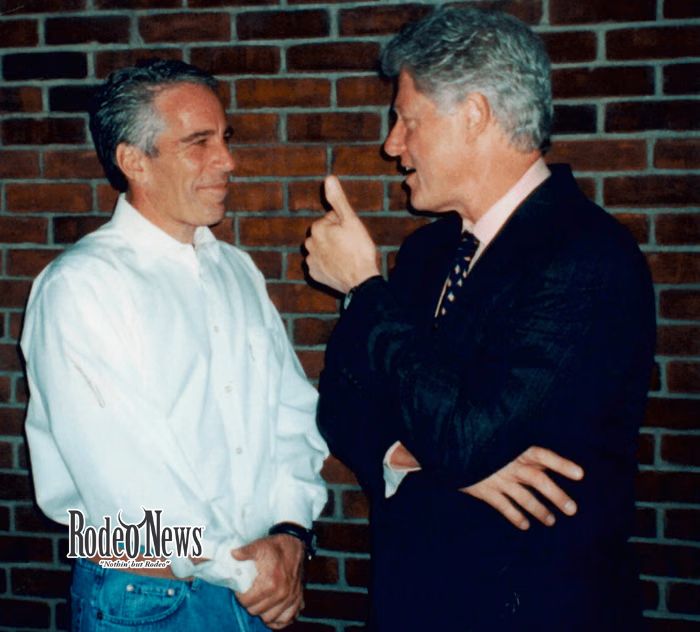
The Republican-led House Oversight Committee has been examining connections between high-profile political figures and Epstein, who died by suicide in 2019 while awaiting trial on federal sex trafficking charges. The investigation has reignited scrutiny of Epstein’s extensive network of powerful acquaintances, including politicians, business leaders and celebrities.
Hillary Clinton Denies Any Meeting With Epstein
Appearing before the committee on Thursday, Hillary Clinton stated she had never met Epstein and had no knowledge of his activities. According to lawmakers present, she told investigators she did not recall any direct interaction with the financier.
Her deposition was temporarily halted after Representative Lauren Boebert shared an image from the proceedings, prompting procedural objections. Committee Chair James Comer later indicated that the full video of the testimony would be released after review.
Clinton described the investigation as a “fishing expedition,” arguing that Republicans were attempting to weaponize the Epstein case for political purposes. Her remarks underscored deep partisan divisions surrounding the inquiry.
Bill Clinton’s Past Association With Epstein
Unlike his wife, Bill Clinton has acknowledged flying on Epstein’s private jet several times in the early 2000s, primarily for philanthropic travel connected to the Clinton Foundation’s global initiatives. However, the former president has consistently said he was unaware of Epstein’s criminal conduct at the time and has denied ever visiting Epstein’s private island in the U.S. Virgin Islands.
White House visitor logs cited in previous news reports show that Epstein visited the White House at least 17 times during the early years of Clinton’s presidency. Clinton has said he cut ties with Epstein around 2005, well before Epstein pleaded guilty in Florida in 2008 to solicitation of a minor.
Clinton has not been accused of wrongdoing related to Epstein’s criminal activities. He has also denied past allegations of sexual misconduct unrelated to Epstein, and no criminal charges have been brought against him in those matters.
Recently released court files included a photograph showing Clinton in a hot tub with Epstein and an unidentified woman. The image has circulated widely online, adding to renewed public scrutiny. Clinton’s representatives have declined to comment on the photograph beyond reiterating that he was unaware of Epstein’s illegal behavior.
Subpoenas and Contempt Threats
The House Oversight Committee issued subpoenas to both Clintons in August as part of its broader investigation. Initially, the former president and former secretary of state resisted appearing before the panel, questioning the scope and intent of the inquiry.
They later agreed to comply after Republicans threatened to hold them in contempt of Congress.
Both Clintons requested that their depositions be conducted in public rather than behind closed doors. Bill Clinton argued that private questioning would amount to a “kangaroo court” and urged lawmakers to hold an open hearing.
“Let’s stop the games and do this the right way: in a public hearing,” he wrote earlier this month on social media platform X.
Chairman Comer rejected the request, stating that the committee would proceed with closed-door depositions to preserve the integrity of the investigation. Video recordings are expected to be released following review and approval by committee members.
Political Tensions Surround the Inquiry
The investigation unfolds amid heightened partisan tensions in Washington, with Republicans framing the probe as a matter of accountability and transparency, while Democrats describe it as politically motivated.
Speaking ahead of Hillary Clinton’s testimony, Comer said the questioning would be extensive and suggested that Bill Clinton’s session would be “even longer.”
Republicans argue that Epstein’s connections to influential figures demand thorough examination. Democrats counter that the committee is selectively targeting political opponents while ignoring broader systemic failures that allowed Epstein’s crimes to go unchecked for years.
Epstein’s death in federal custody in 2019 continues to fuel public skepticism and conspiracy theories, further complicating the political landscape surrounding the case.
What Comes Next
Bill Clinton’s deposition is expected to last several hours and will likely focus on the nature and extent of his interactions with Epstein, including travel records and financial connections.
While no criminal allegations have been made against the former president in connection with Epstein, the testimony could shape public perception and influence ongoing political narratives ahead of future election cycles.
The committee has not indicated whether additional high-profile figures will be subpoenaed as part of the investigation. Lawmakers say the probe remains active.
For now, attention turns to Friday’s deposition, which could provide new insight into one of the most scrutinized networks of associations in recent American political history.
As the inquiry continues, the political reverberations are expected to persist — underscoring how the shadow of Jeffrey Epstein’s crimes continues to reach into the highest levels of public life.