
NASA Reveals Astronaut Behind First Medical Evacuation from International Space Station
NASA has confirmed that veteran astronaut Mike Fincke was the crew member whose medical issue prompted the early return of SpaceX’s Crew-11 mission from the International Space Station last month — marking the first time an astronaut required a medical evacuation from the orbiting laboratory.
The agency disclosed the information at Fincke’s request, weeks after the mission was cut short. While officials had previously acknowledged a “medical concern” aboard the station, they declined to identify the astronaut involved or the nature of the condition.
In a statement released Tuesday, Fincke confirmed he experienced what he described as a medical event requiring “immediate attention” from fellow crew members.
“I experienced a medical event that required immediate attention from my incredible crewmates,” Fincke said. “While it was not an emergency, it required advanced medical imaging not available on the space station.”
A Sudden Shift in Orbit
The issue first surfaced on Jan. 7, as Fincke and NASA astronaut Zena Cardman prepared for a scheduled spacewalk. NASA officials at the time described the matter cautiously, noting only that a crew member aboard the orbital complex was being monitored for a medical concern.
Within 24 hours, the agency announced that Crew-11 would conclude its mission early to allow the astronaut to receive further evaluation on Earth.
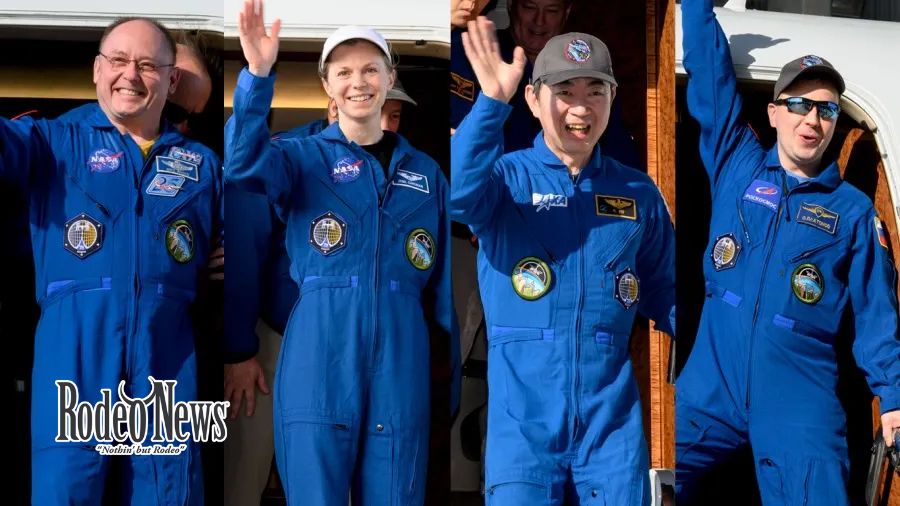
On Jan. 15, Fincke and his crewmates — Cardman, Japanese astronaut Kimiya Yui, and Russian cosmonaut Oleg Platonov — splashed down in the Pacific Ocean off the coast of San Diego aboard SpaceX’s Crew Dragon capsule Crew Dragon Endeavour. Their return came roughly a month ahead of schedule.
Though NASA emphasized the situation was not life-threatening, the decision underscored the logistical and medical challenges inherent in long-duration spaceflight, where advanced diagnostic tools remain limited.
Recovery on Earth
Following splashdown, all four astronauts were assisted out of the capsule on stretchers — standard procedure after extended time in microgravity. They were transported to Scripps Memorial Hospital La Jolla for evaluation.
Fincke expressed gratitude toward medical staff, as well as NASA and SpaceX teams who coordinated the accelerated return.
“Their professionalism and dedication ensured a positive outcome,” he said.
NASA later confirmed that Fincke is recovering well and continuing routine post-flight rehabilitation at Johnson Space Center in Houston.
“Spaceflight is an incredible privilege,” Fincke added. “And sometimes it reminds us just how human we are.”
ISS Left with Skeleton Crew
Crew-11’s early departure temporarily reduced the ISS population to three: NASA astronaut Chris Williams and Roscosmos cosmonauts Sergey Kud-Sverchkov and Sergey Mikayev. The trio maintained essential research operations and station upkeep while NASA and SpaceX worked to expedite the launch of their replacements.
The successor mission, Crew-12, had originally been slated for mid-February. However, joint efforts between NASA and SpaceX advanced the timeline.
On Feb. 13, a Falcon 9 rocket lifted off carrying Crew Dragon Crew Dragon Freedom, restoring the station’s typical seven-member crew complement after a smooth orbital insertion and docking sequence.
The accelerated launch minimized disruption to ongoing scientific research aboard the station, where experiments range from biomedical studies to materials science investigations conducted in microgravity.
A Rare but Managed Scenario
Medical evacuations from the ISS are extraordinarily rare. The station, continuously inhabited since 2000, is equipped to manage common medical issues and stabilize astronauts. However, its medical capabilities do not extend to advanced imaging technologies such as CT scans or MRIs.
NASA maintains contingency protocols for such scenarios, including rapid undocking procedures and coordinated splashdown and recovery operations. The Crew Dragon spacecraft is designed to remain docked at the station for months at a time, effectively serving as a lifeboat in case evacuation becomes necessary.
While officials have not disclosed further details about Fincke’s condition, the agency’s handling of the situation demonstrated the robustness of emergency planning for human spaceflight.
The Human Element of Exploration
Fincke, a veteran astronaut with multiple spaceflights to his name, has long been considered one of NASA’s most experienced spacefarers. His candid acknowledgment of the event offers a rare glimpse into the physical toll space travel can exact — even on seasoned professionals.
Space agencies have increasingly focused on astronaut health as missions grow longer and ambitions expand toward lunar and Martian exploration. Extended stays in microgravity affect muscle density, bone strength, cardiovascular systems, and immune responses. Continuous monitoring and post-flight rehabilitation are integral components of every mission.
Though NASA characterized the January incident as non-emergency, the early return highlights a fundamental reality: even in the controlled environment of orbit, astronauts remain subject to the unpredictability of the human body.
For now, Fincke’s recovery appears to be progressing smoothly. NASA has not indicated any long-term impact on his flight status.
As the ISS continues its operations hundreds of miles above Earth, the episode stands as a reminder that behind the technical precision and engineering marvel lies something profoundly human.
And sometimes, even in space, that humanity demands immediate attention.