Fact-Checking Trump’s State of the Union: Jobs, Gas Prices and War Claims Under Scrutiny
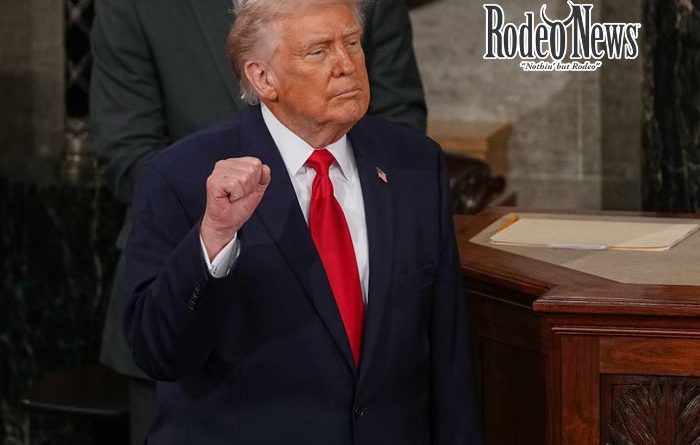
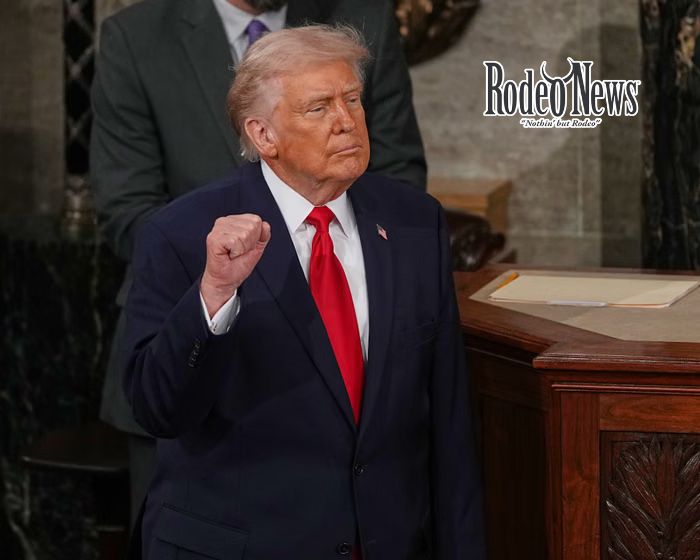
President Donald Trump delivered what became the longest State of the Union address in modern history on Tuesday night, a speech stretching more than one hour and 40 minutes inside the U.S. Capitol.
Framed as a victory lap for the first year of his second term, the address featured sweeping declarations about economic strength, falling energy prices, border security and global peace efforts. But a closer look at publicly available data shows that many of the president’s claims were either exaggerated, misleading or contradicted by official figures.
Here is a closer examination of the most significant assertions made during the speech.
Economy and Jobs: A Record-Breaking Claim That Doesn’t Match the Data
Trump painted a glowing picture of the American economy, declaring the United States “the hottest country anywhere in the world” and asserting that “we have more jobs, more people working today than ever before in the history of our country.”
Employment levels are historically high in raw numbers, largely reflecting population growth over decades. But job growth in 2025 tells a more nuanced story.
Revised figures released by the Bureau of Labor Statistics earlier this month show the United States added approximately 181,000 jobs in 2025. That total is significantly lower than annual job gains seen in most non-pandemic years over the past decade, including during both Trump’s first term and former President Joe Biden’s administration.
While the labor market remains relatively stable, the pace of job creation has slowed compared with previous post-pandemic rebounds. Economists note that moderate job growth can reflect a cooling but still functioning economy — not necessarily collapse, but far from record-setting expansion.
Trump also claimed his administration had secured $18 trillion in investment “pouring in from all over the globe.” However, previous White House tallies included announced pledges and preliminary commitments rather than completed capital expenditures. Publicly listed totals on federal investment tracking pages show substantially lower confirmed figures.
The distinction matters. Announced investments signal business confidence, but they do not always translate into immediate job creation or infrastructure development.
Immigration and Violent Crime: The Case of Iryna Zarutska
During an emotional moment in the speech, Trump introduced the mother of Iryna Zarutska, a Ukrainian woman fatally stabbed on a train in Charlotte, North Carolina last year. The president described the suspect as “a hardened criminal set free to kill in America” who “came in through open borders.”
However, the man arrested and charged in the killing, DeCarlos Brown Jr., is not an immigrant.
The assertion fits within Trump’s broader argument that undocumented immigrants drive violent crime in the United States. Yet multiple academic studies and law enforcement data analyses have consistently found that U.S.-born citizens are more likely to be arrested for violent crimes than undocumented immigrants.
Crime remains a politically potent issue. But criminologists caution against drawing broad conclusions about immigration status and public safety without grounding claims in verified statistics.
Energy Prices: Promises Versus Household Bills
Energy policy featured prominently in the address, with Trump telling lawmakers that Americans are seeing energy prices “going down to numbers like that, they cannot believe it.”
Federal data and utility filings suggest a different trend.
Average household energy bills increased by roughly 6.7% from 2024 to 2025. That rise comes despite Trump’s earlier campaign promise to cut electricity costs in half within his first year back in office.
Since the start of his second term, utility companies across multiple states have raised — or sought regulatory approval to raise — rates significantly. Analysts attribute the increases to a mix of infrastructure upgrades, fuel costs, grid modernization efforts and policy shifts.
The administration has also scaled back or eliminated several federal clean-energy tax incentives enacted in previous years. Critics argue that limiting renewable energy expansion could increase long-term electricity costs, while supporters say deregulation will boost domestic fossil fuel production and lower prices over time.
In addition, administrative restructuring and staffing cuts affected the Low Income Home Energy Assistance Program (LIHEAP), which supports millions of low-income households. While the program was not eliminated, implementation delays have slowed the distribution of aid in some regions.
Gas Prices: Below $2? Not Nationwide
Trump told Congress that gasoline prices are “now below $2.30 a gallon in most states and in some places, $1.99.”
National fuel price trackers show that while some states — particularly in the South — report prices near the $2.30 mark, most states remain above that level. In several Western states, average prices exceed $4 per gallon.
Energy market analysts also point to recent environmental regulatory rollbacks that could create upward pressure on fuel prices over time, depending on refinery costs, global oil supply and seasonal demand.
Gasoline prices remain highly volatile and sensitive to global crude oil markets, geopolitical tensions and refinery capacity constraints — factors largely beyond any single administration’s immediate control.
War and Peace: Counting Ceasefires as “Ended Wars”
Perhaps the most sweeping claim of the night was Trump’s assertion that he had “ended eight wars” within the first 10 months of his second term.
The United States has supported or facilitated several ceasefire agreements and diplomatic accords over the past year. However, foreign policy experts note that not all of these situations were formally recognized wars involving the United States as a combatant.
In some cases, the U.S. acted as a mediator between foreign governments engaged in regional disputes. In others, ceasefires have proven fragile.
For example, a ceasefire agreement between Thailand and Cambodia — hailed by Trump as a diplomatic milestone — broke down within weeks, with fighting resuming and displacing hundreds of thousands of civilians. Longstanding territorial disagreements rooted in colonial-era mapping disputes remain unresolved.
Similarly, while the administration supported efforts toward de-escalation in the Middle East, violence has persisted in several conflict zones despite announced truces.
Diplomacy often unfolds in incremental steps rather than definitive endings. Experts caution that ceasefires, while significant, do not necessarily equate to permanently resolved conflicts.
A Speech Built on Bold Framing
State of the Union addresses traditionally serve as political showcases, blending policy priorities with optimistic framing. Trump’s 2026 speech was no exception — expansive in tone, combative in parts and designed to reinforce his campaign-era themes of economic resurgence, border control and global strength.
But the contrast between rhetoric and verifiable data underscores the enduring tension between political messaging and empirical reality.
As lawmakers applauded and protested in equal measure inside the chamber, the numbers outside told a more complicated story — one of moderate economic growth, rising household costs, contested immigration narratives and fragile diplomatic achievements.
The president’s words projected momentum and dominance. The data, however, suggests a landscape that is steadier, more uneven and far less absolute than the speech portrayed.