Argentina Workers Clash With Police as Senators Debate Labor Reform
BUENOS AIRES, Argentina — Tensions spilled into the streets of Argentina’s capital on Wednesday, as thousands of workers mobilized by powerful trade unions clashed with police outside the nation’s Congress. The confrontations occurred as senators opened debate on a sweeping labor reform bill that has become central to President Javier Milei’s ambitious economic agenda.

Protesters blocked major thoroughfares near the legislative complex, transforming downtown Buenos Aires into a scene of unrest marked by heated confrontations, smoke, and defiance.
Protests Turn Violent Near Congress
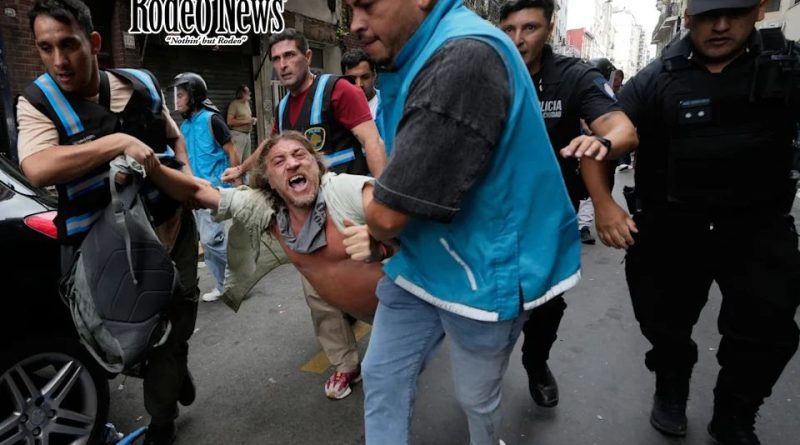
What began as a mass demonstration by trade union members and opposition supporters quickly escalated into clashes with security forces. Police deployed water cannons and fired rubber bullets in an attempt to disperse crowds, while some demonstrators responded by hurling rocks, bottles and Molotov cocktails at law enforcement.
Authorities reported multiple detentions as skirmishes unfolded in the central square outside the legislature. Videos and photos captured by journalists on the ground showed officers and protesters grappling amid clouds of tear gas and barricades of makeshift shields.
The chaotic scenes underscored the intensity of opposition to labor overhauls that critics say would strip key protections from Argentine workers.
What’s at Stake: Labor Reform Bill
Inside the Senate chamber, lawmakers debated a comprehensive overhaul of Argentina’s labor code — a central plank of President Milei’s so‑called “shock therapy” program aimed at loosening what his government describes as rigid and outdated worker protections.
Supporters of the bill argue the reforms would modernize the labor market, stimulate economic growth, and encourage formal employment in a country where a large share of workers are employed informally. Among the measures discussed are easing restrictions on dismissals, lengthening probation periods, and decentralizing collective bargaining negotiations.
However, powerful trade unions and political opponents have framed the reforms as an attack on long‑established rights, warning that they would weaken job security, undercut severance protections, and diminish union influence in collective bargaining.
Unions Mobilize Against Changes
Argentina’s labor movement, historically one of the most influential in Latin America, mobilized its base in force for Wednesday’s protests. The General Confederation of Labour (CGT) — one of the largest union federations — helped coordinate worker participation, alongside other opposition groups concerned about the future of employment rights.
Many demonstrators carried banners calling for the preservation of existing protections and denounced what they see as “austerity measures” that disproportionately affect low‑income and vulnerable workers.
Some union leaders accused the government of seeking to erode hard‑won rights under the country’s long tradition of labor advocacy — a legacy rooted in Peronism that spans back to the mid‑20th century.
Political Context and Senate Debate
The Senate debate — which lasted more than a dozen hours — was marked by fierce exchanges over the direction of Argentina’s economy and the role of the state in regulating employment. Despite the unrest outside, the upper chamber eventually approved the measure in its initial stages, a major step for the Milei administration’s legislative agenda.
The approval cleared the bill’s passage in principle, but it will now move to the lower house of Congress for further consideration. The government is pressing for swift action, arguing that labor reforms are key to attracting investment and reducing persistent unemployment.
Yet opponents warn that the push for deregulation could deepen social divisions and provoke ongoing resistance if worker protections are reduced without adequate safeguards.
Clashes Highlight Social Fault Lines
The clashes in Buenos Aires come amid broader political and economic debates in Argentina — a nation that has grappled with high inflation, sluggish growth and deep fiscal challenges for years. Labor rights remain among the most sensitive and fiercely defended aspects of public policy, and Wednesday’s confrontations revealed just how high the stakes are for both the government and its critics.
For many Argentines, the question of how to balance economic competitiveness with social protections is not only a matter of policy but a core issue of identity and historical struggle. The day’s events have left an indelible mark on the country’s political landscape as lawmakers press ahead while street protests continue to loom large.