Elon Musk Says AI Compute Could Leap to Space Within 36 Months
Elon Musk has outlined a bold vision for the future of artificial intelligence infrastructure, predicting that space could become a more cost-effective environment for AI computing than Earth within the next 30 to 36 months. The comments underscore growing concerns about terrestrial energy and infrastructure constraints and hint at sweeping changes in how advanced computing — and the chips that power it — might be deployed in the years ahead.
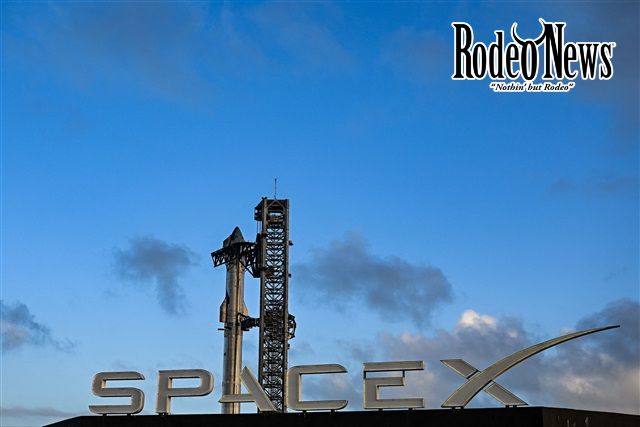
Musk, whose SpaceX recently acquired his other venture, artificial intelligence company xAI, suggests that the limits of power generation and data center infrastructure on Earth will increasingly push innovation beyond the planet’s surface. Combined with SpaceX’s rapid launch capabilities and satellite network, this could lay the groundwork for orbital computing facilities that harness solar energy and avoid traditional constraints on cooling and power.
Why Space for AI?
The constraints facing AI infrastructure on Earth are real and increasingly visible. Modern AI systems — especially large language models and generative frameworks — consume massive amounts of electricity and require dense clusters of high-performance chips such as Nvidia GPUs. While data center operators continue to seek power sources and land for expansion, Musk argues that the long-term economics of AI could ultimately favor space: abundant solar energy, minimal cooling needs, and vast expanses for building out hardware.
This perspective builds on Musk’s recent push to unify his aerospace and AI ambitions. SpaceX’s purchase of xAI — reportedly valued at around $1.25 trillion — now ties together rocket launches, satellite broadband via Starlink, AI research, and social media platforms under a single umbrella. The goal is to leverage this integrated ecosystem to address compute bottlenecks that have hampered traditional data centers.
Infrastructure Limits on Earth
Musk has repeatedly emphasized that the biggest limits on scaling AI are infrastructure, not ambition. Without abundant reliable power and space to build ever-larger data centers, AI developers face bottlenecks that could slow progress. This view echoes broader industry concerns that electricity generation, cooling systems, and land availability are emerging as more binding constraints than chip production alone.
Research and reporting elsewhere highlight that semiconductor supply remains a critical challenge for AI players globally, with companies like Nvidia continuing to make large strategic investments in multiple rivals — including xAI — to scale GPU availability.
SpaceX and xAI: A Combined Future
SpaceX’s acquisition of xAI is central to Musk’s infrastructure vision. By folding the AI startup into the space company, Musk appears to be positioning SpaceX not just as a launch provider but as a comprehensive technology infrastructure firm capable of deploying data centers both on Earth and in orbit. Orbital data centers — long a theoretical concept — would rely on solar power and satellite networks like Starlink to support massive AI compute workloads without many of the constraints terrestrial facilities face.
Analysts note that such a shift could reshape the competitive landscape for AI hardware. Instead of relying on traditional cloud providers and ground-based facilities, SpaceX might offer uniquely scalable and power-efficient options — though technical challenges remain significant, and many experts consider the proposed 2–3-year timeline to be highly ambitious.
Industry Reaction and Skepticism
While Musk’s vision has captured headlines, observers remain cautious. The engineering hurdles — from launching and maintaining hardware in harsh space environments to dealing with radiation shielding and orbital debris — are formidable and could take decades rather than years to overcome. Critics argue that Musk’s timeline may be more aspirational than practical, given the nascent state of space computing infrastructure.
Nonetheless, the blend of aerospace and AI reflected in SpaceX’s strategy highlights a broader industry trend: AI infrastructure is no longer just about processors and algorithms. It’s increasingly about power, space, and the physical networks that underpin global compute capacity.
Looking Ahead
As Musk’s SpaceX begins charting a path toward orbital AI data centers, questions remain about how and when such infrastructure will materialize. Adoption will depend on breakthroughs in space engineering, sustainable power generation, and the economics of launching and servicing hardware beyond Earth’s atmosphere.
But in the short term, Musk’s comments at least solidify a conversation that was once niche within aerospace and tech circles: that the next frontier for computing infrastructure might actually be off the planet.