
New King Arthur Series Embraces Sex, Violence, and Faith in a Bold Reimagining
New King Arthur Series Embraces Sex, Violence, and Faith in a Bold Reimagining
A new Arthurian saga is arriving with little interest in playing it safe.
The Pendragon Cycle: The Rise of Merlin, set to premiere on The Daily Wire on January 22, 2026, offers a gritty origin story that blends myth, faith, sensuality, and brutality in a way few modern fantasy series attempt. Billed as “not the Camelot you know,” the show rewinds the legend to its earliest roots, focusing on Merlin, his father Taliesin, and a young Arthur long before the sword and the crown.

The first two episodes were released early to VIP subscribers and members of the press, signaling confidence from The Daily Wire in a project that clearly knows its audience—and is unapologetic about it.
A Fantasy With Clear Ideological DNA
Because The Rise of Merlin comes from The Daily Wire, expectations are unavoidable. This is not a lavish HBO-style epic in the mold of Game of Thrones, nor does it chase the modern fantasy trend of broad cultural reinterpretation. Instead, the series leans into a worldview rooted in Christian symbolism, traditional masculinity, and historical authenticity over contemporary inclusivity.

That approach will resonate strongly with some viewers and alienate others. Those looking for a faith-infused retelling of Arthurian legend will find plenty to appreciate. Viewers uncomfortable with overt religious themes or a cast chosen for historical plausibility rather than modern representation may prefer fantasy offerings elsewhere.
Conservative Fantasy—But Not Tame
Despite its ideological foundation, The Rise of Merlin is far from restrained.
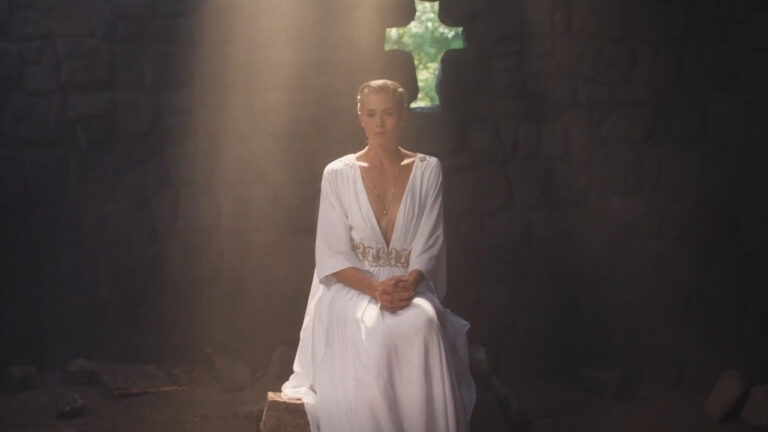
The series does not shy away from violence, nor does it avoid sensuality. Characters such as Charis and Morgain are portrayed with deliberate allure, framed through carefully designed costumes and suggestive cinematography. Intimacy is implied rather than explicit, striking a balance that feels intentional rather than prudish.
This restraint paradoxically gives the show a sharper edge. Battles are brutal, betrayals sting, and emotional wounds linger. The result is a series that feels adult without relying on shock value for its own sake.
Strong Performances, Uneven Rhythm
Performance-wise, the cast shows promise. Emree Franklin’s Morgain stands out, capturing a slow-burning bitterness that anchors much of the emotional conflict. The romantic and supernatural storylines move at a pace dictated by the two hour-long episodes, creating moments of genuine momentum.

However, that pace is also the show’s biggest weakness.
The series attempts to compress a dense narrative—adapted from Stephen Lawhead’s Pendragon Cycle novels—into a limited runtime. Political relationships, regional factions, and mythological references are sometimes introduced without sufficient context. Viewers unfamiliar with the source material may find themselves momentarily lost, particularly during early mentions of groups like the Cymry or the visually striking but initially confusing scenes set in Atlantis.
Too Fast, Then Too Slow
Ironically, while some storylines feel rushed, others linger too long.
Several dramatic scenes stretch beyond their emotional impact, tipping into melodrama. Heightened performances, anguished declarations, and extended pauses occasionally give the series a soap-opera quality that disrupts immersion. The tonal imbalance suggests a show still finding its rhythm.
That said, these flaws feel less like fatal missteps and more like growing pains for an ambitious first season.
A Clear Vision, For Better or Worse
The Pendragon Cycle: The Rise of Merlin will not be for everyone—and it doesn’t try to be.
What it offers instead is a confident, ideologically consistent fantasy series that embraces its influences rather than diluting them. It is masculine, spiritual, violent, and sensual in equal measure, carving out a niche that modern fantasy television rarely occupies.
For viewers seeking a traditional Arthurian tale filtered through faith and grit, this may be one of the more intriguing premieres of the year. For others, its worldview alone will be reason enough to look elsewhere.
Either way, The Rise of Merlin announces itself loudly—and without apology