Thailand Escalates Attacks on Cambodia as ASEAN Ceasefire Effort Falters
Amid mounting international calls for peace, Thailand has intensified its military actions against Cambodia, including heavy shelling and airstrikes on civilian areas, despite hopes for a ceasefire before the ASEAN-mediated talks.
The latest escalation comes just one day before the highly anticipated meeting of the Joint General Border Committee (GBC) in a bid to discuss a ceasefire. In a clear display of strength before peace talks, Thai forces targeted the Cambodian border provinces, with Poipet City, one of Cambodia’s busiest border hubs, suffering some of the heaviest bombardment.
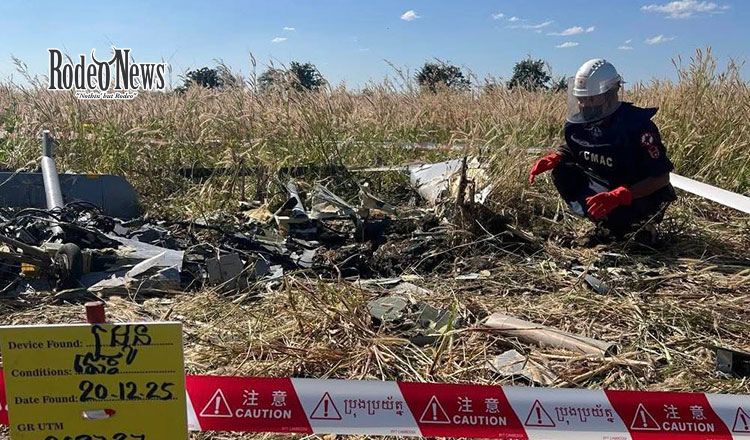
Shelling and Airstrikes Continue
Yesterday, Thai forces launched a series of artillery shellings on Poipet, particularly striking densely populated areas such as Kon Damrei in Nimit commune and Stoeng Bot village. The attacks continued throughout the day, including aerial bombings by Thai F-16 jets, which dropped multiple bombs on civilian zones in Preah Vihear province.
According to Lieutenant General Maly Socheata of Cambodia’s Ministry of National Defence, between 10:38 a.m. and 3:25 p.m., Thai military units fired artillery shells and conducted aerial strikes across various civilian sites in Poipet, Banteay Meanchey province. These attacks killed 21 Cambodian civilians and left 83 others injured, further displacing over half a million people from their homes since the violence erupted on December 7.
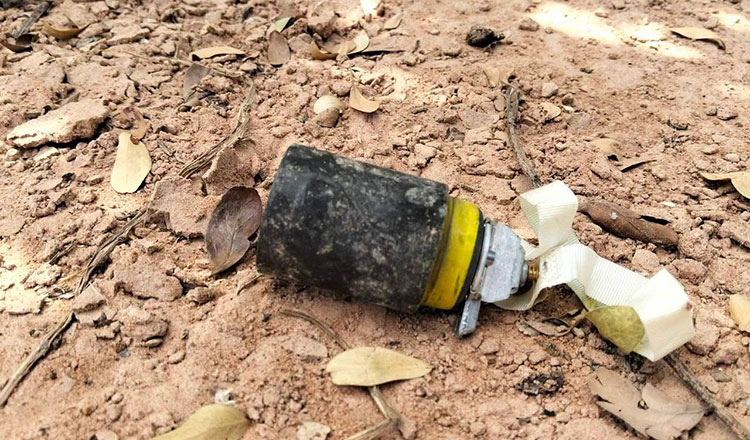
Cluster munitions fired by the Thai army into Cambodia. CMAC
While Thailand continues to defend its position by insisting that Cambodia must first declare a “sincere and verifiable” ceasefire, the international community, including the US and the European Union, has condemned the attacks, urging an immediate halt to hostilities.
ASEAN Efforts at Peace Fail
The latest round of violence casts doubt on ASEAN’s ability to mediate a peaceful resolution. Both Cambodia and Thailand had previously agreed, during a Special ASEAN Foreign Ministers’ meeting in Kuala Lumpur, to convene a General Border Committee meeting today. However, disagreements over the venue have complicated the process. Thailand has insisted on holding the talks in Chanthaburi province, while Cambodia requested the meeting take place in Kuala Lumpur, citing ongoing security concerns due to the escalating border violence.
Since the fighting began, Thailand has rejected multiple ceasefire proposals. Despite these efforts, including calls from US President Donald Trump, the situation remains tense, and the conflict shows little sign of abating.
Humanitarian Crisis Deepens
The humanitarian impact of the conflict is severe. The Cambodian Ministry of Interior reported that nearly 550,000 people have been displaced, including 286,992 women and 175,057 children. Thousands of homes, schools, hospitals, and government buildings have been destroyed or severely damaged.
The shelling has also resulted in widespread infrastructure damage, including bridges, roads, and markets. The Cambodian government has called on the international community to increase monitoring and humanitarian support for those affected by the ongoing violence.
Diplomatic Tensions Heighten
Amid the escalating violence, US President Donald Trump publicly criticized Thailand’s actions, stating that the country was responsible for restarting the conflict after both sides signed the Kuala Lumpur peace accord in late October. In a press conference, Trump acknowledged the long-standing tensions between Thailand and Cambodia, suggesting that the situation required urgent resolution.
In response, Thai Prime Minister Anutin Charnvirakul denied claims that Thailand had initiated the conflict, asserting that Thailand’s actions were in retaliation for the Cambodian invasion. He emphasized that Thailand sought to protect its sovereignty and was committed to resolving the dispute through direct negotiations, despite international calls for a ceasefire.
ASEAN’s Role in Mediating Peace
The ASEAN Foreign Ministers’ meeting ended with a statement calling for continued efforts to end hostilities and a return to the 1991 Cambodia-Thailand Joint Declaration for peace. ASEAN remains committed to acting as a neutral facilitator, with the Philippines, which will assume the ASEAN chairmanship in January 2026, offering to mediate peace talks between the two nations.
Cambodian Foreign Minister Prak Sokhonn reiterated his country’s dedication to peace, emphasizing that Cambodia had respected the ceasefire despite repeated violations by Thailand. He also highlighted the need for ASEAN to uphold its credibility by promoting peaceful resolutions to regional conflicts.
Conclusion: A Long Road to Peace
The situation on Cambodia’s border with Thailand remains dire, with civilians bearing the brunt of the violence. While diplomatic efforts continue, both countries face immense pressure from the international community to cease hostilities. As the ASEAN-mediated peace talks approach, hopes for a lasting resolution hinge on the willingness of both sides to genuinely pursue peace.