Thailand claims F16 strikes respect ‘relevant international laws, with the highest priority placed on preventing harm to civilians.’
The Royal Thai Air Force (RTAF) has issued a formal clarification in response to recent airstrikes on Cambodian targets, asserting that the operations complied with international law and were conducted with the utmost priority on civilian protection. The strikes, which took place in the aftermath of escalating military actions in Cambodia, have been controversial following reports of civilian casualties, including at least three individuals injured during the attacks.
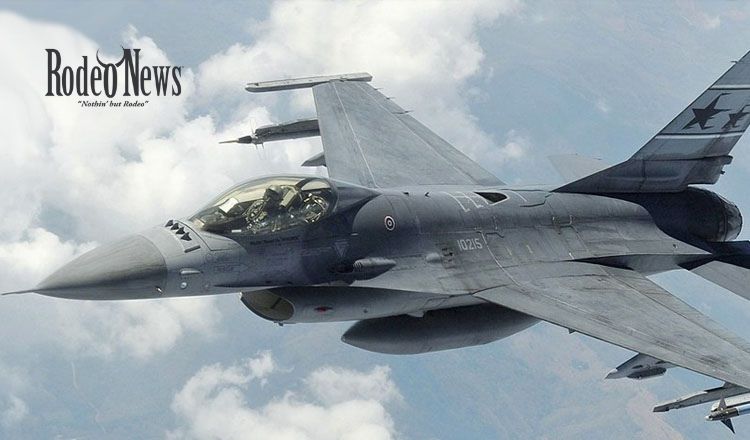
File image of a Royal Thai Air Force F16. WikiMedia
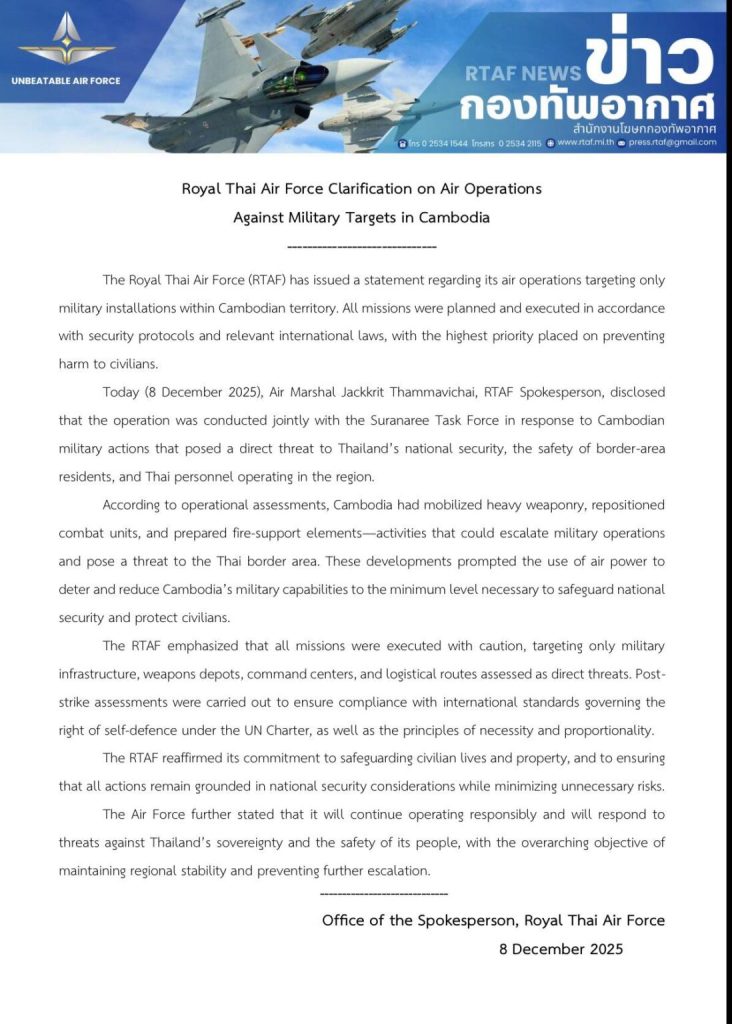
In a statement released on December 8, 2025, Air Marshal Jackkrit Thammavichai, the RTAF spokesperson, emphasized that all military actions were executed in full adherence to established security protocols and international legal frameworks, including the UN Charter. According to the RTAF, the operations targeted only military infrastructure, combat units, and other military assets directly threatening Thailand’s national security.
The clarification follows a series of F-16 fighter jet airstrikes, which were carried out jointly with the Suranaree Task Force, in response to what the Thai military described as direct threats posed by Cambodia’s military actions near the Thai border.
Assessing the Threat and the Need for Action
The Thai Air Force outlined in its statement that Cambodia’s military had recently mobilized heavy weaponry and repositioned troops along the border, raising concerns of potential escalation. According to the RTAF, these actions were viewed as direct threats to both the security of Thailand’s border areas and the safety of Thai personnel stationed in the region.
In response, the Thai military resorted to air power, using F-16 fighter jets to disable military targets that were deemed essential to Cambodia’s combat readiness, such as weapons depots and command centers. While emphasizing the necessity of these actions, the RTAF also reiterated that the goal was not to escalate the conflict but to minimize Cambodia’s military capabilities to prevent any potential harm to Thailand and its citizens.
“Each mission was meticulously planned, with strict protocols in place to avoid harm to civilians,” the RTAF statement explained. “We are fully committed to safeguarding the lives and property of civilians while defending Thailand’s sovereignty.”
Emphasis on International Legal Standards
The Thai Air Force has also taken steps to assure both domestic and international observers that all operations complied with international laws governing armed conflict. According to the RTAF, the missions adhered to the principles of necessity and proportionality, key elements of the international humanitarian law that aims to limit the effects of warfare on civilian populations.
Post-strike assessments were reportedly conducted to ensure compliance with international standards. The Air Force confirmed that these assessments showed that the operations were consistent with Thailand’s right to self-defense, as enshrined in the UN Charter.
“The Royal Thai Air Force has always prioritized the protection of innocent lives. These operations were no different, and we acted to protect our citizens and maintain national security,” Air Marshal Thammavichai remarked.
Ongoing Commitment to Regional Stability
Looking ahead, the RTAF emphasized its ongoing responsibility to respond to threats to Thailand’s sovereignty while promoting stability in the region. The statement underscored that the Air Force would continue to operate with caution and restraint, focusing on minimizing risks and avoiding unnecessary escalation.
“The overarching objective remains to protect Thailand’s security and the safety of our people, while ensuring regional stability and peace,” the RTAF said.
Despite the clarification, concerns remain over the potential long-term impact of these strikes on relations between Thailand and Cambodia. While both nations have expressed a desire to avoid further conflict, the recent military actions highlight the ongoing tensions in the region, particularly along the porous border shared by the two countries.
As the situation evolves, the international community will be closely watching to ensure that the principles of international law are upheld, and that civilian lives remain protected in any future military engagements.