Pete Hegseth Invokes ‘Fog of War’ as Backlash Grows Over Strikes on Caribbean Boats
US Defense Secretary Pete Hegseth is facing a surge of bipartisan criticism after defending a controversial pair of US military strikes on an alleged drug‑smuggling vessel in the Caribbean Sea — an operation now under congressional investigation and raising fresh questions about the legality of American force in international waters.
The incident, which initially occurred in September, has become a flashpoint in Washington as the Trump administration weighs deeper military engagement in Latin America, including possible operations targeting sites inside Venezuela. The timing has amplified the political stakes as lawmakers, military officials, and legal experts debate whether the actions could amount to a violation of international law or even a war crime.
Trump Backs Hegseth Amid Intensifying Scrutiny
Speaking during a televised cabinet meeting at the White House, President Donald Trump offered full support for his defense chief, praising Hegseth’s performance and framing the operation as part of a broader crackdown on narcotics trafficking.
“He’s doing a great job,” Trump said, before emphasizing what he described as an uncompromising approach to maritime drug interdiction. “I want those boats taken out. And if we have to, we’ll attack on land also — just like we attacked at sea.”
The White House confirmed earlier this week that a second strike did occur, though Trump said he had not yet received a full briefing on the details. “To me it was an attack,” he said. “I wasn’t involved. I knew they took out a boat.”
Hegseth Cites “Fog of War” and Distances Himself From Second Strike
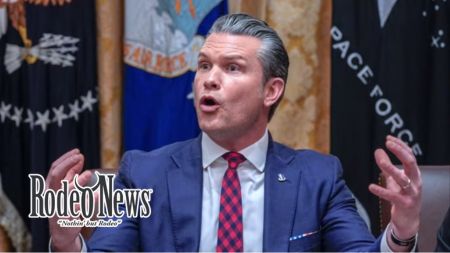
Hegseth, a former Army officer and television host, defended the operation before reporters and cabinet officials, invoking the “fog of war” — a phrase typically used to describe the confusion inherent in battlefield conditions.
According to Hegseth, he personally watched the initial strike, which killed nine people suspected of being involved in drug trafficking. But the defense secretary claimed he did not witness the second strike, carried out against the same vessel after two survivors were spotted in the water.
He said that the follow‑up attack was ordered by Admiral Frank Bradley, who leads the Joint Special Operations Command, insisting that Bradley “made the right decision” based on the situation at the time.
“I did not personally see survivors,” Hegseth said. “The thing was on fire… this is called the fog of war. This is what you in the press don’t understand.”
But critics argue that the circumstances of the second strike — targeting individuals who may no longer have posed a threat — could fall outside what is permissible under the laws of armed conflict. The Pentagon has declined to release footage of the operation, fueling further suspicions on Capitol Hill.
Congress Launches Dual Investigations
Lawmakers from both major parties have demanded answers, and the House and Senate Armed Services Committees have opened inquiries into how the strike was conducted and who authorized the second round of fire.
Senator Elissa Slotkin, a Michigan Democrat and former Pentagon official, accused Hegseth of sidestepping responsibility by attributing the decision to Admiral Bradley. “At the Pentagon, the buck stops with the secretary of defense. Period,” she said. Slotkin has also urged the Pentagon to release full video of the strike.
On the Republican side, Senate Majority Leader John Thune defended President Trump’s authority to order such missions but declined to say whether he had confidence in Hegseth — an omission that has raised eyebrows among defense analysts.
The investigations come as lawmakers are increasingly concerned about the administration’s willingness to expand military operations in the hemisphere, particularly amid rising tensions with Venezuela’s government under President Nicolás Maduro.
A History of Controversy for Hegseth
Hegseth, who has built a political profile through high‑visibility commentary and outspoken views on military policy, has long criticized what he sees as excessive restrictions on US troops during combat operations.
During Trump’s first term, he successfully pushed the president to pardon several service members accused or convicted of war crimes in Iraq and Afghanistan — decisions that stirred debate inside the Pentagon about discipline and rules of engagement.
More recently, Hegseth was embroiled in a separate controversy following the disclosure of sensitive operational details in a Signal messaging group that included top administration officials and a journalist. The fallout led to the resignation of National Security Adviser Michael Waltz earlier this year.
“Since Signalgate back in the spring, Secretary Hegseth’s leadership has been a distraction from the critical missions of our military,” Senator Slotkin said, renewing calls for greater accountability.
A Critical Moment for US Policy in Latin America
The growing turmoil around Hegseth’s leadership comes as Washington reassesses its military posture in the region. US surveillance and interdiction efforts in the Caribbean have expanded over the past year, driven by concerns that criminal networks are exploiting maritime routes as political instability deepens in parts of Latin America.
But the legal parameters governing such missions remain complex — especially when operations occur in international waters and involve suspected criminals rather than armed combatants.
Defense analysts warn that the controversy could complicate future US actions in the region and may limit the administration’s ability to rally congressional support for broader security initiatives.
For now, Hegseth remains defiant, the White House remains supportive, and Congress is demanding answers — setting the stage for a high‑stakes debate over the boundaries of American military power and the accountability of those who wield it.