China-Japan Tensions Over Taiwan Escalate: What’s Behind the UN Dispute?
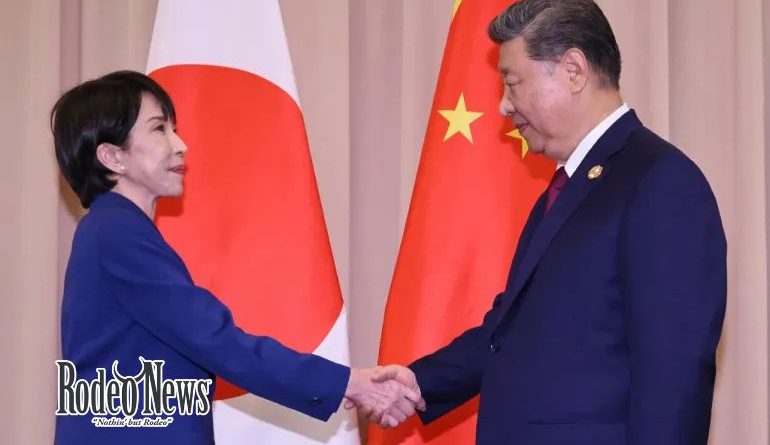
In the wake of escalating diplomatic tensions, China has taken its dispute with Japan to the United Nations, drawing global attention to the simmering conflict over Taiwan. The diplomatic row, sparked by Japanese Prime Minister Sanae Taikachi’s comments on Taiwan, has quickly spiraled into a broader trade and security crisis, severely affecting relations between the two East Asian powers. This article delves into the core of the dispute, tracing its roots, the military and trade repercussions, and its wider implications for international relations.
The Spark: Japan’s Controversial Comments
The tensions began on November 7, 2023, when Japanese Prime Minister Sanae Taikachi addressed Japan’s position on Taiwan during a parliamentary session. Responding to an opposition politician’s question about a hypothetical Chinese blockade or military action against Taiwan, Taikachi said that Japan would be compelled to intervene if Taiwan’s security were threatened. The remarks were notably more assertive than previous Japanese statements on Taiwan, which had typically focused on concern without detailing potential military involvement.
Taikachi’s comments were met with an immediate backlash from Beijing. China, which views Taiwan as a part of its territory, has consistently opposed any international support for Taiwan’s self-governance. China’s government quickly summoned Japan’s ambassador to protest the statement, demanding a retraction. However, Taikachi, who had only recently assumed office, refused to back down, leading to heightened diplomatic tensions.
A Trade War in the Making
What initially began as a diplomatic spat has rapidly expanded into a trade conflict. On November 14, 2023, China issued a no-travel advisory for Japan, directly targeting the tourism sector. The Chinese government’s move was seen as a punitive response, as Japan had been a popular destination for Chinese tourists, with more than 7.5 million Chinese visitors recorded in 2023. The following day, Chinese airlines began offering refunds for flights to Japan, further escalating the tension.
China also took aim at Japan’s education sector, warning Chinese students about rising anti-Chinese sentiment in Japan. While it is unclear if the violence against Chinese nationals was politically motivated, the growing fear of xenophobia has added to the strained relations.
The Military Dimension: Territorial Disputes and Military Posturing
In addition to the diplomatic and economic fallout, the China-Japan spat has triggered renewed concerns over security. Both countries claim sovereignty over the Senkaku/Diaoyu Islands in the East China Sea, an area rich in resources and strategically important for both. The Chinese coastguard recently patrolled the disputed waters, prompting Japan to condemn what it termed a violation of its territorial sovereignty.
The situation in the East China Sea is just one facet of the broader military tensions. Japan’s decision to even consider a military response to a potential Chinese attack on Taiwan has sent shockwaves through the region. Analysts have raised concerns that any escalation could draw in other powers, including the United States, Japan’s closest ally.
The UN Involvement: A Global Stage for the Dispute
On November 17, 2023, the situation reached a new level when China’s permanent representative to the United Nations, Fu Cong, submitted a letter to UN Secretary-General António Guterres, warning of the dire consequences if Japan were to intervene in Taiwan. Fu’s letter was a clear signal that China intended to take its concerns to the global stage. In it, Fu described any attempt by Japan to involve itself in the Taiwan issue as “an act of aggression,” emphasizing China’s firm stance on the issue of Taiwan’s sovereignty.
This move to the UN marks the intensifying nature of the dispute, which has now broadened beyond bilateral tensions to one that may have international implications. For Japan, the issue is not just about Taiwan but also its regional role and its commitment to democratic values.
Symbolism and Defiance: The Meeting in Beijing
Diplomatic exchanges continued, with senior diplomats from both sides meeting in Beijing on November 18, 2023. In a dramatic display of defiance, Liu Jinsong, a senior Chinese diplomat, chose to wear a five-buttoned collarless suit associated with the 1919 May Fourth Movement, a Chinese student-led rebellion against Japanese imperialism. This sartorial choice was widely interpreted in the Japanese media as a symbolic act of defiance.
The tensions were further underscored by the conduct of the meeting. Liu reportedly kept his hands in his pockets throughout the discussions, a gesture considered disrespectful in Chinese diplomatic circles. While these symbolic gestures may seem trivial, they reveal the deep-rooted historical animosities between the two nations.
The Historical Context: A Legacy of Conflict
The history of Sino-Japanese relations is long and fraught with conflict. Japan’s occupation of China during the late 19th and early 20th centuries, followed by the brutal Second Sino-Japanese War (1937-1945), left a lasting scar on China’s national psyche. Though Japan and China normalized relations in 1972, the historical bitterness persists, particularly over the issue of Taiwan.
Since the end of World War II, Japan has followed a policy of strategic ambiguity when it comes to Taiwan. While Japan formally acknowledges the “One China” policy, it has maintained unofficial relations with Taiwan, including strong economic ties. This ambiguous stance has created uncertainty about how Japan would respond if China were to take military action against Taiwan.
The Trade Stakes: Economic Consequences for Both Nations
Trade between China and Japan is critically important for both economies. China is Japan’s second-largest trading partner, and Japan exports a wide range of goods, including industrial equipment, semiconductors, and automobiles. In 2024, Japan is expected to export around $125 billion worth of goods to China. For China, Japan is a major source of technology and industrial equipment, with Japan’s imports from China totaling about $152 billion in 2024.
The current trade disruptions, especially in the tourism and seafood sectors, are already being felt by businesses on both sides. Japanese seafood exporters, in particular, are concerned about the long-term impact of China’s trade restrictions.
China has previously retaliated against Japan with trade measures, including suspending the export of rare earth materials in 2010 following a diplomatic row. In 2023, Beijing also imposed a temporary ban on Japanese food imports in response to Japan’s handling of the Fukushima nuclear disaster, although that ban was lifted just before the recent flare-up in tensions.
Conclusion: The Road Ahead
As the China-Japan dispute over Taiwan continues to unfold, the prospects for resolution appear slim. The diplomatic standoff, economic sanctions, and military posturing are all signs of a deepening divide that threatens to reshape East Asian geopolitics. The United Nations’ involvement further internationalizes the issue, making it a point of global concern.
The history of Sino-Japanese relations, marked by territorial disputes and military conflict, looms large over the current tensions. For Japan, balancing its security concerns, economic interests, and regional commitments will be increasingly difficult as the situation develops. As for China, the Taiwan issue remains a core national priority, and its stance on the matter is unlikely to soften.
With both nations doubling down on their positions, the coming months could determine whether this dispute will escalate further or eventually de-escalate into diplomacy. For now, the path ahead remains uncertain, with no signs of a breakthrough in sight.