Trump Threatens Military Action Against Nigeria Over Alleged Christian Persecution
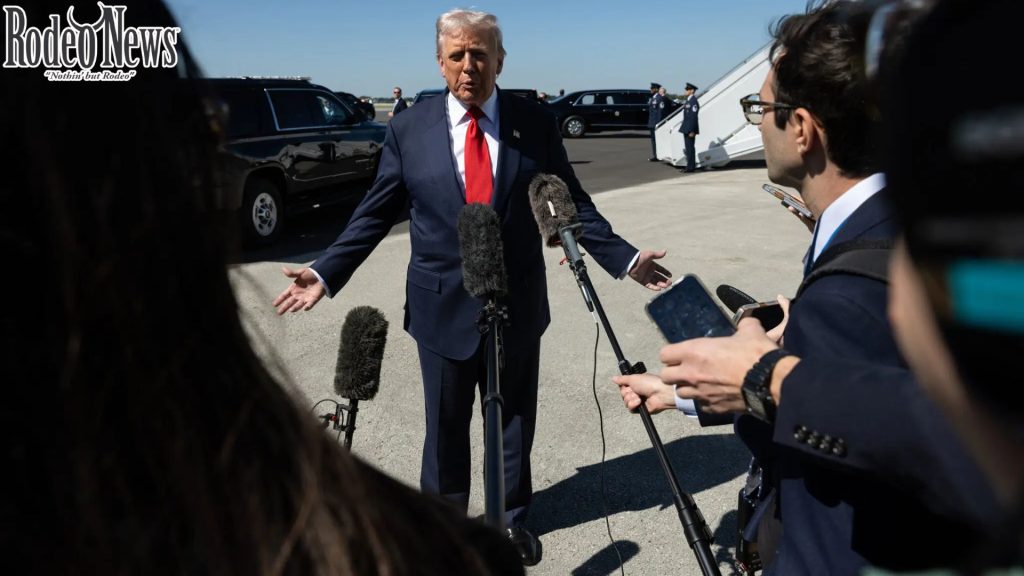
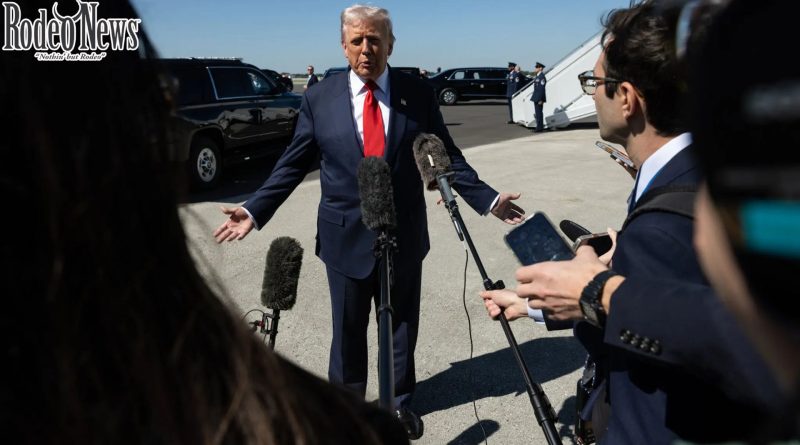
Former U.S. President Donald Trump has escalated his rhetoric toward Nigeria, announcing in a social-media post that he has instructed the U.S. defense apparatus to prepare for possible military action unless the Nigerian government moves decisively to stop what he described as the “killing of Christians.”
He declared that the U.S. will immediately cease all aid and assistance to Nigeria and warned that American forces may enter the country “guns-a-blazing” to wipe out Islamist extremist groups if the violence continues.
The warning comes as Nigeria, Africa’s most populous country, faces multiple security challenges — including insurgency by Boko Haram, clashes between herders and farmers, and communal-religious violence. Despite these complications, the Nigerian government dismissed the allegation that it is tolerating religious persecution, reaffirming that the constitution protects freedom of faith
The U.S. will immediately halt all foreign aid to Nigeria if Christian killings persist.
The Pentagon (referring to a “Department of War” terminology) is to prepare for operations in Nigeria targeting extremist groups.
Nigeria, labelled a “now disgraced country” in his remarks, has been accused of permitting extremist attacks on Christians while the government allegedly fails to act.
Nigeria’s Response
The government of Nigeria under President Bola Ahmed Tinubu responded firmly: it rejects the characterization of religious persecution and reiterated its commitment to protecting citizens irrespective of faith.
Analysts note, however, that religious and ethnic violence in Nigeria often involves complex factors of land, resource conflicts and governance breakdown — not solely religious identity.
Geopolitical Stakes
This standoff has broader implications:
The prospect of U.S. military intervention in a sovereign African nation marks a significant escalation, raising questions about international law, diplomatic norms, and U.S. foreign-policy precedent.
Nigeria’s strategic position — rich in oil, Africa’s most populous state, with growing ties to China in infrastructure and mineral development — means that pressure from Washington may prompt Abuja to deepen non-U.S. alliances.
Foreign Policy
The move also signals potential changes in U.S. aid-conditionality and how Washington frames human-rights and religious-freedom standards in its bilateral relations.
Risks and Considerations
Even if no direct military invasion follows, such threats can destabilise diplomatic relations, damage Nigeria’s global standing, and provoke retaliatory or alliance shifts.
An actual intervention in Nigeria would be logistically complex, ethically fraught and may provoke large-scale civilian harm given the country’s size and internal fragmentation.
From Nigeria’s perspective, perceived U.S. bullying could strengthen nationalist narratives, complicate internal conflict resolution, and erect barriers to cooperation.
For the U.S., public threats alone may undermine credibility if not backed by action — or could trap the U.S. into unexpected commitments.
What Happens Next
Nigeria’s government is likely to issue further clarifications, possibly mobilise diplomatic channels, and emphasise internal reform efforts.
The U.S. Congress may become involved, particularly if aid is officially suspended or new sanctions are introduced.
Other global powers (such as China and Russia) may use this moment to expand influence in Nigeria or across West Africa, especially in security and infrastructure sectors.
Close observers will watch for any military deployment indicators, Pentagon statements, or bilateral dialogue between Washington and Abuja.
In summary, Donald Trump’s threat to Nigeria marks a dramatic pivot in U.S.-Africa relations — blending religion, military posture and strategic leverage. Whether this evolves into actual military engagement or remains rhetorical pressure, the ripple effects on Nigeria’s internal politics and on the broader geopolitical landscape are likely significant