Trump Orders U.S. to Resume Nuclear Weapons Testing
U.S. President Directs Restart of Nuclear Weapons Testing
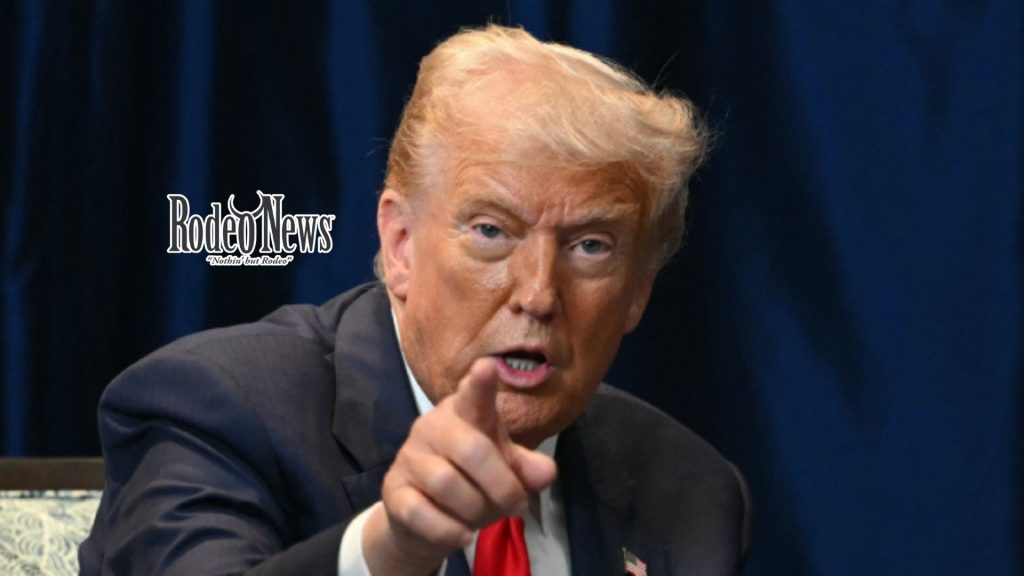
Donald Trump announced that he has instructed the United States Department of Defense (Pentagon) to begin testing nuclear weapons, saying the United States must act “on an equal basis” with rivals such as China and Russia.
The statement came just minutes before Trump opened a summit with Chinese leader Xi Jinping in South Korea.
Channels Television
Context: What the Statement Means
It is not clear whether the directive refers to:
actual nuclear warhead detonations — the last such U.S. test was in 1992.
or testing of delivery systems (missiles, rockets) capable of carrying nuclear warheads.
If warhead testing, this would mark a major reversal in U.S. nuclear-test policy. Between 1945 and 1992 the U.S. carried out over 1,000 nuclear tests; the last was in September 1992 at the Nevada site.
Channels Television
Why This Matters
The U.S. has been a signatory to the Comprehensive Nuclear‑Test‑Ban Treaty (CTBT), which bans all nuclear explosions for both civilian and military purposes since 1996.
Trump’s announcement signals heightened tension in nuclear-capable rivalry, particularly with China and Russia. The move is described as a response to what the U.S. sees as testing programs by other countries.
According to the International Campaign to Abolish Nuclear Weapons (ICAN), nine countries currently possess nuclear weapons, with Russia owning about 5,500 warheads and the U.S. about 5,044.
International and Diplomatic Reactions
China urged the United States to “earnestly abide by the obligations of the Comprehensive Nuclear-Test-Ban Treaty… and take concrete actions to safeguard global nuclear disarmament.”
The ambiguity of the announcement—when, where and how testing will proceed—adds to global concern and unpredictability. Trump said that the testing would “begin immediately,” but kept specifics vague.
What’s Next?
Key questions remain:
Will the U.S. resume underground nuclear warhead detonations?
How will existing treaties be affected or circumvented?
What will be the responses from China, Russia and other nuclear-armed states?
How will global arms control regimes adapt or fracture under this shift?
In Summary
President Trump’s directive to resume nuclear weapons testing signals a significant policy pivot for the U.S., driven by emerging threats and rival capabilities in China and Russia. With treaty obligations and global arms control frameworks under strain, the announcement raises urgent questions about the future of nuclear stability worldwide