
Germany’s Politics of Compromise Faces Existential Test Under Merz
Published: October 22, 2025
Berlin — For decades, Germany’s postwar democracy rested on a carefully balanced tradition: compromise. Coalitions were not just routine — they were the foundation. Every major policy was hashed out in backrooms, debated in committee chambers, and slowly ushered into law with the consent of multiple parties. But that hallmark of German governance is now under siege.
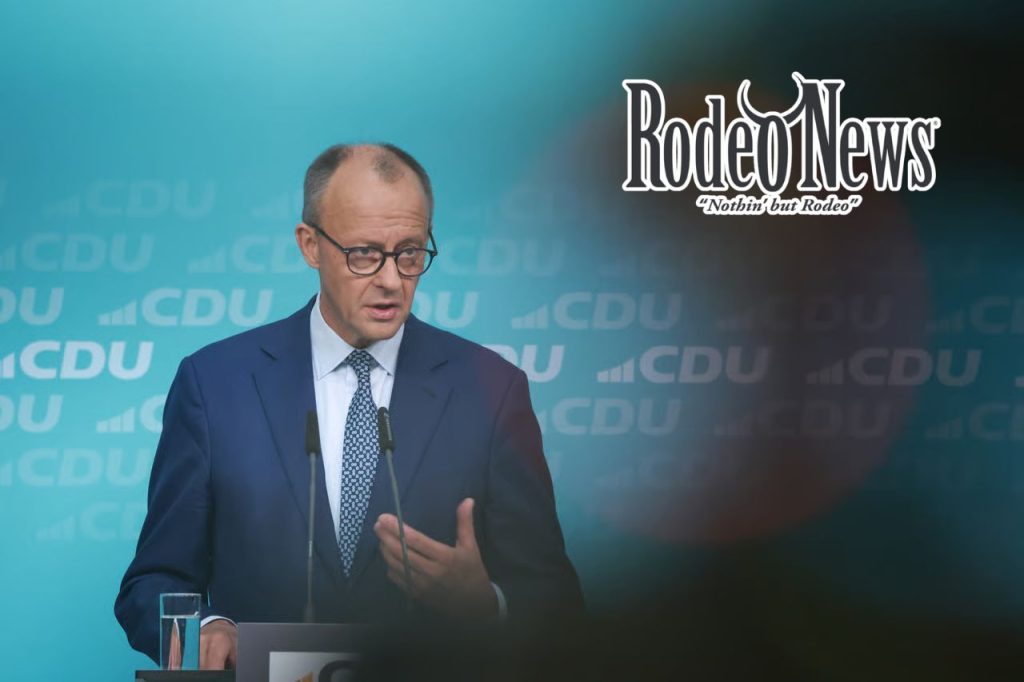
As Chancellor Friedrich Merz steers his coalition through a storm of internal dissent and growing public frustration, many are questioning whether Germany’s cherished model of consensus politics can survive in today’s polarised political landscape.
A Legacy of Checks and Balances — Now Fractured
Since the founding of the Federal Republic in 1949, Germany’s political system was engineered to avoid the centralisation of power. Every decision passed through rigorous checks — cabinets, parliaments, courts — in a deliberate and often slow-moving dance designed to prevent dominance by any one party or ideology.
Yet that patience-driven governance model now finds itself at odds with an era that favours fast, decisive — and often divisive — action. Across Europe, liberal democracies are struggling to reconcile the need for deliberation with the demand for speed. In Germany, that tension is acute.
Merz’s Balancing Act
Chancellor Merz, head of the center-right Christian Democratic Union (CDU), assumed power earlier this year after a bruising election campaign. His coalition is smaller than anticipated and deeply fragmented — a far cry from the stability many voters had hoped for after the collapse of the previous “traffic light” coalition between the Social Democrats (SPD), the Greens, and the Free Democrats (FDP).
Instead of unity, Merz has inherited infighting and disillusionment. And the pressure is coming from all sides — including his own.
In a telling television interview, Merz defended the compromises his government has made: “I am no longer the representative of the CDU. I am the representative of the government.” The message was clear — leadership in a coalition requires negotiation. But for a growing number of voters and commentators, that nuance no longer satisfies.
A Culture of Dispute Replaces Quiet Diplomacy
Coalition politics in Germany were once marked by discretion — debates occurred behind closed doors, and deals were quietly struck. But in today’s media ecosystem, particularly in the age of social media, loud disagreement often eclipses measured consensus.
Take the recent row over military service reform. Although both CDU and SPD largely agree on its reintroduction, public arguments over procedural details spiraled into a political spectacle. Similar scenes have played out on issues from immigration to welfare — symbolic of a broader transformation in how German politics is conducted.
Even long-held parliamentary norms are beginning to erode. Over the summer, CDU lawmakers threatened to block the appointment of a Constitutional Court judge amid a far-right media backlash. Though the candidate eventually withdrew, the episode marked an unprecedented break in protocol — and a signal that Germany’s political decorum may be fraying.
Populism on the Rise
Behind this turbulence looms a more ominous threat: the growing strength of the far-right Alternative for Germany (AfD). Still polling strongly, the AfD is projected to make major gains in several 2026 state elections — including a potential outright majority in Saxony-Anhalt.
The party’s appeal lies in its simple, uncompromising messaging. Promises to slash immigration, abandon climate regulations, and centralise power offer an alluring contrast to the CDU’s slow-moving consensus politics.
It’s a shift that mirrors global trends. Just as former U.S. President Donald Trump bulldozed traditional checks and balances in the name of action, a portion of the German electorate now wonders why their leaders can’t do the same.
The Price of Progress
Merz’s government has begun rolling out what it calls an “autumn of reforms,” tackling military policy, budget allocations, and digital infrastructure. Yet rather than being praised for progress, ministers face daily criticism — not only from opponents, but from within the coalition itself.
It’s an ironic twist. The very compromises necessary to keep the government functioning are being interpreted as failures of leadership. And as each policy becomes a flashpoint, the larger project of preserving democratic consensus grows ever more fragile.
A Test of Democratic Will
Germany’s political architecture was built to endure — with layers of oversight, legal constraints, and power-sharing arrangements designed to guard against extremism and authoritarianism. But the durability of the system depends on a cultural commitment to compromise.
That’s what’s at stake now.
The challenge for Merz is not merely to pass legislation. It’s to re-establish the legitimacy of deliberative politics itself — to prove that compromise is not weakness, but wisdom. And in doing so, to remind Germans that democracy was never meant to be easy — only worth it.