US-Australia Critical Minerals Deal Highlights Western Lag Behind China
A landmark agreement signed between the United States and the Commonwealth of Australia marks a major effort to shore up the West’s supply of critical minerals — yet, it also underscores how far behind the West remains in relation to China’s dominance in the sector.
Deal Basics
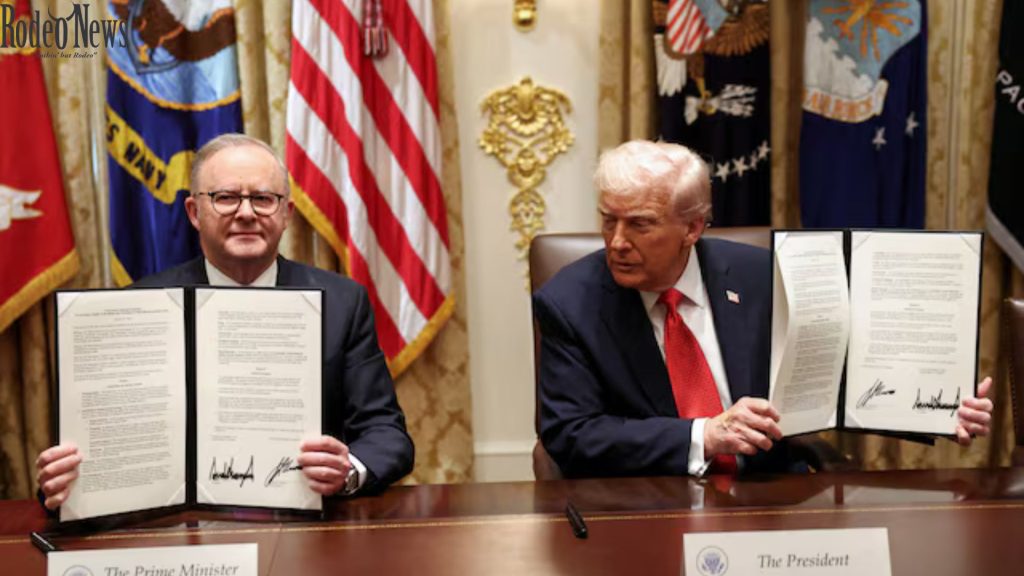
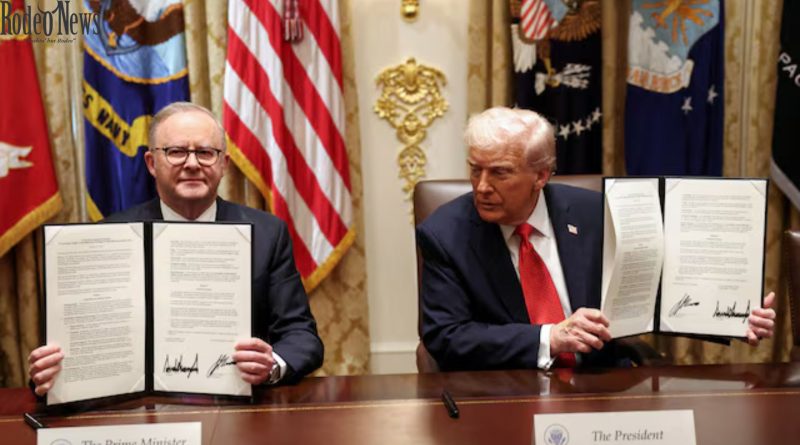
On October 21, 2025, the U.S. President and the Australian Prime Minister inked a pact that aims to channel up to US $8.5 billion into projects focused on mining, refining and processing metals vital for defence, advanced manufacturing and the clean-energy transition.
Under the arrangement, the U.S. Export-Import Bank has issued seven letters of interest totalling roughly US $2.2 billion toward specific Australian projects.
Key recipients include:
- Arafura Rare Earths, which is building a mine in Australia’s Northern Territory.
- Sunrise Energy Metals, developing a scandium project and a nickel-cobalt venture in New South Wales.
- Alcoa Corp, planning to build a gallium plant alongside its alumina refinery in Western Australia — a facility that could produce up to 10 % of the global gallium supply, a semiconductor-critical metal.
Why It Matters — And Why It’s Still Small
China’s dominance in refined critical minerals is enormous. It produces around:
- 90 % of global refined rare earths
- Over 90 % of graphite.
- Just under 80 % of cobalt
- Nearly 70 % of lithium.
And when including Chinese indirect control of Indonesia’s nickel refining, China effectively controls about 70 % of refined nickel
The deal is significant because it signals Western governments are stepping up efforts — and capital — to reduce dependence on Chinese-controlled supply chains. However, industry delegates at the major mining conference International Mining & Resources Conference in Sydney cautioned that the deal is more of a starting block than a finish line. One delegate compared the situation to a 400-metre race: “China is already three-quarters around the track, the West is still at the blocks.”
Even with investment, creating new mines and processing/refining capacity outside China is both time- and resource-intensive. Moreover, Western producers face higher cost bases — it will take years before they can offer competitive pricing relative to Chinese counterparts.
To make non-Chinese supply chains viable, the West may have to provide strong incentives: royalty deferrals, tax breaks or tariffs on Chinese-sourced materials.
The Big Picture
- This deal is a first step, not a silver bullet. It’s a marker of new momentum, but the scale of the challenge is vast.
- China isn’t sitting still. With established production and refining infrastructure, it remains the benchmark and dominant force for critical minerals.
- For Western industries — from defence to electric vehicles — sourcing secure, diversified supplies means building everything from upstream mines to mid- and downstream refining and recycling.
- Success will require sustained public-private partnerships, favourable policy frameworks, and patience — returns may come over years, not months.
What’s Next
- Monitor how quickly the Australian-based projects move from interest letters to production and refinement.
- Watch for policy moves (tax, royalties, tariff measures) that aim to tilt competitiveness in favour of non-Chinese supply.
- Keep an eye on China’s responses — whether ramping up capacity further, diversifying its downstream processing or using its dominance as a strategic lever.
- Evaluate how this deal influences global companies’ procurement strategies and whether more such deals emerge with other trusted mining jurisdictions.
This agreement between the U.S. and Australia offers important momentum — but it also confirms: when it comes to critical minerals, the West has a long way to run to catch up.