Starship Flight 11 Hits Key Milestones in Return, Re-Entry & Landing Performance
SpaceX has successfully completed its eleventh integrated flight test of Starship, marking a significant stride in its quest for a fully reusable launch system. The mission, launched from Starbase, Texas, delivered a set of critical test outcomes in both ascent and return phases.
Booster Returns & Splashdown Success
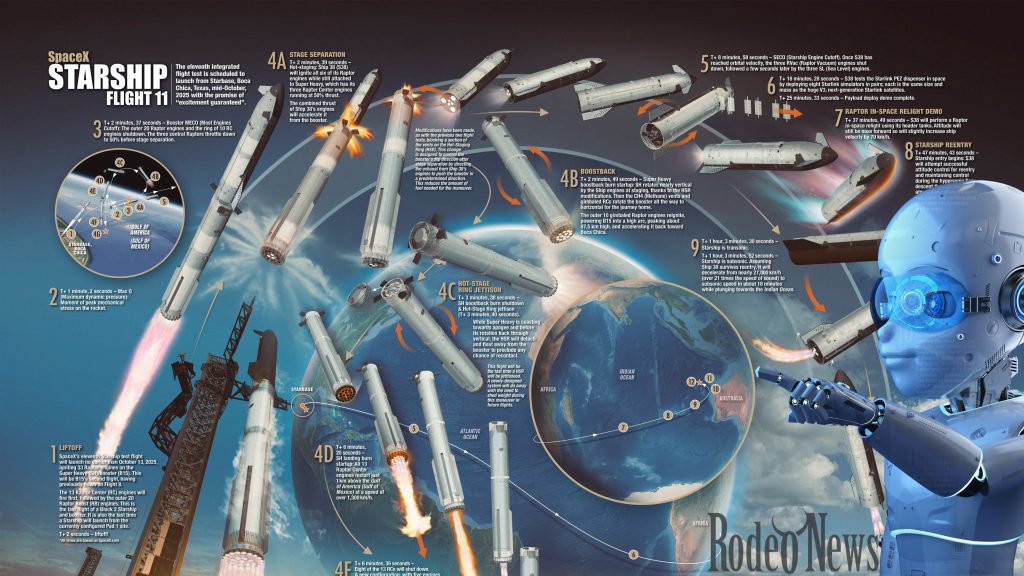
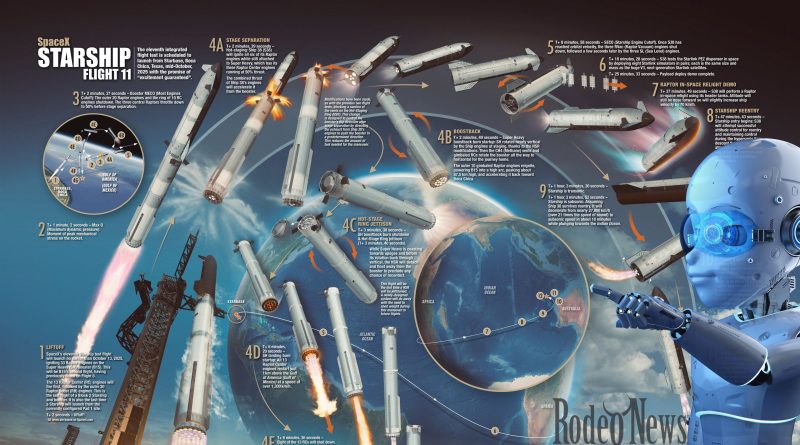
The Super Heavy booster executed a controlled boostback burn and guided itself toward a soft splashdown in the Gulf of Mexico. This achievement confirms continued progress in booster return guidance and recovery operations.
Re-Entry and Heat Shield Performance
Meanwhile, the Starship upper stage remained in orbit to undertake a rigorous atmospheric re-entry test. It probed both aerodynamic control and thermal protection systems under real flight conditions. Early reports indicate that stability improved, the Raptor engines were further refined, and the heat shield endured as expected through the high-energy descent.
Precision Landing in the Ocean
For the first time in the program, Starship performed a precision landing burn and touched down intact in the Indian Ocean. This successful landing demonstrates enhanced control authority and guidance accuracy during the critical final approach.
What This Means for Starship Development
Each of these milestones brings SpaceX one step closer to its goal of fully reusable, high-cadence orbital operations. The data harvested from Flight 11 will feed directly into upcoming mission planning, vehicle refinements, and system upgrades, especially for lunar and Mars mission variants.
As Starship’s capabilities mature, it also opens the door for broader collaborations, novel payload integrations, and deeper-space access—supporting NASA’s Artemis program and future commercial exploration.
If you like, I can also produce a shorter version, a version for social media, or variant angles (e.g. technical deep dive). Which would you prefer next?