Canada’s Jeremy Hansen Gears Up for Historic Artemis II Mission to the Moon
October 10, 2025
Canadian astronaut Jeremy Hansen is on the brink of making history. After more than two years of rigorous training, Hansen is set to become the first non-American astronaut to travel beyond low Earth orbit when he joins NASA’s highly anticipated Artemis II mission in early 2026.
The 10-day lunar flyby, scheduled to launch as early as February 2026, will mark humanity’s first crewed journey toward the Moon in over five decades. The mission will not land on the lunar surface but will loop around it — a critical step toward returning astronauts to the Moon later this decade.
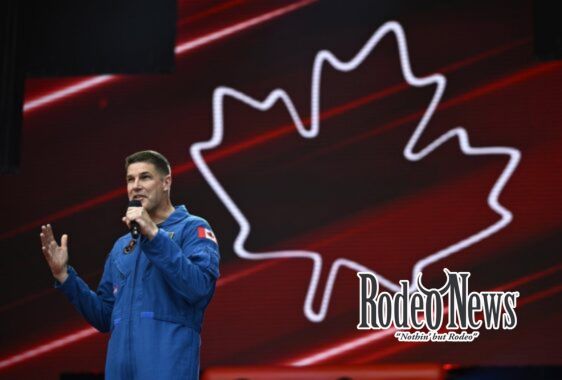
“I know that after I launch and come back, I’m going to miss what I’m doing right now,” Hansen, 49, said in a recent interview. “There’s just so much energy, preparation, and excitement.”
A Compact Mission With High Stakes
The Artemis II mission, while relatively short in duration, presents a complex set of challenges. Unlike the six-month expeditions common aboard the International Space Station (ISS), the Artemis crew will spend just 10 days in space — but every hour will count.
“This is a condensed, high-pressure mission,” said Reid Wiseman, Artemis II commander and a veteran NASA astronaut. “It’s not about long-term science experiments like on the ISS. It’s about execution, performance, and resilience.”
Joining Wiseman and Hansen aboard the Orion spacecraft are pilot Victor Glover and fellow mission specialist Christina Koch. The quartet will live and work inside a tightly packed capsule with just 330 cubic feet of habitable space — roughly equivalent to two minivans.
NASA and the Canadian Space Agency (CSA) have outlined an intensive daily schedule that includes navigation tests, equipment assessments, and communication drills. With no room for error, every task is choreographed down to the minute.
A Mission of Historic Firsts
The Artemis II flight isn’t just a technological milestone — it’s also a powerful symbol of international cooperation and human progress.
If successful, Hansen will become the first non-American astronaut to venture beyond low Earth orbit. His colleague, Victor Glover, will be the first person of color to do so, and Christina Koch the first woman.
“This is a mission that’s breaking new ground in more ways than one,” said Mathieu Caron, director of life sciences and space medicine at the CSA. “And it reflects the diversity and collaboration that modern space exploration is built on.”
Hansen, who joined the Canadian astronaut corps in 2009, has spent the past two-and-a-half years immersed in mission-specific training, including simulations, technical instruction, and team-building exercises.
Meanwhile, fellow Canadian astronaut Jenni Gibbons has been appointed as Hansen’s backup. Gibbons, who hails from Calgary, will also serve as the mission’s CAPCOM — the liaison between the spacecraft and mission control.
Culinary Innovation in Orbit
Feeding astronauts in space requires both creativity and precision. The Artemis II team will dine on a carefully curated menu of rehydratable and thermostabilized meals — meals packed in metallic pouches instead of traditional cans, which are deemed too heavy for deep space travel.
In a nod to Hansen’s homeland, five uniquely Canadian foods will join him in space: pure maple syrup, maple cookies, smoked salmon bites, shrimp curry with rice, and a nutrient-dense super-seed cereal.
“It’s important for astronauts to feel connected to home,” said Natalie Hirsch, project manager for operational space medicine at the CSA. “These food items offer both nutrition and cultural significance.”
Fitness in Microgravity
Despite the tight quarters, physical fitness remains a priority. A compact flywheel system designed specifically for the Orion capsule will allow astronauts to perform both resistance and cardio exercises in space.
Hansen, who stands at 6-foot-2, will have to navigate the challenge of working out in a confined environment. “Yeah, Canada did get more than its fair share of the volume on this mission,” he joked at a press conference. “I’m getting a little self-conscious about my size.”
But the seriousness behind the joke is real. In microgravity, maintaining muscle and bone strength is essential, especially for a mission that pushes the boundaries of current human spaceflight.
Moon and Back — A Personal Mission
As the mission nears, the excitement isn’t limited to space agencies. Across Canada — particularly at CSA headquarters just outside Montreal — the buzz is tangible.
“It’s an incredible moment for our country,” said Caron. “This isn’t just about reaching the Moon. It’s about Canada’s role in the future of space exploration.”
Hansen will carry with him small half-moon pendants inscribed with “moon and back,” each adorned with the birthstones of his family members — a personal touch that underscores the emotional weight of the mission.
Looking ahead, Artemis III is expected to land astronauts on the Moon’s surface — including a woman and a person of color — no earlier than mid-2027. Artemis IV will follow, with plans to begin assembling the Gateway, a small space station that will orbit the Moon and support future missions. Canada’s contribution: the next-generation Canadarm3.
For now, Hansen remains focused on the immediate goal: a safe and successful journey beyond Earth’s orbit and back — and making history for Canada in the process.