Golden State Valkyries Rally to Beat Atlanta Dream 68-64 in WNBA Finals Game 1
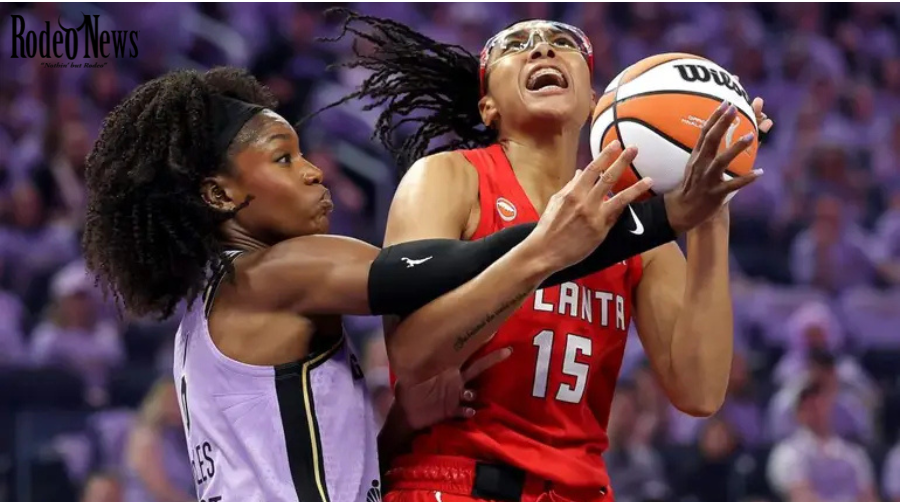
The Golden State Valkyries opened the 2026 WNBA Finals with a hard-fought 68-64 victory over the Atlanta Dream on October 17, delivering a dramatic finish in front of their home fans at Chase Center in San Francisco. Gabby Williams led the way with 26 points, including crucial free throws in the closing moments that secured the Valkyries’ first win of the championship series.
The victory gave Golden State a 1-0 advantage in the best-of-seven WNBA Finals. It also demonstrated the team’s ability to recover from a difficult start, withstand Atlanta’s defensive pressure and execute when the game was on the line.
The Atlanta Dream entered the series after sweeping the New York Liberty in the semifinals. Meanwhile, Golden State advanced after eliminating the defending champion Las Vegas Aces. Both franchises are pursuing their first WNBA championship, making every game an important step toward a historic achievement.
With Game 1 decided by just four points, the opening contest offered an early indication that this year’s Finals could become a tightly contested battle between two determined teams.
Golden State Valkyries Secure a Dramatic Game 1 Victory
The Golden State Valkyries did not enjoy a comfortable start against Atlanta. The Dream established an early rhythm, attacked the basket effectively and created problems for a Golden State offense that struggled to find its shooting touch.
Atlanta finished the opening quarter with a 22-14 advantage. Angel Reese played a significant role in that early momentum, scoring 11 points on 5-of-6 shooting during the first period.
Golden State, meanwhile, struggled from long range. The Valkyries missed their first eight three-point attempts before Kaitlyn Chen finally connected from beyond the arc. Her shot helped spark a run that changed the atmosphere inside Chase Center.
Despite their early difficulties, the Valkyries remained competitive. Their defensive intensity improved, their offensive movement became more effective, and Williams began to find opportunities to attack.
The turning point came during the second quarter, when Golden State produced a powerful offensive stretch to take control of the game.
Rather than allowing Atlanta to extend its advantage, the Valkyries responded with greater urgency. They finished the first half with a 42-39 lead, turning an eight-point first-quarter deficit into a three-point advantage at halftime.
That comeback established the foundation for the rest of the contest. However, neither team managed to create significant separation after the break, setting up a tense finish.
Gabby Williams Delivers a Career-Defining Performance
Gabby Williams emerged as the decisive player in Game 1, finishing with a game-high 26 points in 33 minutes.
Her performance was particularly impressive because she endured a difficult opening quarter before taking over in the second period. Williams went scoreless in the first quarter, missing all four of her field-goal attempts. Instead of allowing those early struggles to affect her confidence, she responded with one of the game’s most important individual performances.
Williams scored 16 points in the second quarter alone, helping Golden State transform its offensive fortunes.
She attacked the basket, found opportunities in transition and converted a critical three-pointer during the Valkyries’ comeback. Her defensive activity also helped generate momentum, including a steal that led to a fast-break basket.
The 16-point quarter tied for the third-highest scoring total by an individual player in a quarter in WNBA Finals history, according to the Valkyries’ official recap.
Williams continued to contribute throughout the second half, even as Atlanta increased its defensive pressure. Her ability to remain composed during the closing minutes ultimately made the difference.
With Golden State trailing 64-61 late in the fourth quarter, Williams helped bring the team back within one point before stepping to the free-throw line in the final stages.
She converted two free throws with 1:18 remaining to put the Valkyries ahead. Later, with 4.1 seconds left, she made two more to secure the 68-64 victory.
Williams finished the afternoon as the game’s leading scorer and the clear centerpiece of Golden State’s offensive effort.
Her performance highlighted the importance of resilience in championship basketball. A slow start did not prevent her from becoming the player who determined the outcome.
How the Valkyries Overcame Atlanta’s Early Advantage
Golden State’s comeback was not simply the result of one player’s scoring. The team also made important adjustments after Atlanta controlled the opening minutes.
The Dream initially found success by attacking the paint and taking advantage of Golden State’s shooting struggles. Reese established an early presence near the basket, while Allisha Gray and Rhyne Howard helped Atlanta maintain offensive pressure.
The Valkyries responded by tightening their defense and limiting Atlanta’s efficiency.
Golden State also benefited from contributions off the bench. Chen’s timely three-pointer helped end the team’s early shooting drought, while her five consecutive points contributed to a first-quarter run that briefly put the Valkyries ahead.
The second quarter became the decisive stretch of the first half. Williams scored repeatedly, and Golden State capitalized on transition opportunities to move in front.
The Valkyries entered halftime leading 42-39 after outscoring Atlanta 28-17 in the second quarter.
However, Golden State’s offense slowed dramatically after the break. The team scored only nine points in the third quarter, allowing Atlanta to regain the advantage.
The Dream entered the fourth quarter ahead 56-51, placing Golden State under significant pressure.
Instead of abandoning its defensive approach, the Valkyries continued to compete possession by possession. That persistence proved essential when Atlanta struggled to score during the final minutes.
Golden State ultimately finished the game with a 68-64 victory despite shooting just 32.1 percent from the field. The result illustrated how defensive execution, rebounding and late-game free throws can compensate for an inconsistent shooting performance.
Atlanta Dream Fall Short Despite Strong Individual Performances
The Atlanta Dream had several opportunities to win Game 1 but could not maintain their early advantage.
Allisha Gray led Atlanta with 19 points after returning from an injury to her left ring finger, which had caused her to miss the final two games of the team’s semifinal series against New York.
Gray remained an important offensive option, but Golden State made her work for nearly every basket. She finished 5-of-19 from the field, limiting her overall efficiency.
Reese recorded a double-double with 14 points and 12 rebounds. Her strong opening quarter helped Atlanta establish early control, but Golden State adjusted defensively as the game progressed.
Reese did not make another field goal after the first quarter, according to the Valkyries’ official recap. That change significantly affected Atlanta’s ability to maintain its early offensive rhythm.
Howard added 12 points but struggled with her shooting, finishing 3-of-14 from the field.
Jordin Canada contributed eight points, seven assists and five rebounds. She also made an important mid-range jumper late in the fourth quarter, helping Atlanta remain in front during the closing stages.
Nevertheless, the Dream were unable to produce the baskets needed to close out the game.
Atlanta scored only eight points in the fourth quarter after managing 17 points in each of the second and third periods. The team missed several late opportunities, including a three-point attempt by Gray with nine seconds remaining.
The final stretch underscored the difficulty of closing out a Finals game against a team that continues to defend aggressively under pressure.
Golden State’s Defense Makes the Difference
The Golden State Valkyries demonstrated that defensive execution could be just as important as scoring in a championship series.
Atlanta finished with 64 points while shooting 32.8 percent from the field. The Dream also made just four of 25 attempts from three-point range, a 16 percent conversion rate.
Golden State’s defense disrupted Atlanta’s shooting rhythm and limited opportunities for easy baskets.
Kiah Stokes played an important role around the basket, recording four blocks and providing additional resistance against Atlanta’s interior offense.
Her defensive presence was especially valuable against Reese, who had established herself as a threat during the opening period. As the contest continued, Golden State became more effective at contesting shots and forcing difficult decisions.
The Valkyries also won the rebounding battle. They finished with 41 rebounds compared with Atlanta’s 35, including a 12-7 advantage in offensive rebounds.
Those extra possessions helped Golden State remain competitive despite its shooting struggles.
The Valkyries also committed fewer turnovers, finishing with eight compared with Atlanta’s 12. In a game decided by four points, limiting mistakes helped preserve opportunities to score.
Although Golden State did not dominate every statistical category, its defensive discipline and ability to protect possessions provided a clear advantage during the decisive moments.
The Final Minutes Decide WNBA Finals Game 1
The fourth quarter delivered the tension expected from a championship matchup.
Atlanta entered the period with a five-point lead and appeared positioned to take the opening game. The Dream continued to apply defensive pressure, forcing Golden State to work for scoring opportunities.
With just over three minutes remaining, Atlanta led 64-61 after Howard converted two free throws.
Williams then drove toward the basket and scored a layup to pull Golden State within one point at 64-63.
The next possessions became increasingly important. Atlanta had opportunities to extend its lead but failed to convert several attempts. Golden State, meanwhile, remained within striking distance despite its own offensive limitations.
Williams converted two free throws with 1:18 remaining to give the Valkyries a lead they would not surrender.
Atlanta continued searching for a response, but missed shots prevented the Dream from regaining control. Stokes added a free throw to help increase Golden State’s advantage, and the Valkyries maintained their composure during the final possessions.
With 4.1 seconds remaining, Williams returned to the line and made both free throws. Her final pair of successful attempts established the four-point margin and effectively ended Atlanta’s comeback hopes.
The finish reflected a familiar principle of playoff basketball: when field goals become difficult to find, free-throw accuracy and decision-making can determine the result.
Golden State did not need a spectacular offensive finish. It needed a few successful possessions, reliable execution and enough defensive resistance to prevent Atlanta from answering.
Williams supplied the crucial points, and the Valkyries completed the comeback.
What the Game 1 Result Means for the 2026 WNBA Finals
The Golden State Valkyries entered the Finals seeking their first championship after an impressive postseason run. Their victory over Atlanta gives them an early advantage in a series that could define the franchise’s young history.
Golden State also maintained its unbeaten home record during the playoffs, adding further significance to the opening result.
However, the 68-64 scoreline suggests that the series is unlikely to be decided easily. Atlanta showed that it could pressure Golden State defensively, control portions of the game and exploit early weaknesses.
The Dream will likely focus on improving their fourth-quarter offense and creating more efficient opportunities for Gray and Howard. They will also need to find ways to maintain Reese’s early impact throughout the game.
For Golden State, the priority will be sustaining its defensive intensity while generating more consistent offense. The Valkyries cannot necessarily depend on Williams scoring 26 points every night, particularly if the team’s perimeter shooting remains inconsistent.
Contributions from the supporting cast could become increasingly important as the series develops.
Stokes’ rim protection, the team’s rebounding advantage and the ability of players such as Chen to provide timely scoring will remain valuable factors.
The next game offers Atlanta an immediate opportunity to respond. Because the Finals follow a best-of-seven format, one defeat does not determine the championship outcome.
Nevertheless, winning the opening game provides Golden State with momentum and reinforces the value of its home-court advantage.
Game 2: Atlanta Must Respond Quickly
Game 2 is scheduled for Monday, October 19, at Chase Center in San Francisco, where the Valkyries will again benefit from their home crowd.
Atlanta will attempt to even the series before the matchup progresses further. A stronger start could help the Dream avoid the pressure of playing from behind, while improved shooting efficiency would give them a better chance of controlling the final quarter.
Golden State, meanwhile, will look to build on its opening victory and establish a 2-0 advantage.
The Valkyries will need to maintain their defensive pressure while finding more reliable ways to score beyond Williams’ individual production. Their performance in Game 1 showed that they can win without efficient team shooting, but repeating that formula may prove difficult.
The Dream’s response will also test their ability to recover from a narrow postseason defeat. Their opening-quarter performance demonstrated their offensive potential, and a more complete game could change the direction of the series.
With both franchises pursuing their first WNBA championship, Game 2 carries considerable importance.
Final Takeaway: The Valkyries Win the Opening Battle
The Golden State Valkyries secured a memorable 68-64 victory over the Atlanta Dream in Game 1 of the 2026 WNBA Finals, powered by Gabby Williams’ outstanding 26-point performance and a determined defensive effort.
Golden State recovered from an early deficit, took control in the second quarter and survived a difficult third period before delivering the decisive plays in the closing minutes.
Atlanta demonstrated its ability to compete but could not convert enough late opportunities to protect its lead.
The result gives Golden State a 1-0 advantage in the championship series, but the larger challenge remains ahead. The Dream have an opportunity to respond in Game 2, while the Valkyries will aim to protect their home court and move closer to their first title.
If the opening game is any indication, the 2026 WNBA Finals could be defined by defense, resilience and the ability to execute under pressure.
Related reading: Follow the official WNBA news and playoff coverage for game recaps, scores and championship updates.