Bleached Coral Recovery: 5 Breakthrough Facts
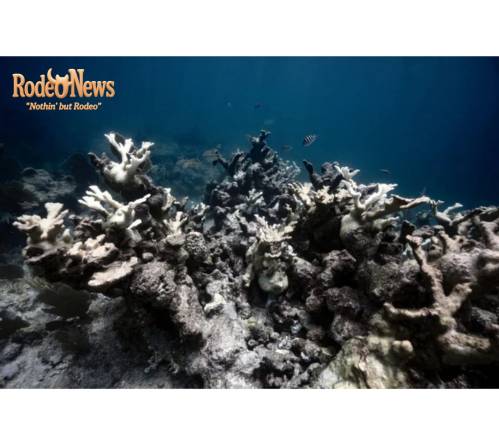
Bleached coral recovery may be possible much faster than scientists previously expected. Researchers at Stanford University have demonstrated that severely bleached coral fragments can recover within seven weeks after coming into contact with healthy, genetically identical coral. The discovery offers a promising new direction for coral reef restoration as rising ocean temperatures threaten marine ecosystems worldwide.
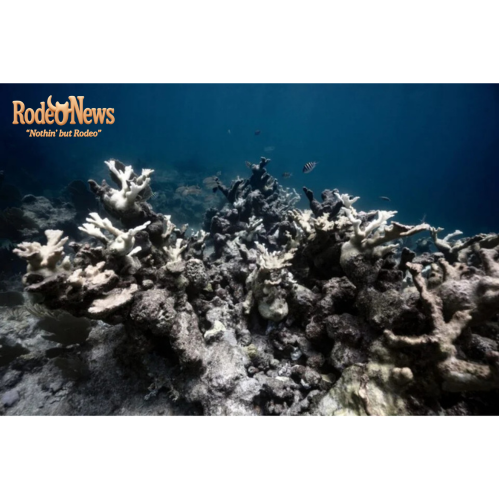
The study, published in Science Advances on October 14, 2026, reveals how healthy coral can help damaged coral regain its beneficial microscopic algae. These algae provide much of the energy corals need to survive, grow and maintain their characteristic colors.
The research is particularly significant because coral recovery following severe bleaching can take months or even years. Some corals never recover, especially when high temperatures persist or repeated bleaching events leave insufficient time for regeneration.
However, the Stanford findings come with an important qualification. The experiment took place under controlled laboratory conditions, and the technique depends on coral fragments being genetically identical. Scientists must conduct further research before determining whether the approach can be applied effectively across large, damaged reefs.
Here are five important facts about the discovery, how the process works and what it could mean for the future of coral conservation.
1. Bleached Coral Recovery Happened in Just Seven Weeks
The most striking finding is the speed at which the damaged coral recovered.
In the Stanford experiment, researchers assembled 10 pairs of coral fragments belonging to the same species, Pocillopora damicornis. Each pair included one healthy fragment and one severely bleached fragment.
Five pairs were placed in direct physical contact. The remaining five pairs were positioned a few millimeters apart, allowing scientists to compare recovery between the two groups.
The results revealed a substantial difference.
The bleached fragments that touched healthy coral recovered within seven weeks. By contrast, the bleached fragments kept separate from their healthy counterparts died during the experiment.
The result suggests that direct contact can provide something that damaged coral may struggle to obtain quickly enough from its surrounding environment.
Ordinarily, a bleached coral must regain sufficient populations of its beneficial symbiotic algae to resume normal energy production. Under favorable conditions, recovery can happen naturally, but the process may be slow.
The Stanford method appears to accelerate this biological process by allowing healthy coral to transfer algae and nutrients directly to a damaged neighbor.
Nevertheless, the experiment involved a limited number of coral pairs under controlled conditions. Larger studies will be needed to determine how consistently the approach works across different coral species, environmental conditions and levels of bleaching damage.
Even with those limitations, the results provide a compelling starting point for developing faster coral restoration methods.
2. Healthy Coral Can Transfer Life-Supporting Algae
To understand why the experiment worked, it is necessary to understand the relationship between coral animals and the microscopic algae living inside their tissues.
Many reef-building corals depend on symbiotic algae known as Symbiodiniaceae. These algae use sunlight to produce energy-rich compounds through photosynthesis, supplying much of the energy that their coral hosts require.
In return, the algae receive shelter and access to nutrients within the coral’s tissues.
This relationship supports the growth of individual corals and helps sustain the complex reef ecosystems that provide habitat for numerous marine species.
However, when ocean temperatures become too high, the relationship can break down.
Under heat stress, corals may expel their symbiotic algae or lose the algae and their pigments. Their tissues become pale or white, creating the condition known as coral bleaching.
A bleached coral is not necessarily dead. However, the loss of its principal energy source leaves it vulnerable to starvation, disease and additional environmental stress.
The Stanford research identified a potential way to restore this relationship more quickly.
Using microscopic imaging, the researchers observed that healthy and bleached coral fragments could fuse their tissues when they were genetically identical. Tiny channels formed between the connected tissues, allowing beneficial algae and nutrients to pass from the healthy fragment into the damaged one.
The transferred algae then began establishing themselves within the bleached coral.
This finding suggests that coral tissue fusion may serve as a biological pathway for delivering the resources necessary for recovery.
3. Coral Recovery Begins Before the Damaged Fragment Regains Its Color
Another important finding concerns how quickly the recovery process begins.
The Stanford team observed that beneficial algae started moving into bleached coral within approximately three days of contact with a healthy counterpart.
After around five days to one week of contact, some fragments had received enough algae to continue recovering independently.
The researchers also found that algae populations inside the recovering coral began multiplying rapidly. During the second week, the algae doubled approximately every four days, a rate reported to be roughly 10 times faster than that observed in wild corals.
This rapid growth helps explain why brief contact could have effects that continue long after the coral fragments are separated.
Once enough beneficial algae have entered the damaged tissue, they can multiply within the recovering coral. The process no longer depends entirely on a continuous supply of algae from the healthy fragment.
This distinction is important for potential conservation applications.
If a short period of contact is sufficient to initiate recovery, restoration teams might eventually develop methods for treating bleached coral fragments in nurseries before returning them to damaged reef environments.
However, researchers still need to determine how much contact is necessary for different coral species and whether the results can be reproduced outside laboratory conditions.
The early findings do not mean that all bleached corals can be saved. Coral that has already died cannot simply be revived through tissue contact, and surviving coral may face additional threats after recovery.
The research instead offers a possible way to help living but severely stressed coral regain the biological partners it needs to survive.
4. The Technique Has One Major Limitation: Genetic Identity
Despite the promising results, bleached coral recovery through direct contact is not a universal solution.
The experiment worked with genetically identical coral fragments, often called clones. These fragments can originate from the same colony and share the same genetic makeup.
When genetically identical fragments come into contact, their tissues can recognize one another and fuse. This connection creates the pathways through which algae and nutrients can move.
Corals with different genetic identities may not form the same connection. As a result, conservation teams cannot assume that any healthy coral fragment will successfully restore any bleached neighbor.
This restriction presents a major logistical challenge.
A restoration program would need to identify suitable coral fragments, establish their genetic relationships and determine which healthy fragments can safely be paired with damaged ones.
The process could become particularly complicated on natural reefs, where corals occur across large areas and belong to diverse genetic lineages.
Scientists would also need to establish whether the method is effective across additional species. The initial experiment focused on Pocillopora damicornis, so its findings should not automatically be generalized to every reef-building coral.
Further testing must examine the technique under different water temperatures, light conditions, nutrient levels and environmental stressors.
These limitations do not eliminate the discovery’s potential. Instead, they identify the questions researchers must answer before turning a laboratory observation into a practical restoration strategy.
5. The Discovery Could Strengthen Existing Coral Reef Restoration Efforts
Coral conservation programs already use several approaches to help damaged reefs recover.
One common strategy involves growing coral fragments in nurseries before transplanting them to degraded reef environments. Researchers also investigate selective breeding, heat tolerance, coral-associated microorganisms and methods for preserving endangered coral genetic material.
The Stanford discovery could complement these approaches rather than replace them.
For example, a restoration nursery could potentially use healthy coral fragments to help severely bleached, genetically compatible fragments recover before they are returned to a reef.
The method might also provide researchers with a new way to investigate how coral tissues exchange beneficial microorganisms and nutrients.
However, any practical application would require careful monitoring. Moving or connecting coral fragments can introduce disease risks, and restoration teams must consider the ecological consequences of their interventions.
Successful restoration also depends on the conditions in which the coral will live after treatment.
If ocean temperatures remain dangerously high, a coral fragment that recovers in a laboratory may bleach again when exposed to prolonged marine heat stress. Ocean acidification, pollution, disease and habitat degradation can create additional pressures.
For that reason, the new method should be viewed as a potential restoration tool rather than a substitute for addressing the causes of coral decline.
Protecting existing healthy reefs, reducing local environmental pressures and limiting global warming remain essential components of long-term coral conservation.
Why Coral Reef Recovery Matters Around the World
Coral reefs occupy a relatively small portion of the ocean floor, yet they support an extraordinary range of marine life.
They provide habitat, feeding grounds and breeding areas for many fish and other marine organisms. They also support coastal fisheries, tourism and livelihoods in communities that depend on healthy marine ecosystems.
Reefs can help reduce wave energy and protect some coastlines from erosion and storm impacts. Their ecological importance extends beyond the immediate areas where they grow.
When coral bleaching becomes widespread, the consequences can spread throughout these interconnected systems.
Loss of living coral can reduce habitat complexity, affect fish populations and weaken the ecological structure of a reef. Communities dependent on fishing and tourism may also face economic pressure as reef health deteriorates.
The problem becomes more difficult when bleaching events occur repeatedly. Corals that survive one episode may need months or years to recover, depending on the severity of the stress and the environmental conditions that follow.
If another major heat event occurs before recovery is complete, the remaining coral may face additional damage.
This is why methods that accelerate recovery could be valuable. Even if they cannot prevent bleaching, they may eventually help conservation teams improve the chances of survival for some affected coral.
Still, the scale of global reef decline means no single technique is likely to solve the problem independently.
Can Stanford’s Method Restore Entire Coral Reefs?
Not yet. The current evidence demonstrates recovery in a controlled laboratory experiment, not the rapid restoration of entire natural reefs.
Scaling the method would require researchers to resolve several practical challenges.
First, restoration teams would need reliable ways to identify genetically compatible coral fragments. Second, they would need to determine how to bring the fragments into contact without causing additional damage or spreading disease.
Third, the technique would have to be tested in more realistic environments, where water movement, predators, competing organisms and changing temperatures influence coral survival.
Finally, scientists would need to measure whether recovered fragments remain healthy over longer periods and whether they can contribute to the growth and reproduction of reef colonies.
These questions will determine whether the method can move from laboratory research into large-scale conservation programs.
The encouraging aspect is that the researchers have identified a biological process that may be harnessed rather than relying entirely on slow natural recovery.
Further studies could help establish the most effective contact periods, the range of coral species that can benefit and the conditions under which the treatment remains effective.
Conclusion: A Promising New Direction for Coral Conservation
The Stanford research offers a new perspective on bleached coral recovery. By placing severely bleached coral fragments in contact with healthy, genetically identical counterparts, scientists observed full recovery within seven weeks under laboratory conditions.
The findings suggest that tissue fusion can allow beneficial algae and nutrients to move between coral fragments, helping damaged coral regain the biological partners it needs to survive.
The method is not yet a proven solution for restoring large reef systems. Its reliance on genetically identical coral and the challenges of applying it in natural environments remain important limitations.
Nevertheless, the discovery could eventually complement coral nurseries, selective breeding and other restoration strategies.
Its greatest significance may be the possibility of helping living but severely bleached corals recover before further environmental stress causes irreversible damage.
As ocean warming continues to threaten coral ecosystems, research that improves the chances of survival for damaged corals could become an important part of broader conservation efforts.
The next step is to determine whether this promising laboratory result can be adapted safely and effectively to the complex conditions of the world’s threatened coral reefs.