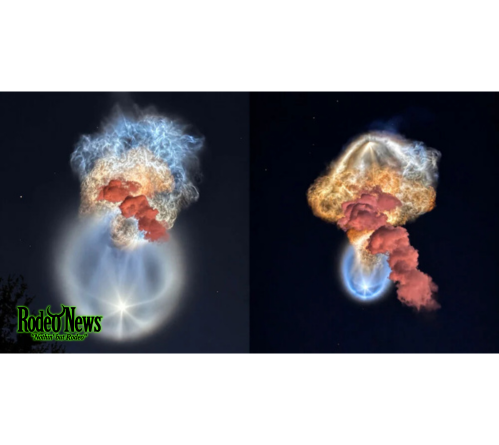
SpaceX Space Jellyfish: 5 Stunning Photos Explained
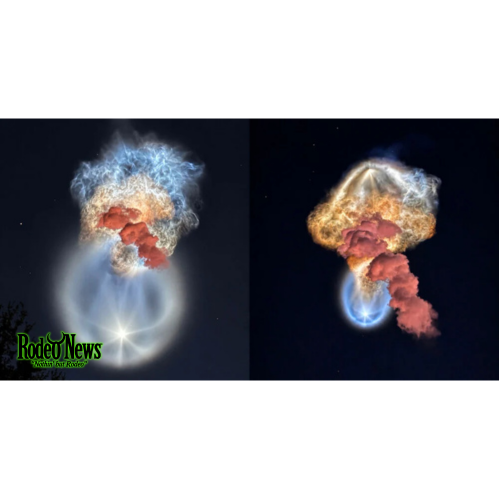
A spectacular display in the early-morning sky has given space enthusiasts and photographers a remarkable reason to look upward. The latest SpaceX space jellyfish phenomenon appeared after a Falcon 9 rocket launched from Florida, producing a luminous, expanding plume that resembled a giant jellyfish suspended above Earth.
NASA and SpaceX photographers captured the extraordinary scene on October 13, 2026, as the rocket carried an uncrewed Dragon cargo spacecraft toward the International Space Station (ISS). The images show bright, colorful exhaust spreading across the predawn sky, creating shapes that look almost otherworldly.
Although the display might initially resemble a strange celestial object, the explanation is rooted in physics. The rocket’s exhaust expanded high above the ground, where sunlight illuminated the plume even as much of the surrounding landscape remained dark.
The resulting contrast transformed an ordinary rocket launch into a spectacular visual event. Photographs of the display have attracted attention from photography enthusiasts, space watchers, and people who witnessed the phenomenon across parts of the eastern United States.
The event also highlights how rocket launches can produce unexpected photographic opportunities, particularly when atmospheric conditions and the timing of a launch align.
What Is the SpaceX Space Jellyfish Phenomenon?
The SpaceX space jellyfish is an informal name for a distinctive visual effect created when a rocket’s expanding exhaust plume catches sunlight at high altitude.
The effect is most noticeable when a rocket launches shortly before sunrise or after sunset. At these times, the ground may be in darkness while the upper atmosphere remains exposed to direct sunlight.
As a rocket climbs, its engines release hot exhaust gases that spread and change shape in the surrounding atmosphere. From the ground, the expanding plume can resemble a large, rounded head with long, trailing extensions, similar to the shape of a jellyfish.
The illuminated gases can appear blue, white, orange, pink, or other colors depending on the lighting, atmospheric conditions, camera settings, and the stage of the launch.
The phenomenon is not a giant organism, an unidentified flying object, or a newly discovered celestial body. It is a temporary interaction between rocket exhaust, the upper atmosphere, and sunlight.
NASA has documented the effect in photographs of the October 13 launch, showing how an ordinary mission can produce an extraordinary sight for observers.
NASA Captures Stunning Photos of the SpaceX Rocket Launch
The Falcon 9 rocket lifted off at approximately 6:33 a.m. Eastern Daylight Time from Space Launch Complex 40 at Cape Canaveral Space Force Station in Florida.
Photographers documented the rocket’s bright trail and the plume spreading into a large, glowing shape against the darker predawn sky.
Some photographs show a concentrated trail extending upward, with a luminous cloud expanding around it. Other images reveal a broader plume with curved, wispy extensions that give the display its jellyfish-like appearance.
The photographs are particularly striking because the rocket’s exhaust is illuminated against a sky that still appears dark from the perspective of observers on the ground.
NASA credited photographer John Kraus for one of its published images. Other photographs from the launch were captured by NASA photographer Bill White and SpaceX photographers.
Readers can view the agency’s original material through NASA’s official SpaceX CRS-35 launch jellyfish photo gallery.
The images provide more than an attractive view of a rocket launch. They also demonstrate how timing, atmospheric conditions, and photographic composition can transform a technical event into a compelling visual story.
Why Did the Rocket Exhaust Look Like a Giant Jellyfish?
The unusual appearance comes down to three factors: expanding exhaust, sunlight, and the contrast between the illuminated plume and the darker sky.
1. Rocket exhaust expands as the vehicle climbs
A rocket releases exhaust as its engines propel the vehicle upward. As the rocket reaches higher altitudes, the surrounding atmospheric pressure decreases, allowing the exhaust plume to expand.
This expansion can create a broad, rounded structure with trailing material stretching behind the rocket.
The plume does not maintain a fixed shape. Its appearance changes as the vehicle moves, the exhaust disperses, and the surrounding atmosphere influences its development.
2. Sunlight illuminates the upper atmosphere
The second factor is the position of the Sun.
Shortly before sunrise, the ground may remain in darkness while objects much higher in the atmosphere are already receiving sunlight. A rocket plume can therefore become brightly illuminated against a dark background.
This creates the impression that the exhaust itself is glowing.
The effect is similar to seeing high clouds illuminated by the setting Sun after the landscape below has grown dark. The rocket’s height and the geometry of the lighting make the visual contrast especially dramatic.
3. The shape creates the jellyfish illusion
As the plume expands, its rounded upper portion and trailing extensions can resemble the body and tentacles of a jellyfish.
The shape is temporary and changes continuously. Depending on the observer’s position, the plume may look like a glowing dome, a large ring, a fan, or a cloud with long, flowing strands.
Photographers can capture different stages of this evolution in a sequence of images.
According to NASA’s explanation of the CRS-35 launch, the sunlight illuminating the rocket’s exhaust created the striking jellyfish-like appearance.
What Was SpaceX Launching During the Display?
The rocket was carrying a Dragon cargo spacecraft as part of SpaceX’s CRS-35 commercial resupply mission for NASA.
The mission was designed to transport scientific investigations, equipment, and other supplies to the International Space Station, where astronauts conduct research in microgravity.
NASA reported that the Dragon spacecraft was carrying approximately 6,300 pounds of cargo.
The mission illustrates how routine space operations can generate memorable public spectacles. While the primary objective was delivering supplies to an orbiting laboratory, the launch also produced a visual display that could be seen well beyond Florida.
The Falcon 9 is a partially reusable rocket designed to transport payloads into space. Its first stage can return to Earth after separation, allowing SpaceX to recover and reuse boosters when mission conditions permit.
For CRS-35, the first-stage booster returned to Landing Zone 40 at Cape Canaveral, according to the launch coverage published by PetaPixel.
The cargo mission and the photographic spectacle were therefore connected to the same event, even though the jellyfish effect was an atmospheric consequence rather than a separate mission objective.
Why Could People See the SpaceX Space Jellyfish So Far Away?
Rocket launches can sometimes be visible hundreds of miles from their launch sites. The October 13 display was reported across parts of the eastern United States.
Visibility depends on several factors, including the rocket’s trajectory, altitude, local weather, atmospheric transparency, and the position of the Sun.
A plume high in the atmosphere may be visible from a distant location because it can rise above the curvature and obstructions that limit views of objects closer to the ground.
The timing of the launch was particularly favorable. At 6:33 a.m. in Florida, the rising Sun illuminated the upper portion of the plume while many locations below were still experiencing predawn darkness.
That contrast helped the display stand out against the sky.
However, not everyone in the region would have seen the same effect. Clouds, haze, buildings, trees, and local light conditions can reduce visibility. The plume’s appearance also changes from one viewing angle to another.
Photographs taken from different locations can consequently show very different colors, shapes, and levels of detail, even when they document the same launch.
How Photographers Captured the Extraordinary Images
The space jellyfish is an example of how photographic timing can be just as important as equipment.
A photographer positioned near the launch site may capture the rocket’s initial ascent and the development of its exhaust plume. Someone farther away may see the illuminated cloud against a broader section of the sky, with buildings, trees, or a distant horizon providing scale.
Longer exposures can emphasize the plume’s brightness and capture subtle variations in color. Shorter exposures may preserve more detail in the rocket’s trail and the structure of the illuminated gases.
Camera exposure, focal length, atmospheric clarity, and image processing can all influence the final appearance.
Smartphone cameras can also record striking images when the plume is bright enough and the photographer has a clear view. A stable camera position and an appropriate exposure can help preserve details that might otherwise be lost in a dark sky.
Photographers should avoid looking directly at the Sun through optical equipment, and they should follow safe viewing practices around launch areas. A clear view of a launch does not justify entering restricted zones or approaching launch infrastructure.
For people hoping to photograph similar events, monitoring official launch schedules and local weather forecasts can help identify possible opportunities. However, a future launch does not guarantee another visible jellyfish effect.
Could Another SpaceX Launch Create the Same Effect?
Yes. Similar displays can occur during future rocket launches, especially when a vehicle climbs into sunlight while the ground below remains dark.
The precise appearance is difficult to predict. Launch timing, altitude, exhaust characteristics, atmospheric conditions, and the observer’s location all influence whether a jellyfish-like plume becomes visible.
The phenomenon can also appear around sunset. In that case, the ground may already be darkening while the upper atmosphere continues to receive direct sunlight.
PetaPixel reported that another Falcon 9 launch from the same Florida launch site was scheduled for the morning of October 19, 2026. Launch schedules can change, so viewers should verify the timing through official SpaceX and NASA announcements before making plans.
Even if another launch takes place under similar conditions, it may not produce a display as prominent as the October 13 event.
The best opportunities generally occur when a launch coincides with favorable lighting and clear viewing conditions. People outside Florida should also consider the launch’s direction and whether the rocket’s path will be visible from their location.
What the Space Jellyfish Reveals About Modern Spaceflight
The photographs are a reminder that spaceflight produces effects that extend beyond the rocket itself.
A launch involves complex engineering, high-speed movement, changing atmospheric pressure, and the release of exhaust into different layers of the atmosphere. Under the right conditions, those processes create visible patterns that can be observed from the ground.
The display also illustrates the relationship between scientific explanation and public curiosity. A sight that initially looks mysterious can become an opportunity to explain atmospheric physics, sunlight, and rocket technology.
At the same time, these images should not be mistaken for evidence that a new object or unusual natural phenomenon has appeared in space. The jellyfish shape is a recognizable consequence of rocket launches under favorable lighting conditions.
For photographers, the event offers a powerful example of how familiar technology can produce extraordinary images. For space enthusiasts, it connects the visual excitement of a launch with the practical work of delivering research equipment and supplies to astronauts in orbit.
The images can also encourage more people to follow space missions and learn about the technology behind them.
The Bottom Line
The October 13 SpaceX space jellyfish display transformed a routine cargo launch into a remarkable photographic event.
A Falcon 9 rocket carrying a Dragon spacecraft toward the International Space Station left behind an expanding exhaust plume. Sunlight illuminated the plume high above the ground, producing the glowing, jellyfish-like structure captured by NASA and SpaceX photographers.
The spectacle was not a mysterious object or an extraordinary creature in the sky. It was a striking example of how rocket exhaust and the geometry of sunlight can combine to create an unusual atmospheric display.
As commercial launches continue, similar sights may appear again. Their exact appearance and visibility will depend on launch timing, atmospheric conditions, and the position of observers.
For now, the photographs offer a memorable look at the unexpected beauty that can accompany modern space exploration.
Sources: NASA, PetaPixel, and Space.com. This article is an independently written overview of the reported launch and its photographic effects.