Terence Tao and the 5 Challenges AI Poses to Mathematics
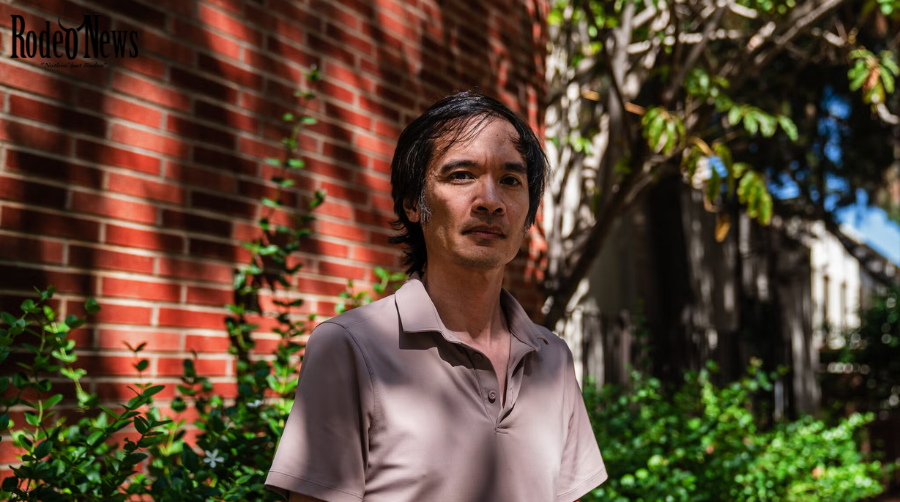
Artificial intelligence is forcing mathematicians to reconsider how mathematical discoveries are made, checked and shared. At the center of this debate is Terence Tao, the Fields Medal-winning mathematician whose public commentary has helped frame the opportunities and risks associated with increasingly capable AI systems.
The discussion has intensified as technology companies report progress on difficult mathematical problems. While AI tools can generate ideas, explore complex calculations and help researchers test conjectures, their growing capabilities also raise questions about reliability, transparency and the purpose of mathematical research itself.
For Tao, the challenge is not simply whether machines can solve difficult problems. It is how mathematicians can use these systems without losing the human understanding and rigorous verification that make mathematics dependable. His recent writing and lectures emphasize the need to rethink research practices as AI becomes a more powerful part of the discipline.
Terence Tao
+1
1. Why Terence Tao’s AI Mathematics Debate Matters
Terence Tao is one of the most prominent mathematicians of his generation. A professor at the University of California, Los Angeles, he received the Fields Medal in 2006, an internationally prestigious award recognizing exceptional mathematical achievement.
His perspective carries weight because he has long engaged with computational methods and the changing relationship between mathematics and technology. Rather than treating AI as either an inevitable threat or a guaranteed breakthrough, Tao has explored how these tools might change the practical work of research.
That distinction is important. Mathematics depends on more than producing an answer. Researchers must determine whether a result is correct, understand why it works and establish how it connects to existing knowledge.
AI systems are increasingly capable of generating promising mathematical arguments. However, a convincing explanation is not automatically a valid proof. A subtle error in an assumption or a logical step can undermine an otherwise impressive result.
Tao’s public discussions therefore focus on the broader consequences of AI adoption. The question is whether the mathematical community can develop better ways to use powerful computational tools while preserving its standards of rigor and understanding.
His position also reflects a larger debate in science: should researchers judge new technologies primarily by the results they produce, or should they also consider how those results are obtained and communicated?
2. AI Mathematical Proofs Are Becoming More Powerful
One reason artificial intelligence has attracted attention in mathematics is that the field offers something unusual: many results can be checked against precise logical standards.
In other areas, verifying an AI-generated answer may require experiments, extensive observation or access to information that is difficult to obtain. In mathematics, a proof can sometimes be checked mechanically if it has been expressed in a suitable formal language.
This makes mathematical research an especially promising area for combining AI with verification software.
Modern AI systems can help researchers explore possible approaches, identify patterns, propose intermediate results and translate informal reasoning into more structured arguments. They can also assist with repetitive work that might otherwise consume substantial research time.
However, these abilities do not eliminate the need for human judgment.
A model may propose an argument that looks plausible but relies on an incorrect assumption. It may overlook an important condition or produce a result that answers a slightly different question from the one the researcher intended to solve.
Consequently, researchers must distinguish between an AI-generated suggestion and a result that has been adequately established.
Tao’s own writing highlights the value of combining AI-generated work with traditional verification methods. In this approach, AI expands the range of possible ideas, while reliable checking methods help separate useful discoveries from errors.
Terence Tao
+1
This combination could make advanced mathematics more productive. Yet it also creates a new challenge: generating possible solutions may become much faster than checking, interpreting and integrating them into the existing body of knowledge.
3. The Problem of Verifying AI-Generated Mathematics
Verification is one of the most important issues in the debate over AI mathematics.
A proof is not valid simply because it is long, technical or written in confident language. Every essential step must follow from the stated assumptions and previously established results.
Human mathematicians already spend considerable time reviewing proofs, checking calculations and identifying hidden gaps. AI could accelerate parts of that process, but it can also generate a much larger volume of material that needs examination.
This creates a potential imbalance between discovery and validation.
If a system produces hundreds of proposed results in a short period, researchers must determine which ones deserve attention. They need to inspect the reasoning, test the assumptions and establish whether each claim contributes something genuinely new.
Formal proof assistants can help address this challenge. These systems check mathematical arguments expressed in precise formal languages, reducing reliance on informal assurances that a proof is correct.
Nevertheless, formal verification has limits. A system may verify a proof of a statement that was formulated incorrectly or does not fully capture the original mathematical question. Human review remains necessary to establish that the formal statement matches the intended claim.
The challenge is therefore not to choose between AI and human mathematicians. It is to develop workflows in which automated tools can generate and check work without allowing unverified claims to be mistaken for established knowledge.
4. Why OpenAI’s Mathematical Progress Has Intensified the Debate
Technology companies have increasingly used difficult mathematical problems to demonstrate the capabilities of their AI systems.
Recent reporting describes OpenAI’s release of hundreds of mathematical manuscripts containing claimed full or partial solutions to long-standing problems. The scale of the release has prompted discussion about both the potential scientific value of AI-generated results and the way such work should be evaluated.
Yahoo Tech
+1
For supporters, AI-assisted discovery could help researchers explore problems that have resisted conventional approaches for years. Even an incomplete result might identify a promising direction or provide a useful starting point for further investigation.
For critics, the volume and presentation of AI-generated work can create a different problem. Producing a large collection of manuscripts is not the same as establishing that every result is correct, original or scientifically significant.
This distinction matters because mathematical progress depends on a shared process of scrutiny. Researchers must be able to inspect a result, understand its assumptions and determine whether it can be reproduced or independently verified.
The debate also concerns incentives. If technology companies are rewarded for announcing impressive breakthroughs, they may have reasons to emphasize the quantity or apparent significance of their systems’ output. Academic mathematics, by contrast, relies on careful evaluation and a long-term record of reliable results.
Those incentives do not make AI-generated research inherently unreliable. They do, however, reinforce the importance of independent review and transparent evidence.
The most useful measure of progress is not how many solutions a system claims to produce. It is how many withstand scrutiny and contribute meaningfully to mathematical understanding.
5. Terence Tao’s Vision for the Future of Mathematics
Tao’s recent work explores how mathematics might evolve beyond its traditional research model as AI becomes more capable.
In his October 2026 lecture, titled “Math 2.0,” he discussed the effects of automated problem-solving and outlined a vision in which AI tools support the mathematical community while strengthening the role of understanding in research. His published materials describe a transition from traditional approaches toward a more technologically assisted form of mathematical work.

What’s new
+1
This vision does not require mathematicians to reject automation. Instead, it encourages them to reconsider which tasks should be delegated to machines and which forms of human involvement remain essential.
AI may be particularly useful for repetitive calculations, exploring large collections of possibilities, checking intermediate steps and helping researchers navigate unfamiliar literature.
Meanwhile, human researchers can concentrate on choosing meaningful questions, recognizing important patterns, interpreting results and deciding which discoveries deserve further attention.
The distinction is not absolute. AI systems can contribute to creative exploration, while human researchers also perform routine calculations. The goal is to combine their strengths rather than assume that one can completely replace the other.
A productive future for mathematics may therefore involve more collaboration between people, software and automated verification systems.
Such collaboration would require new research practices, better technical infrastructure and clear expectations about how AI-assisted results are documented and evaluated.
6. Could AI Change the Role of Human Mathematicians?
The rise of AI has prompted understandable concerns about the future of mathematical careers.
If machines can solve increasingly difficult problems, researchers may wonder whether traditional expertise will become less valuable. Students may also question which skills they should prioritize when automated systems can perform more calculations and generate sophisticated arguments.
However, mathematical expertise encompasses much more than solving a problem after it has been specified.
Researchers decide which problems matter, develop definitions, identify connections between different fields and determine whether a result changes the way a subject is understood. They also explain discoveries, challenge assumptions and evaluate the broader implications of new ideas.
AI can assist with some of these activities, but its output still requires interpretation and assessment.
The changing environment may place greater value on skills that help people work effectively with automated systems. These include formulating precise questions, checking assumptions, understanding formal verification and recognizing when an apparently impressive result is misleading.
Education will also need to adapt. Students who rely on AI to produce solutions without understanding the underlying reasoning risk missing the very skills they need to evaluate those solutions.
A stronger approach is to use AI as a tool for testing ideas, reviewing work and exploring alternative methods while continuing to develop independent mathematical judgment.
In that model, AI does not remove the need for expertise. It changes how expertise is applied.
7. The Risks of Producing More Research Than Humans Can Review
One of the less obvious consequences of AI-assisted discovery is the possibility of overwhelming the research community with material.
Scientific progress depends on the ability to identify reliable findings among competing claims. Researchers must read papers, compare results, check references and decide which directions deserve further investment.
When the supply of possible discoveries increases dramatically, those tasks can become a bottleneck.
A flood of low-quality results could make it harder to identify the most important advances. Researchers might spend more time evaluating weak arguments and less time developing promising ideas.
The same problem can affect collaboration. A large research project may benefit from automation, but its participants still need clear documentation, reliable communication and a shared understanding of the results.
AI could help by organizing literature, identifying related work and assisting with preliminary checks. However, these systems must themselves be evaluated, particularly when they are asked to summarize complicated arguments or assess whether a claim is genuinely new.
Tao’s broader discussions of AI emphasize the importance of keeping human understanding involved rather than automating every part of the process.
Terence Tao
+1
The central issue is not whether more mathematical output is desirable. It is whether the community can maintain the quality, reliability and accessibility of its knowledge as that output grows.
8. What Responsible AI Mathematics Should Look Like
The debate surrounding Terence Tao and AI points toward several practical principles for researchers, universities and technology companies.
First, claims should be presented with appropriate evidence. A preliminary result should not be described as a definitive breakthrough until it has passed the relevant checks.
Second, researchers should make their methods and assumptions as transparent as possible. Where feasible, publishing formal proofs, supporting code and verification procedures can help others assess a result independently.
Third, AI-generated work should receive scrutiny proportionate to its complexity and significance. Automated checks can reduce the burden, but independent expertise remains essential for understanding what has actually been proved.
Fourth, research institutions should consider how AI changes academic incentives. Rewarding only the quantity of output may encourage the publication of material that is difficult to evaluate or has limited long-term value.
Finally, education should teach students how to use AI critically. Learners need to understand the subject well enough to identify errors, explain their reasoning and take responsibility for the conclusions they present.
These principles can help ensure that AI contributes to mathematics without weakening the standards that make mathematical results trustworthy.
They also offer a framework for evaluating future claims. Instead of asking only whether an AI system can solve a difficult problem, researchers can ask whether the result is correct, understandable, reproducible and useful.
9. What Comes Next for AI and Mathematical Discovery?
The relationship between artificial intelligence and mathematics is likely to remain an important research question as AI systems improve.
Future developments may make it easier to generate formal proofs, coordinate large collaborative projects and explore mathematical possibilities that would be difficult to investigate manually.
Better verification systems could also help researchers distinguish valid results from convincing but flawed arguments.
However, technological progress alone will not settle the questions raised by Tao and other mathematicians. The community will still need to decide how discoveries should be evaluated, how research quality should be measured and how students can learn effectively in an environment where automated assistance is widely available.
The answers may differ across mathematical fields. Some areas may benefit most from automated calculation, while others depend heavily on conceptual insight, interpretation or connections that are difficult to formalize.
This makes a single prediction about the future of mathematics unlikely to capture the full picture.
What is clear is that AI is becoming an important part of the conversation about how mathematical work is performed. Its long-term impact will depend not only on the capabilities of the technology but also on the standards and institutions that guide its use.
For Tao, the broader challenge is to shape a future in which new tools strengthen mathematical research rather than reduce it to a race for automated answers.
Conclusion: AI Must Advance Mathematical Understanding
The debate over Terence Tao and AI mathematics reflects a turning point for scientific research. Artificial intelligence is becoming capable of assisting with increasingly sophisticated mathematical tasks, opening possibilities for faster discovery and new forms of collaboration.
At the same time, these developments make verification, transparency and human understanding more important than ever.
A machine-generated answer is only the beginning of a mathematical result’s journey. Its value depends on whether the reasoning is sound, the claim is meaningful and other researchers can establish what it contributes.
The future of mathematics will therefore depend on more than building systems that solve difficult problems. It will require a thoughtful approach to using those systems, preserving rigorous standards and ensuring that the growth of automated discovery translates into genuine knowledge.
The most successful outcome may not be a world in which machines replace mathematicians, but one in which researchers use AI to explore more possibilities while remaining responsible for understanding and verifying the results.