Macron and Merz Face a Crucial Test Over the EU Budget Deal
The Macron and Merz EU budget deal has emerged as a major test of European cooperation, with France and Germany facing mounting pressure to overcome their differences over the European Union’s next long-term spending plan. As EU leaders meet in Brussels on October 15–16, 2026, negotiations over the bloc’s 2028–2034 budget are exposing competing priorities, domestic political pressures and growing concerns about Europe’s economic and strategic future.
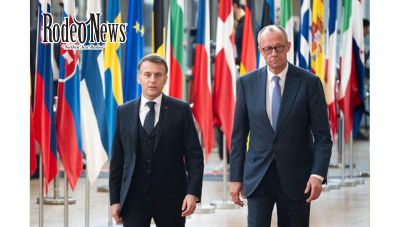
French President Emmanuel Macron and German Chancellor Friedrich Merz occupy central positions in the negotiations. Their countries are two of the EU’s most influential members, and their ability to reach common ground could help shape a compromise acceptable to the wider bloc.
However, both leaders face constraints at home. Germany is pushing for tighter spending discipline, while France is resisting reductions that could affect established EU priorities. Those differences have complicated efforts to establish a shared position before the next seven-year budget takes effect.
The outcome will influence how the EU finances agriculture, regional development, research, security, infrastructure and other priorities during a period of economic uncertainty and geopolitical competition.
Macron and Merz EU Budget Deal: Why the Negotiations Matter
The EU’s multiannual financial framework, commonly known as the MFF, determines the bloc’s spending priorities over a seven-year period. It provides the financial structure for programs that support farmers, businesses, research institutions, regional economies and cross-border projects.
For the 2028–2034 period, the European Commission initially proposed a budget worth approximately €1.76 trillion. A subsequent compromise proposal from Ireland, which holds the rotating presidency of the Council of the EU, reduced the proposed total to around €1.62 trillion in 2025 prices.
Despite that reduction, the proposal has not resolved disagreements among member states.
Germany and other net contributors argue that the EU must exercise greater financial discipline. These countries typically contribute more to the common budget than they receive directly through EU programs and are concerned about the cost of financing an increasingly ambitious European agenda.
France, meanwhile, is defending spending priorities that support its agricultural sector and other established EU programs. Paris has resisted an approach that would require substantial cuts without adequately addressing the needs of European farmers, businesses and regional communities.
The disagreement is not simply about the total amount of money available. It also concerns how the funds should be distributed, which programs deserve priority and how much financial responsibility individual member states should accept.
Consequently, the Macron and Merz EU budget deal has become an important part of the broader debate over the direction of European integration.
Germany Pushes for Spending Discipline
Berlin has emerged as a leading voice among countries seeking a smaller and more carefully targeted EU budget.
The German government has argued that the proposed spending framework remains too expensive and does not adequately reflect the financial constraints facing member states. Merz has also questioned how the available money is allocated, particularly when emerging priorities such as defense, research and new technologies compete with established spending commitments.
Germany’s position reflects several overlapping concerns.
First, national governments face pressure to manage public finances while addressing demands for increased defense spending, infrastructure investment and economic modernization. Larger EU contributions could intensify those budgetary pressures.
Second, Berlin wants European spending to produce measurable benefits. Supporters of tighter spending controls argue that the EU should concentrate resources on projects that strengthen competitiveness, improve security and help European companies compete internationally.
Third, Germany believes that existing programs should be reassessed rather than automatically protected from reductions.
However, this approach creates difficult choices. Cutting the overall budget could reduce funding for programs that governments, farmers, universities and regional authorities rely on. Even when member states agree that modernization is necessary, they may disagree over which sectors should absorb the reductions.
Germany must therefore balance its demand for fiscal discipline against the need to secure sufficient support from countries with different economic structures and political priorities.
France Resists Cuts to Established EU Priorities
France approaches the negotiations from a different position.
Agriculture remains a particularly important issue for Paris, which has traditionally defended the EU’s Common Agricultural Policy. The program provides financial support to farmers and contributes to the bloc’s wider food-security objectives.
For France, significant reductions in agricultural funding could create political and economic difficulties. Farmers are an influential constituency, and decisions made in Brussels can have direct consequences for agricultural incomes, rural communities and food production.
The French government also has an interest in preserving the EU’s ability to support regional development and respond to economic shocks.
Nevertheless, protecting existing spending commitments becomes more difficult when other governments demand greater investment in defense, technological innovation and industrial competitiveness.
Macron must therefore navigate a delicate balance between defending French priorities and demonstrating that France can contribute to a workable European compromise.
The domestic political context adds another complication. Macron is approaching the end of his presidency in 2027, and major concessions on European spending could become contentious in France’s presidential campaign. Political rivals could portray an agreement that reduces agricultural support or other established programs as a failure to defend national interests.
This does not mean an agreement is impossible. It does, however, raise the political cost of compromise for the French president.
Five Issues That Could Shape an EU Budget Deal
The negotiations involve several interconnected questions. Five issues stand out as particularly important to the chances of a compromise.
1. The overall size of the EU budget
The first challenge is determining how much money the bloc should spend between 2028 and 2034.
Germany and its allies have argued for a lower spending ceiling, while other governments and EU institutions have warned against reducing the budget so far that it cannot adequately support European ambitions.
The Commission’s initial proposal and Ireland’s subsequent revision illustrate the difficulty of finding a figure that satisfies both sides.
A final agreement must establish a spending level that is financially acceptable to contributing countries while providing enough resources for the EU to meet its policy objectives.
2. Agricultural support and regional funding
The second issue concerns the distribution of spending.
France and other countries that prioritize agricultural support are likely to scrutinize any proposal that reduces funding for farmers. Regional authorities will also be concerned about the future of cohesion funding, which aims to reduce economic disparities between parts of the EU.
Reducing these programs could free money for other priorities. However, the consequences would be unevenly distributed, making the negotiations politically sensitive.
3. Defense and European security
Security has become an increasingly important consideration in European budget discussions.
Governments face demands to strengthen defense capabilities, protect critical infrastructure and improve the EU’s ability to respond to geopolitical threats.
Yet increased security spending requires funding, potentially forcing governments to reconsider other commitments or agree to a larger overall budget.
Germany’s concerns about how proposed cuts affect defense and other emerging priorities demonstrate that the debate involves more than a simple disagreement between high-spending and low-spending countries.
4. Research, technology and competitiveness
The EU also wants to improve its ability to compete with the United States and China in advanced industries, including artificial intelligence, clean technology and scientific research.
Universities, research institutions and businesses depend on funding that supports innovation and cross-border cooperation.
However, critics of the proposed framework have warned that reductions to research and technology programs could undermine the bloc’s long-term competitiveness.
Negotiators must therefore decide whether to protect investment in future-oriented industries, even if doing so requires difficult choices elsewhere in the budget.
5. New revenue and the cost of financing
Finally, EU governments must determine how the budget will be financed.
Contributions from member states remain central to the system, but discussions also involve the possibility of additional EU-level revenue sources and the financial implications of existing obligations.
The EU must account for the repayment of borrowing associated with its COVID-19 recovery program, adding another demand on available resources. The distribution of these costs is likely to remain a source of disagreement.
A compromise on spending alone may therefore be insufficient. Governments must also agree on how to cover the bill.
Why Macron and Merz May Struggle to Reach Common Ground
Despite their countries’ influence, neither Macron nor Merz can deliver a budget agreement independently. All EU member states must ultimately agree on the final framework, giving national governments considerable leverage over the negotiations.
Other major countries also have interests that could shape the outcome. Italy and Poland, for example, have their own priorities concerning economic development, security and the distribution of European funding.
This means that even a Franco-German understanding would represent a starting point rather than a completed agreement.
Political circumstances further complicate the process. Macron faces the approaching end of his presidency, while Merz is under domestic pressure over Germany’s political and economic direction. Both leaders must consider how their positions will be received by voters and political opponents.
As a result, diplomatic flexibility may be difficult to demonstrate publicly.
A French concession could attract criticism from those who believe Paris should defend agricultural and regional spending. A German compromise could face objections from supporters who expect the government to maintain strict financial discipline.
The challenge is to find an arrangement that allows both leaders to present the outcome as consistent with their national interests.
What the EU Budget Dispute Means for European Citizens
Although negotiations over the MFF can appear technical, their consequences extend well beyond Brussels.
Agricultural funding affects farmers and rural economies. Regional development programs help finance infrastructure and economic projects. Research funding supports universities, laboratories and companies developing new technologies.
The budget also influences the EU’s capacity to coordinate responses to shared challenges, from economic competition to border protection and security.
A smaller budget would not automatically mean that every EU program faces cuts. Governments could redirect resources toward selected priorities. However, such changes would create beneficiaries and potential losers, making the allocation of funding politically significant.
Conversely, a larger budget would not necessarily resolve the bloc’s challenges. Governments would still need to agree on spending priorities, financial contributions and the effectiveness of individual programs.
For businesses, universities and regional authorities, prolonged uncertainty could complicate planning for projects that depend on EU financing.
The timing of an agreement is therefore important. Negotiators want to establish the framework before the 2028 budget period begins, while avoiding a dispute that undermines confidence in the EU’s ability to make collective decisions.
Could a Compromise Emerge From the Brussels Summit?
The October 15–16 summit provides an opportunity for European leaders to clarify their positions and explore possible compromises. However, a comprehensive agreement is not guaranteed.
Recent reporting indicates that disagreements remain substantial, with Germany and other contributing countries continuing to question the proposed budget’s size and allocation. EU institutions and other member states have also raised concerns about whether the plan adequately supports emerging priorities.
Macron and Merz could use bilateral discussions to narrow the gap between their governments. Such progress could encourage other capitals to reconsider their positions or help negotiators identify areas where concessions are possible.
Nevertheless, the final agreement will require broader negotiations involving national governments and EU institutions.
If the summit fails to produce a breakthrough, talks could continue in the following weeks and months. The challenge would be to prevent disagreements from becoming more entrenched as domestic political pressures increase.
European leaders are aiming to secure an agreement by the end of 2026, although the precise timetable will depend on progress in the negotiations.
The Stakes for European Unity
The Macron and Merz EU budget deal debate reflects a larger question about the future direction of the European Union: how can the bloc finance new ambitions without losing the support of governments concerned about costs?
France and Germany have historically played influential roles in major European compromises. Their cooperation can help create momentum, but their differences also expose the competing priorities that define the EU.
The current dispute involves more than a disagreement over figures. It concerns the balance between fiscal restraint and investment, established programs and emerging needs, and national preferences and collective European objectives.
A successful compromise would need to address these competing demands while preserving enough flexibility for the EU to respond to changing economic and security conditions.
For Macron, the negotiations present a challenge in defending French priorities while working toward a common European position. For Merz, they require reconciling Germany’s demands for spending discipline with the need to maintain support for the bloc’s broader objectives.
Neither leader controls the final outcome. Their ability to build agreement with other governments, however, could significantly influence the direction of the negotiations.
As discussions continue, the central question is whether EU leaders can agree on a budget that is both financially sustainable and ambitious enough to support Europe’s future.
Conclusion
The dispute over the EU’s 2028–2034 budget has placed Macron and Merz at the center of one of Europe’s most consequential financial negotiations. Germany is pressing for tighter spending controls, while France is defending established priorities and seeking to limit politically difficult reductions.
The proposed budget of approximately €1.62 trillion remains contested, and substantial differences persist over its size, financing and distribution.
The Brussels summit may help identify common ground, but any lasting settlement will require concessions from multiple governments. The final outcome will shape how the EU funds agriculture, research, security, regional development and economic competitiveness for seven years.
Ultimately, the Macron and Merz EU budget deal will depend on whether European leaders can reconcile national political constraints with the practical demands of collective action.