New Dinosaur Species Discovered in a Century-Old Fossil
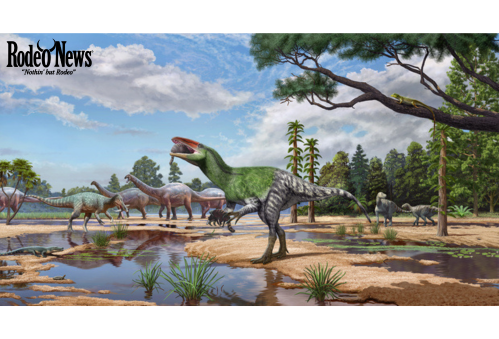
A new dinosaur species has been identified after a fossil remained largely overlooked in a British museum collection for nearly 100 years. Named Invictibellatrix amberina, the long-clawed predator lived approximately 120 million years ago in what is now southern England. Researchers say the discovery provides the first definitive evidence that megaraptoran dinosaurs once lived in Europe, adding an important piece to the puzzle of how these mysterious carnivores evolved and spread across ancient continents.
The fossil was originally discovered on the Isle of Wight and acquired by London’s Natural History Museum in 1924. For decades, the fragment of a dinosaur skull remained in the museum’s collection without being recognized as evidence of a previously unknown species.
Modern scientific techniques finally revealed its significance.
A research team led by scientists associated with University College London examined the fossil using computed tomography, or CT scanning. The scans allowed researchers to create a three-dimensional model of the skull fragment and compare its anatomical features with those of other meat-eating dinosaurs.
The results identified a distinctive combination of characteristics that separated the specimen from previously known species.
The findings, published in the scientific journal Royal Society Open Science, demonstrate that historic museum collections can still contain important discoveries. They also provide new evidence about the evolutionary history of megaraptorans, a group of predators known for their powerful arms and enormous curved claws.
1. Meet Invictibellatrix amberina, the New Dinosaur Species
The newly identified dinosaur has been named Invictibellatrix amberina.
The name Invictibellatrix means “unconquered female warrior.” Researchers selected the name to reflect the evolutionary success of megaraptorans, a group that eventually included formidable predators in several parts of the Southern Hemisphere.
The second part of the name, amberina, refers to amber associated with the geological setting where the fossil was discovered.
Scientists estimate that the animal measured approximately 3 to 4 meters long, or around 10 to 13 feet. It stood just over 1.5 meters tall, making it comparable in overall size to a large tiger in some respects.
However, the dinosaur’s build and hunting equipment would have made it very different from a modern mammal.
Unlike Tyrannosaurus rex, which had a massive skull, powerful jaws, and relatively short arms, Invictibellatrix amberina belonged to a group characterized by more slender heads and strong forelimbs.
Researchers believe its claws measured approximately 10 to 20 centimeters long. These curved weapons may have helped the dinosaur capture and restrain prey.
The animal probably hunted smaller dinosaurs, lizards, and mammals. Scientists also suggest that it may have had a covering of filament-like feathers, based on evidence from related dinosaurs.
Because the discovery is based primarily on a fragment of the skull, however, many details about its appearance remain uncertain.
Researchers have reconstructed the animal using comparisons with better-known relatives rather than a complete skeleton.
That distinction is important. The fossil provides direct evidence of the dinosaur’s skull anatomy, while its estimated body size, feather covering, and hunting behavior are informed interpretations based on related species.
2. How Scientists Identified the New Dinosaur Species
The discovery highlights how modern technology can transform scientific understanding of fossils that have been stored for generations.
When the specimen entered the Natural History Museum’s collection in 1924, researchers did not recognize it as belonging to a distinct megaraptoran species.
The fossil consists of part of the rear skull, including the braincase region. Although incomplete, this section contains anatomical details that can help scientists determine where an animal fits within the dinosaur family tree.
Researchers used CT scanning to examine the fossil’s internal and external structure.
The technology generates detailed images of an object’s interior without requiring scientists to break or physically cut the specimen. Those images can then be combined to create a digital three-dimensional model.
This approach is especially useful for fragile fossils, which may be difficult to study using traditional methods.
After creating the digital model, the researchers compared the fossil’s features with those of other theropods, the group of predominantly meat-eating dinosaurs that includes tyrannosaurs, spinosaurs, and numerous other lineages.
The comparison revealed a combination of characteristics that supported identifying the fossil as a new species.
Rather than relying on the fossil’s size or general shape alone, the team examined specific anatomical differences that helped distinguish it from other known dinosaurs.
This process is central to paleontology. Scientists must determine whether a fossil represents a previously described species, an unusual individual, or an animal that has not yet been scientifically recognized.
In this case, the evidence supported the identification of Invictibellatrix amberina.
The discovery also demonstrates why museum collections remain valuable long after the original excavation.
A specimen may initially receive limited attention because researchers lack the technology, comparative material, or scientific questions needed to understand its importance.
Decades later, new analytical tools and a better understanding of related animals can reveal information that earlier researchers could not identify.
3. Why the New Dinosaur Species Matters to European Paleontology
One of the most significant aspects of the discovery is its geographic location.
Before this research, scientists had not identified definitive evidence of megaraptorans in Europe. The discovery of Invictibellatrix amberina changes that understanding.
Megaraptorans were a group of two-legged carnivorous dinosaurs whose fossil record has been particularly difficult to interpret.
Their remains are relatively uncommon, and scientists continue to investigate how the group evolved and how its members were related to other theropods.
Fossils from other regions have shown that some megaraptorans eventually reached impressive sizes. The largest known members of the group included animals from South America that lived much later in the Cretaceous Period.
The new British species appears to represent a smaller, earlier member of the group.
Its existence in Europe provides a valuable geographic link that researchers can use when testing hypotheses about megaraptoran migration.
One leading explanation suggests that the group originated in Asia before spreading through Europe and other regions. The animals may subsequently have reached southern landmasses, where some lineages diversified into larger predators.
The European fossil strengthens this proposed route because it establishes the presence of a megaraptoran in a region that previously lacked confirmed examples.
However, scientists still need additional fossils to reconstruct the group’s evolutionary history with greater confidence.
A single skull fragment cannot establish every stage of an animal group’s migration. Instead, it provides an important piece of evidence that can be evaluated alongside future discoveries.
The finding illustrates how one overlooked specimen can change the scientific picture of an entire group of prehistoric animals.
4. How Megaraptorans Hunted Differently From T. rex
The newly identified dinosaur was related to a fascinating group of predators that hunted differently from the famous Tyrannosaurus rex.
T. rex is known for its enormous skull, powerful jaws, and teeth adapted to delivering devastating bites. Its comparatively short arms have become one of its most recognizable features.
Megaraptorans had a different body plan.
They generally possessed relatively slender heads, long forelimbs, and large curved hand claws. These features suggest that their arms played a much more important role in capturing prey.
Researchers believe megaraptorans were agile hunters capable of pursuing smaller animals and using their powerful limbs to seize them.
The claws may have helped grip prey and inflict serious injuries. However, scientists must be cautious when reconstructing the exact hunting behavior of Invictibellatrix amberina because the available fossil material is incomplete.
The contrast with T. rex nevertheless highlights the remarkable diversity of predatory dinosaurs.
Carnivorous dinosaurs did not all depend on the same hunting strategy. Different species developed distinct combinations of body size, limb strength, skull structure, teeth, and claws.
These differences allowed predators to occupy different ecological roles within ancient environments.
According to researchers, Invictibellatrix amberina was not the dominant predator of its ecosystem. Larger meat-eating dinosaurs also lived in the region, meaning the newly identified species probably hunted smaller prey rather than consistently challenging the largest carnivores.
Its likely role may have resembled that of a modern predator that targets smaller animals while avoiding direct competition with larger hunters.
This interpretation remains a scientific reconstruction rather than a behavior directly observed from the fossil.
5. Could This Dinosaur Have Been More Dangerous to Humans Than T. rex?
One of the most striking claims surrounding the discovery concerns the hypothetical danger the dinosaur might have posed to humans.
Lead researcher Cassius Morrison suggested that Invictibellatrix amberina could have presented a greater threat to a human than an adult T. rex.
The comparison is not a claim that the smaller dinosaur was more powerful overall. Instead, it concerns the relationship between predator size and potential prey.
An adult T. rex was an enormous animal with a body mass far beyond that of a human. Morrison suggested that a human might not have represented a particularly worthwhile target for such a large predator compared with larger available prey.
A smaller, agile carnivore could have been more likely to pursue an animal closer to its preferred prey size.
The newly identified dinosaur’s estimated dimensions also suggest that it was capable of moving quickly and maneuvering more easily than some of the largest theropods.
Its powerful arms and curved claws may have made it particularly effective at capturing smaller animals.
However, the comparison is hypothetical. Humans did not exist during the Early Cretaceous, and scientists cannot directly establish how this dinosaur would have behaved around people.
The claim is therefore best understood as an illustration of how predator size and hunting adaptations may affect the risks faced by potential prey.
It also emphasizes that a smaller predator can still be dangerous without being the largest animal in its environment.
6. The Dinosaur’s Name Honors an Unconquered Warrior
The name Invictibellatrix carries a meaning that goes beyond the animal’s physical characteristics.
The Latin-derived term means “unconquered female warrior.”
Researchers said the name was intended to convey strength and hope for people who have experienced bullying, discrimination, victimization, or oppression.
The choice also reflects the broader evolutionary story of megaraptorans.
Although early members of the group were relatively small compared with some later predators, their descendants developed into substantial carnivores in several regions of the Southern Hemisphere.
The naming decision connects the fossil’s scientific importance with a message about resilience.
Scientific names often draw on Latin, Greek, geography, distinctive physical features, or people associated with a discovery. In this case, the researchers chose a name that highlights the group’s evolutionary history and carries a broader symbolic meaning.
The name amberina also links the species to the geological setting associated with the fossil.
Together, the two parts distinguish the animal from other dinosaurs while communicating something about the researchers’ intentions.
The naming does not change the anatomical evidence supporting the new species, but it adds context to how the discovery is being presented to the public.
7. A Century-Old Museum Fossil Reveals New Scientific Possibilities
The story of Invictibellatrix amberina is also a reminder that museums are more than places where the public views ancient bones.
Large natural history collections contain enormous numbers of specimens gathered over generations. Many were collected before scientists had access to modern scanning technology, digital databases, and today’s extensive comparative fossil records.
Some specimens were studied intensively when they were discovered. Others remained in storage because their significance was unclear or because researchers focused on different questions.
Reexamining old collections can therefore produce important scientific advances without requiring a new expedition.
In this case, the fossil had been held by the Natural History Museum in London since 1924.
Its eventual identification demonstrates how technological advances can make old specimens newly informative.
CT scans allowed the researchers to examine the braincase fragment in greater detail and compare it with other dinosaurs. The resulting analysis identified features that had not previously been recognized as evidence of a separate species.
Museum research also helps scientists study fossils that may be difficult to replace or whose original locations have changed.
As analytical methods improve, researchers can revisit existing material to investigate questions about evolution, anatomy, ancient environments, and the movement of animals across continents.
The discovery does not mean every unidentified fossil represents a new species. Most specimens require careful evaluation, and many will remain difficult to classify because they are incomplete or poorly preserved.
Nevertheless, the finding reinforces the importance of maintaining museum collections and making them available for scientific study.
A fossil collected nearly a century ago can still reshape modern understanding of prehistoric life.
8. What Scientists Still Need to Learn
Although the discovery provides important new information, many questions about Invictibellatrix amberina remain unanswered.
The most obvious limitation is the lack of a complete skeleton.
Researchers have identified the species primarily from a portion of its skull. That material offers useful anatomical evidence, but it does not directly reveal the complete shape of the animal’s body, its exact weight, or every detail of its movement.
Estimates of its size and appearance rely partly on comparisons with related dinosaurs.
Scientists also need more fossils to understand the species’ variation and determine how it relates to other megaraptorans.
Additional discoveries could help clarify the group’s origins, migration routes, and evolutionary relationships with other theropods.
The location of the British fossil is particularly important because it adds Europe to the confirmed geographic record of megaraptorans. Yet researchers still need evidence from other regions to reconstruct how the animals moved between continents.
The broader question of megaraptoran relationships also remains an active subject of paleontological research.
Scientists continue to examine where the group belongs within the theropod family tree and how its distinctive anatomy evolved.
Future fossil discoveries, improved imaging techniques, and more detailed comparisons could help resolve these questions.
For now, Invictibellatrix amberina offers a rare glimpse into a group of dinosaurs whose evolutionary history is still being pieced together.
Conclusion: A Forgotten Fossil Changes Dinosaur History
The discovery of Invictibellatrix amberina demonstrates that important scientific discoveries do not always come from newly excavated fossils.
This previously overlooked specimen remained in London’s Natural History Museum for nearly a century before modern analysis revealed its significance.
The newly identified dinosaur was a relatively small, long-clawed predator that lived in Britain approximately 120 million years ago. It belonged to the megaraptoran group, whose members had powerful arms and distinctive curved claws.
Most importantly, the fossil provides the first definitive evidence that megaraptorans lived in Europe, helping researchers investigate how the group spread across ancient continents.
The discovery also highlights the role of CT scanning and digital reconstruction in modern paleontology. By examining a small fragment of the skull, scientists were able to identify anatomical features that distinguished the animal from previously known species.
Much remains unknown about the dinosaur because researchers have not found a complete skeleton. Nevertheless, the fossil has already added valuable information to the scientific record.
As researchers continue examining museum collections and searching for additional remains, other overlooked specimens may reveal new chapters in the history of prehistoric life.
The story of Invictibellatrix amberina offers a powerful reminder that even a fossil sitting quietly in a museum drawer can hold a discovery capable of changing what scientists know about Earth’s distant past.