Breanna Stewart: 5 Big Moves the Liberty Must Make
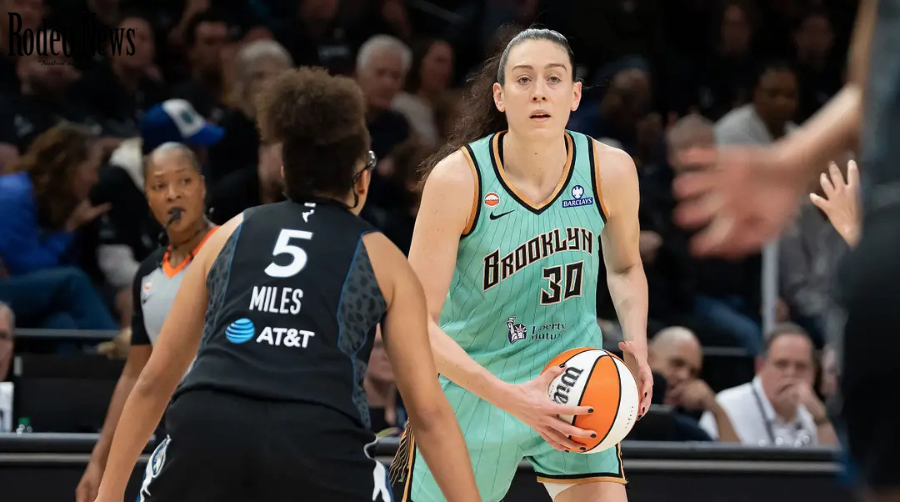
Breanna Stewart and the New York Liberty face a defining offseason after their disappointing 2026 WNBA playoff exit. Despite having championship-level talent, New York finished the season with unanswered questions about its coaching, defensive identity, and ability to turn individual star power into consistent team success. The organization now faces an important challenge: make the necessary changes to maximize Stewart’s championship window before another opportunity slips away.
The Liberty entered the season with ambitions of competing for another WNBA title. Instead, their postseason ended against the Atlanta Dream in the semifinals, leaving the franchise to reassess its direction. Injuries contributed to the team’s difficulties, but they were not the only concern. New York also struggled to establish a consistent identity, particularly on the defensive end.
For Stewart, a two-time WNBA Most Valuable Player, the stakes are especially high. She remains one of the league’s most accomplished players, and her presence gives New York a foundation capable of supporting another championship run. However, individual excellence cannot compensate indefinitely for organizational uncertainty.
The Liberty must now determine whether their current leadership structure can deliver the results expected of a championship contender. The decisions made during the offseason could shape the franchise’s immediate future and influence how much more success Stewart can achieve in New York.
Breanna Stewart and the Liberty Face a Defining Moment
The Liberty’s postseason elimination exposed concerns that had followed the team throughout the season. Although New York demonstrated its potential at several points, it struggled to maintain the consistency required to reach the WNBA Finals.
According to Sports Illustrated, the Liberty’s elimination raised difficult questions about their identity and the direction of the organization under first-year head coach Chris DeMarco.
Those questions matter because championship teams need more than talented rosters. They need a clear playing philosophy, effective communication, reliable decision-making, and a coaching staff capable of adjusting when opponents exploit weaknesses.
New York has considerable individual talent in Stewart, Sabrina Ionescu, and Jonquel Jones. Yet assembling accomplished players does not automatically create a cohesive championship team. The coaching staff must establish how those players complement one another and ensure that everyone understands their responsibilities.
The franchise’s next steps should therefore begin with an honest assessment of what went wrong. Rather than relying exclusively on roster changes, the Liberty must examine whether their basketball system is giving their best players the strongest possible chance to succeed.
1. Breanna Stewart Needs a Clear Championship Plan
The most important priority for New York is straightforward: build a team that can compete for a championship while Stewart remains in her prime.
At 32, Stewart still possesses the experience, versatility, and competitive résumé that make her one of the WNBA’s premier players. She has already won league MVP honors and helped the Liberty secure their first championship in 2024. Her accomplishments demonstrate that she can be the centerpiece of a title-winning team.
However, the opportunity to compete at the highest level should never be taken for granted. Injuries, roster turnover, and the natural progression of professional careers can change a team’s outlook quickly.
The Liberty must identify the qualities their roster needs and make decisions accordingly. That means evaluating their defensive personnel, offensive balance, bench depth, and ability to perform under pressure.
Stewart should not have to compensate for unresolved structural problems every time the team encounters adversity. Her versatility allows her to contribute in multiple areas, but asking one player to solve every problem is not a sustainable championship strategy.
New York should also establish measurable goals for the upcoming season. Improving defensive efficiency, reducing costly late-game mistakes, and creating more dependable offensive possessions would provide a practical starting point.
Most importantly, the organization needs a shared understanding of what success looks like. Stewart, the coaching staff, and the front office must work toward the same objective rather than operating with different expectations.
2. The Liberty Must Resolve Their Coaching Questions
The future of Chris DeMarco is another central issue facing New York.
DeMarco took over after the Liberty dismissed Sandy Brondello, who had guided the franchise to its first WNBA championship in 2024. Changing coaches after such a significant achievement was a bold decision, and it increased the pressure on the organization to find the right successor.
A coaching transition requires time. New systems, different communication styles, and adjustments to player responsibilities can make an early season difficult. Furthermore, injuries can prevent a new coach from consistently working with the intended lineup.
Those considerations deserve attention when evaluating DeMarco’s first season. The Liberty were affected by injuries, including absences involving Ionescu and Satou Sabally. Sabally appeared in only 13 games during the 2026 campaign, limiting the team’s ability to develop consistent lineup combinations.
Nevertheless, the organization must assess whether the coaching staff has demonstrated a convincing plan for improvement.
A championship-caliber coach must establish defensive principles, manage late-game situations, communicate effectively with star players, and make adjustments when an opponent changes strategy. The Liberty’s postseason also highlighted the importance of clear communication during critical moments.
New York should evaluate DeMarco on more than the final result. The front office needs to examine player development, tactical execution, locker-room confidence, and the team’s progress toward a recognizable identity.
If the organization believes DeMarco can address those weaknesses, retaining him should come with a clear development plan and defined expectations. If serious concerns remain, the Liberty must be willing to consider alternatives.
The worst outcome would be allowing uncertainty to continue without a convincing explanation of how the team intends to improve.
3. Defensive Improvement Must Become a Priority
New York’s defensive performance was one of the clearest weaknesses identified during the season.
Sports Illustrated reported that the Liberty recorded a defensive rating of 107.5, ranking seventh in the league. That figure illustrates why defensive improvement should be central to the franchise’s offseason planning.
Championship contenders must be able to win games when their shots are not falling. Strong defense provides that foundation by limiting opponents’ efficient scoring opportunities, creating turnovers, and allowing teams to control the pace of difficult contests.
The Liberty have players capable of making meaningful defensive contributions. However, effective team defense depends on coordination as much as individual ability.
New York needs consistent communication on switches, stronger positioning against drives, disciplined closeouts, and better protection of the basket. Defensive rebounding also matters because allowing opponents second chances can erase otherwise successful possessions.
Coaching plays a major role in each of these areas. Players need to understand their responsibilities within the system and trust that their teammates will execute the same plan.
The front office should evaluate whether the current roster has the personnel necessary to support the preferred defensive approach. If it does not, roster adjustments may be required.
The goal should not simply be to improve a statistical ranking. The Liberty need a defense that remains reliable during the postseason, when opponents target weaknesses and every possession becomes more valuable.
4. Sabrina Ionescu and Jonquel Jones Must Fit the System
Stewart is not the only star whose role matters to New York’s championship hopes.
Sabrina Ionescu provides perimeter scoring, playmaking, and offensive versatility. Jonquel Jones offers interior scoring, rebounding, and size. When the three players operate within a coherent system, they give the Liberty multiple ways to challenge opposing defenses.
The challenge is ensuring those strengths work together consistently.
New York must determine how to create efficient possessions without allowing the offense to become overly dependent on individual talent. That includes establishing reliable actions for Stewart, finding the right balance between Ionescu’s creation and off-ball opportunities, and using Jones effectively around the basket and away from it.
The coaching staff also needs contingency plans for injuries. Ionescu missed stretches of the 2026 season, while Sabally’s limited availability affected the team’s lineup options. A championship roster must be able to adapt when its preferred combination is unavailable.
That does not mean every player must perform the same role. Instead, the system should provide enough flexibility for different combinations to succeed.
Communication among the stars will be equally important. Players must understand when to take responsibility for scoring, when to facilitate for teammates, and how to maintain defensive standards when offensive production fluctuates.
If the Liberty can create clearer roles and more dependable rotations, their star power could become a more consistent advantage.
5. The Front Office Must Make Smarter Offseason Decisions
General manager Jonathan Kolb faces significant responsibility as the Liberty prepare for the next season.
Kolb supported the coaching change that brought DeMarco to New York. Consequently, the organization must carefully evaluate whether that decision has positioned the team to achieve its goals.
However, the offseason should not become a referendum on one appointment alone. The front office must consider the entire roster and identify which changes would produce the greatest improvement.
First, New York needs to review its depth. Injuries demonstrated how quickly a talented lineup can lose continuity when important players become unavailable. Reliable reserves can help maintain performance during the regular season and provide additional options in playoff matchups.
Second, the Liberty must evaluate roster balance. The best available player is not always the best fit if the team already has several players with similar strengths but lacks a specific defensive or offensive skill.
Third, the organization should prioritize continuity where it makes sense. Constantly changing coaches, rotations, and team priorities can make it difficult for players to build chemistry. New York must distinguish between weaknesses that require immediate correction and areas that would benefit from additional time.
Financial and roster constraints will also influence the available options. The Liberty cannot assume every desired move will be possible, particularly in a competitive league where other teams are also trying to improve.
The strongest offseason strategy will combine careful evaluation with decisive action. New York should avoid both extremes: making unnecessary changes out of frustration or preserving a flawed approach simply because the organization has already invested in it.
Why the 2026 Playoff Exit Cannot Be Ignored
There is an important counterargument to the criticism facing New York.
The Liberty overcame substantial challenges during the season and made a notable postseason run. According to Sports Illustrated, they became the first No. 8 seed in WNBA history to defeat the No. 1 seed, sweeping the Minnesota Lynx before their semifinal elimination.
That achievement demonstrates resilience and suggests the team’s ceiling remains high.
Injuries also complicate any assessment of the season. A team cannot always be judged as though every player were available for every game. Missing important contributors can affect offensive spacing, defensive assignments, and the consistency of rotations.
Still, a successful individual series does not eliminate the need for broader improvement. Championship aspirations require a team to sustain its performance across multiple rounds and different opponents.
The Liberty’s elimination against Atlanta therefore presents both a warning and an opportunity. The warning is that their talent alone is not enough to guarantee another title. The opportunity is that the organization now has a clearer picture of the problems it must address.
New York should use that information to build a more dependable team rather than treating the season as either a complete failure or an acceptable result.
What Comes Next for Breanna Stewart and New York?
The coming offseason will test the Liberty’s ability to turn disappointment into meaningful progress.
The front office must decide whether its current coaching direction is the right one, while the coaching staff must demonstrate that it can establish a stronger defensive identity and improve late-game execution.
At the same time, roster decisions should reflect the team’s actual needs rather than short-term reactions. Stewart, Ionescu, and Jones give New York an experienced foundation, but their collective potential depends on the quality of the system around them.
The Liberty should also consider the importance of player confidence. Public uncertainty about leadership can create additional pressure after a difficult postseason. Clear communication about expectations and responsibilities would help establish a more stable environment.
Ultimately, the franchise needs to balance patience with urgency. Building a championship team requires continuity, but continuity is valuable only when the organization is moving in the right direction.
Stewart’s accomplishments make the stakes clear. She has already helped deliver a historic championship to New York. The challenge now is to create the conditions for another title run.
Conclusion: The Liberty Must Put Breanna Stewart First
The New York Liberty have too much talent to approach the next season without a clear plan.
Their 2026 playoff exit exposed questions about coaching, defensive execution, roster depth, and the team’s overall identity. Injuries provide important context, but they do not remove the need for the organization to examine its weaknesses honestly.
Breanna Stewart remains central to that process. Her experience and championship pedigree give New York a valuable foundation, and the franchise must ensure its decisions support her ability to compete at the highest level.
That does not mean making every move solely to satisfy one player. It means building a coherent organization in which coaching, roster construction, and on-court strategy reinforce one another.
The Liberty have already demonstrated that they can reach the summit of the WNBA. Their next challenge is proving that they can build a sustainable contender rather than relying on isolated stretches of exceptional basketball.
For Kolb and DeMarco, the offseason offers a chance to answer the questions left behind by the playoff defeat. For Stewart and her teammates, it offers an opportunity to return with a clearer identity and stronger championship ambitions.
New York does not need to start over. It needs to identify what works, correct what does not, and make every important decision with the same objective in mind: giving its best players a genuine chance to win another title.