SpaceX Dragon Launches 6,300 Pounds of Cargo to ISS as NASA Advances Space Research
SpaceX has launched a new cargo mission to the International Space Station (ISS), delivering more than 6,300 pounds of scientific experiments, supplies, and equipment designed to support astronauts and advance research with potential benefits on Earth. The mission lifted off from Florida on October 13, 2026, as the station’s Expedition 75 crew continued experiments involving human health, biotechnology, and advanced space technology.
The uncrewed Dragon spacecraft launched aboard a Falcon 9 rocket at 6:33 a.m. Eastern Daylight Time from Cape Canaveral Space Force Station. The flight marks SpaceX’s 35th commercial resupply mission to the orbiting laboratory for NASA.
According to NASA, Dragon is scheduled to arrive at the station on Thursday, October 15, at approximately 11 a.m. EDT. Its cargo includes new research equipment, astronaut supplies, and the final pair of roll-out solar arrays planned for installation on the station.
The delivery will support ongoing scientific investigations while helping maintain the station’s power generation capabilities as NASA and its international partners prepare for future exploration missions.
Dragon Carries New Experiments for Medical Research
Among the most significant items aboard the spacecraft are experiments investigating how microgravity could improve medical technology and help scientists better understand human disease.
One investigation, LambdaVision-1, will explore the production of artificial retinas in space. Researchers are examining whether manufacturing these delicate structures in microgravity can produce more uniform layers of protein-based material.
On Earth, gravity can influence how materials settle during manufacturing. In the microgravity environment aboard the ISS, researchers can investigate whether reducing that effect makes it possible to create artificial retinal implants with improved characteristics.
The long-term goal is to develop technology that could help people affected by retinal diseases that cause vision loss. Although the experiment is not an immediate treatment for patients, its findings could help researchers improve future approaches to restoring vision.
Dragon is also carrying equipment for experiments involving three-dimensional heart tissue models. These models could help scientists investigate how heart cells behave and develop better methods for evaluating potential medicines.
Growing biological tissue in microgravity offers researchers a different environment in which to study cellular development. The results could contribute to future drug testing and biomedical research, although further investigation will be necessary before any discoveries can be translated into routine medical applications.
Another investigation involves brain organoids, laboratory-grown structures made from human cells that model selected features of brain tissue. Researchers will use this research to investigate biological processes associated with neurodegenerative diseases, including Alzheimer’s disease, Parkinson’s disease, and multiple sclerosis.
By studying these models, scientists hope to identify biological pathways that could eventually become targets for new treatments.
Final Solar Arrays Will Complete a Major Power Upgrade
Beyond its scientific payload, Dragon is carrying the final two International Space Station Roll-Out Solar Arrays, known as IROSAs.
These compact arrays are designed to supplement the station’s existing solar power system. The original solar wings have experienced age-related degradation, making additional power generation important for supporting station operations and scientific experiments.
The new arrays will be installed during planned spacewalks later in the fall. Their installation will complete a major upgrade intended to increase the electricity available for research, maintenance, and other station activities.
Reliable electrical power is essential to the ISS because its experiments depend on specialized equipment, temperature-controlled storage, computers, and life-support systems.
The additional arrays will also support the station’s long-term operational needs, including preparations for its eventual safe and controlled deorbit.
Dragon’s cargo includes other maintenance equipment and supplies needed to keep the orbital laboratory operating. These deliveries are an important part of maintaining the station, where replacing or repairing hardware can require specialized tools and carefully planned spacewalks.
Expedition 75 Crew Continues Biomedical Experiments
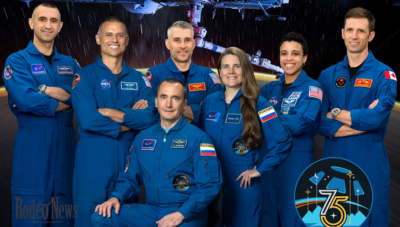
While the cargo spacecraft traveled toward the station, the seven-member Expedition 75 crew continued a full schedule of research and equipment maintenance.
NASA astronaut Anil Menon and Canadian Space Agency astronaut Joshua Kutryk inspected and cleaned a scientific freezer inside the station’s Kibo laboratory module. Scientific freezers are essential for preserving biological samples and maintaining the conditions required for experiments.
Menon also joined NASA astronauts Jessica Watkins and Luke Delaney for eye examinations using a medical imaging device. The work supports research into how microgravity affects the retina, cornea, and lens.
Understanding these changes is important for astronaut health, particularly as space agencies plan longer missions beyond low Earth orbit. Researchers need to understand how living in space affects the human body and how potential problems can be detected and managed.
Kutryk participated in another health investigation by wearing a Bio-Monitor vest and headband. The system collects information about a crew member’s health while living and working in space, helping researchers study the physiological demands of spaceflight.
Watkins also serviced three-dimensional cell-printing hardware in the station’s Destiny laboratory and replaced batteries in an Astrobee free-flying robotic assistant.
Meanwhile, Delaney prepared the Echo tele-operated ultrasound scanner system for remote maintenance by engineers on the ground and removed a battery adapter from a spacesuit emergency jetpack.
These activities demonstrate how daily station operations combine scientific research with routine maintenance and preparation for future missions.
Robotic Technology Could Support Future Space Exploration
The station’s Russian cosmonauts also worked on an experiment designed to improve the remote control of robots.
Station commander Pyotr Dubrov and flight engineer Anna Kikina tested an exoskeleton suit connected to a robotic-control experiment. One cosmonaut wore the suit and virtual reality goggles while simulating tasks such as picking up tools and connecting or disconnecting equipment. The other monitored the activity on a computer and provided verbal guidance.
The experiment could help researchers understand how human movements can be translated into robotic actions.
Such technology may eventually allow astronauts to operate robots in environments where direct human access is difficult or dangerous. It could also support future missions to the Moon and Mars, where remote-operated systems may assist with construction, maintenance, and exploration.
Cosmonaut Sergey Teteryatnikov spent much of his shift cleaning smoke detectors in the Nauka science module and familiarizing himself with station systems and procedures.
Why the Cargo Mission Matters
The successful launch reinforces the importance of commercial cargo services in maintaining the International Space Station. Regular resupply missions deliver scientific equipment, food, replacement hardware, and materials that cannot be produced easily aboard the orbital laboratory.
The research aboard Dragon also illustrates the broader value of microgravity science. Experiments involving artificial retinas, heart tissue, and brain organoids could provide insights relevant to medicine on Earth, while robotic-control technologies and power-system upgrades help prepare for more ambitious exploration.
Dragon is expected to remain docked to the station until mid-November before returning to Earth with research samples and equipment for analysis.
As NASA continues developing capabilities for missions to the Moon and eventually Mars, the International Space Station remains an important testing ground for technologies and scientific investigations that may shape the future of human spaceflight.