
MI5 Warns of Growing UK Security Threats From Russia, Iran and AI
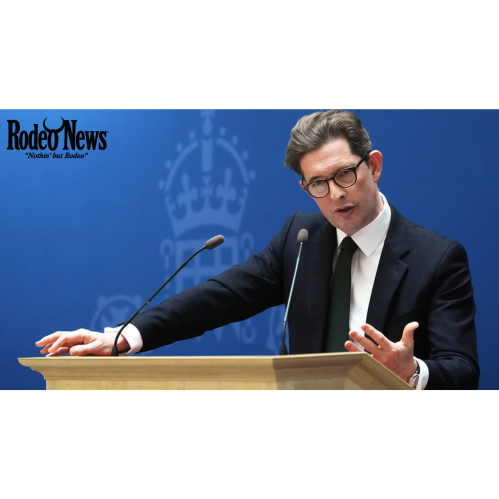
The United Kingdom faces an increasingly complex national security environment as Russia escalates hostile activities, Iran expands its ambitions in Britain, and artificial intelligence creates new risks for terrorists and hostile states. MI5 Director General Ken McCallum issued the warning on October 13, 2026, during his annual assessment of threats facing the country.
McCallum said the security service was devoting more resources to countering threats from foreign states than it did during the Cold War. He also warned that artificial intelligence could help malicious actors develop more sophisticated attacks, exploit drones, and potentially create dangerous biological weapons.
The assessment highlights how national security risks are changing. Traditional espionage remains a concern, but hostile activities increasingly include cyberattacks, covert operations, intimidation, and attempts to disrupt essential services.
According to recent reporting, Iran has shown greater interest in targeting more challenging objectives, including military sites. Russia, meanwhile, remains a leading state-level threat to Britain, with European security agencies increasingly concerned about hybrid warfare.
The warnings come as governments across Europe face mounting pressure to protect critical infrastructure, defend public institutions, and prepare for emerging technological risks.
MI5 UK Security Threats Reach a New Level of Complexity
McCallum’s assessment reflects a security environment in which several threats can develop simultaneously and reinforce one another.
Foreign intelligence services can use criminal intermediaries to carry out activities that provide plausible deniability. Cyber operations can disrupt infrastructure without conventional military engagement. Meanwhile, terrorist groups may exploit digital platforms and emerging technologies to improve their capabilities.
The MI5 chief warned that these developments require sustained attention from intelligence agencies, law enforcement, government departments, and private organizations responsible for essential services.
The risks are not limited to military installations or government buildings. Depending on the nature of an attack, hostile activity could affect transport, healthcare, banking, communications, and energy systems.
However, the warning does not mean that every threat will result in an attack. Intelligence assessments are intended to identify risks early, help authorities prioritize resources, and prevent incidents before they occur.
The challenge for Britain is to strengthen its defenses while ensuring that the public understands the difference between a potential threat and a confirmed incident.
Russia Remains Britain’s Leading State-Level Security Concern
McCallum identified Russia as Britain’s leading state-level aggressor, warning that Moscow continues to use tactics intended to undermine the security of the United Kingdom and its European allies.
These activities are commonly described as hybrid warfare. The term covers a range of methods that can include cyber operations, covert influence, sabotage, intimidation, and other hostile actions designed to weaken an adversary without initiating a conventional military conflict.
Russia has repeatedly denied involvement in hostile activities attributed to it by Western governments.
What Hybrid Warfare Means for Britain
Hybrid warfare creates difficult challenges for intelligence and law enforcement agencies because hostile actions may fall between traditional categories of conflict.
A cyberattack against an energy company, for example, may disrupt essential services without producing the visible destruction associated with a conventional military strike.
Likewise, covert operations can rely on intermediaries or criminal networks, making it more difficult to establish responsibility quickly.
McCallum referred to security concerns elsewhere in Europe, including an attempted drone attack involving a cargo plane at a German airport and a cyberattack against Polish energy infrastructure.
Such incidents illustrate why European governments are increasingly concerned about protecting infrastructure that supports both civilian life and national defense.
Britain’s response involves intelligence gathering, cooperation with international partners, cybersecurity measures, and the investigation of suspected hostile activities.
The wider objective is to make it harder for foreign adversaries to disrupt public services, damage infrastructure, or intimidate communities.
Why Russia’s War Against Ukraine Matters to UK Security
Russia’s continuing war against Ukraine remains an important part of the broader European security picture.
Britain has supported Ukraine, alongside other European countries and international partners. That support has contributed to tensions between Moscow and Western governments.
Intelligence agencies are concerned that Russia may attempt to pressure countries supporting Ukraine through methods that fall short of open military conflict.
Such activities can include cyber operations, covert interference, and attempts to exploit divisions within European societies.
McCallum argued that Russia’s hostile activity must be understood in the context of the wider conflict and the costs Moscow continues to face in Ukraine.
For Britain, this means national security planning cannot focus exclusively on conventional military capabilities. Protecting infrastructure, detecting covert operations, and maintaining resilience against cyberattacks are also essential.
Iran Expands Its Focus on Harder Targets in Britain
Iran was another major focus of McCallum’s warning.
According to the MI5 chief, Iranian activity has increasingly shown ambitions to target more challenging objectives, including military sites.
The warning comes amid heightened security concerns following a suspected plot connected to RAF Fairford, a military airbase in Gloucestershire that has been used by US forces.
British authorities have investigated the suspected incident. McCallum said he could not comment on the specific case while the investigation remained ongoing.
He emphasized, however, that the episode should not be viewed in isolation.
Iran has faced repeated allegations from Western governments and intelligence agencies concerning covert operations and activities conducted through criminal intermediaries. Tehran has denied various accusations of hostile conduct.
Criminal Networks and Covert Operations
One concern for British security agencies is the potential use of criminal networks to carry out activities on behalf of foreign states.
Using intermediaries can make investigations more complicated because the people directly involved in an operation may not be intelligence officers.
Individuals could instead be recruited or paid to conduct surveillance, intimidate targets, or undertake other illegal activities.
McCallum warned that people who accept money from foreign governments or their intermediaries to carry out illegal acts in Britain risk facing serious legal consequences.
The issue has implications for public safety, diplomatic relations, and the protection of people targeted because of their political activities or personal connections.
British authorities have previously raised concerns about threats against Iranian dissidents, media organizations, and other individuals viewed as opponents by Tehran.
The latest warning suggests that intelligence agencies are paying particular attention to whether Iranian operations are becoming more ambitious in their choice of targets.
Why RAF Fairford Has Attracted Attention
RAF Fairford is a Royal Air Force station in Gloucestershire with a history of supporting US military operations.
Its role in activities connected to the Middle East has placed it within a sensitive security context.
The investigation into the suspected plot has attracted attention because it involves concerns about the safety of a military site and the possibility of hostile activity on British soil.
Nevertheless, authorities must establish the facts of any suspected operation through the investigative process.
McCallum’s broader warning was that Iran’s interest in harder targets forms part of a wider security concern, rather than being limited to one location.
The case illustrates why British security services monitor potential threats against military facilities, critical infrastructure, and individuals who may be vulnerable to intimidation.
Artificial Intelligence Could Transform the Security Threat Landscape
Artificial intelligence was another central issue in McCallum’s assessment.
The MI5 chief warned that AI could significantly increase the capabilities available to terrorists, hostile states, and other malicious actors.
AI systems can already assist with tasks involving information analysis, language, software development, and image processing. Depending on how they are used, these capabilities may help legitimate organizations improve their defenses or allow malicious actors to work more efficiently.
The concern is that increasingly capable systems could reduce some of the technical barriers associated with planning sophisticated attacks.
McCallum highlighted risks involving cyber operations, drones, and biological weapons.
However, the possibility that AI could enable more dangerous activity should not be confused with evidence that every feared capability already exists or is readily accessible.
Security agencies must assess both current misuse and the potential for future technological advances to change the threat landscape.
Could AI Help Terrorists Plan Attacks?
Artificial intelligence may help malicious actors process large amounts of information, organize research, translate material, or automate parts of their activities.
Some of these capabilities are also used routinely by businesses, researchers, and government agencies.
The security challenge lies in determining when ordinary technology is being used to facilitate harmful activity and how authorities can identify credible threats without treating every AI application as dangerous.
McCallum warned that terrorist organizations could exploit AI to improve planning and make use of technologies such as drones.
Drones already have legitimate applications in photography, agriculture, inspection, and emergency response. They can also be misused, creating challenges for public safety and infrastructure protection.
AI may complicate these challenges as automated systems become more capable.
Governments and technology companies are therefore under increasing pressure to evaluate how advanced systems could be abused and to develop safeguards proportionate to the risks.
Concerns About Biological Weapons
One of the most serious issues raised in the assessment involved the potential misuse of AI in biological research.
McCallum warned that advanced AI could help malicious actors access dangerous knowledge or contribute to the development of biological threats.
The concern is that AI systems may eventually make certain complex scientific tasks easier for people who lack the expertise traditionally required to undertake them.
However, biological research is technically demanding, and generating information is not the same as successfully creating, producing, or deploying a biological weapon.
Security assessments must distinguish between theoretical possibilities, demonstrated capabilities, and credible operational threats.
The challenge is to identify dangerous applications early enough to establish appropriate protections without unnecessarily restricting legitimate scientific research.
AI safety evaluations, responsible research practices, monitoring of misuse, and cooperation between scientific and security organizations are among the areas receiving growing attention.
MI5 Establishes a Stronger Focus on AI-Related Risks
The increasing use of artificial intelligence has prompted British authorities to examine how the technology could affect national security.
McCallum said MI5 had established an AI Threat Assessment Centre to bring together expertise and evaluate emerging risks.
Such an approach reflects the difficulty of assessing a rapidly developing technology through a single agency or area of expertise.
AI-related security concerns can involve intelligence, cybersecurity, scientific research, public safety, and the protection of critical infrastructure.
A coordinated assessment can help authorities separate realistic dangers from exaggerated claims while identifying areas that require additional preparation.
Balancing Innovation and Security
Artificial intelligence offers significant potential benefits in areas such as healthcare, scientific discovery, industrial productivity, and cybersecurity.
The same broad capabilities, however, may create risks when systems are used to support criminal activity or hostile operations.
The policy challenge is to preserve beneficial uses while reducing opportunities for serious misuse.
For Britain, this requires collaboration between government agencies, technology developers, researchers, and organizations responsible for essential services.
Security measures may include evaluating advanced systems, improving incident reporting, identifying vulnerabilities, and strengthening defenses against AI-assisted cyberattacks.
The precise response will depend on the technology involved and the evidence available about its potential misuse.
McCallum’s warning underscores that AI is no longer only a commercial or technological issue. It is also becoming an important consideration for intelligence and national security planning.
The Wider Terrorism Threat Facing the United Kingdom
The warning about Russia, Iran, and AI forms part of a broader assessment of terrorism and national security risks.
MI5 and counterterrorism police continue to monitor threats from different ideological movements, including Islamist extremism and extreme right-wing terrorism.
Online platforms can play a role in radicalization by exposing individuals to propaganda, extremist communities, and material encouraging violence.
The growing accessibility of digital tools adds another layer of complexity to the work of investigators.
However, political disagreement, religious identity, or controversial opinions do not automatically indicate terrorist intent. Security assessments must focus on credible evidence of threats, preparations for violence, and other relevant indicators.
Protecting the public requires authorities to distinguish between lawful expression and activities that create genuine security risks.
Protecting Communities and Public Institutions
National security threats can affect people beyond the immediate targets of an operation.
An attack or credible threat may disrupt public services, create fear in local communities, or place pressure on emergency responders.
Organizations responsible for transport, healthcare, energy, communications, and financial services therefore have an important role in maintaining resilience.
Individuals can also contribute by remaining alert to credible safety concerns and reporting suspected criminal activity through appropriate channels.
At the same time, public discussion of security threats should avoid spreading unverified allegations or creating unnecessary fear.
Reliable information from official authorities and established news organizations is particularly important during ongoing investigations.
How Britain Is Responding to the Changing Threats
The range of threats identified by MI5 presents a challenge that cannot be addressed through intelligence work alone.
The response requires coordination between domestic security agencies, police forces, international partners, government departments, and private organizations.
Strengthening Cybersecurity
Cybersecurity remains essential because digital systems support many of the services on which the public depends.
Organizations can reduce risks by maintaining updated software, controlling access to sensitive systems, preparing incident-response plans, and testing their ability to recover from disruptions.
Government agencies also work with businesses and international partners to identify threats and improve the security of critical infrastructure.
Improving International Cooperation
Threats involving foreign intelligence services, cyber operations, and criminal intermediaries frequently cross national borders.
International cooperation allows authorities to share information, coordinate investigations, and identify connections that may not be visible within one country alone.
For Britain, cooperation with European allies and other partners remains important in responding to Russian activity, suspected Iranian operations, and transnational terrorism.
Preparing for Emerging AI Risks
AI-related security work requires continuous assessment because the technology and its applications can change quickly.
Authorities must consider how advanced systems might be misused while also identifying opportunities to strengthen defensive capabilities.
This includes assessing potential vulnerabilities, developing appropriate safeguards, and ensuring that security professionals understand how AI changes existing risks.
No single measure can eliminate every threat. The objective is to identify dangerous activity earlier, reduce vulnerabilities, and improve the ability to respond when incidents occur.
What the MI5 Warning Means for the British Public
McCallum’s assessment is a reminder that modern national security involves more than protecting borders or responding to conventional military threats.
Foreign states may attempt to exert pressure through covert activity, cyber operations, and the exploitation of criminal networks. Meanwhile, technological advances can create new opportunities for malicious actors.
The potential consequences include disruption to essential services, threats against individuals, and attempts to undermine confidence in public institutions.
However, the warning should not be interpreted as evidence that an attack is imminent in every area mentioned.
Intelligence assessments are designed to identify risks and encourage appropriate preparation. They do not necessarily indicate that a specific operation will succeed or that the public faces an immediate danger from every identified threat.
The most useful response is a measured one: strengthen defenses, maintain international cooperation, assess emerging technologies carefully, and rely on verified information.
For businesses and public institutions, this may mean reviewing security procedures and ensuring that incident-response plans remain effective.
For the public, it means understanding the seriousness of the risks without allowing unverified claims to create unnecessary alarm.
Conclusion: Britain Faces an Evolving National Security Challenge
MI5 Director General Ken McCallum’s warning highlights the growing complexity of the threats facing the United Kingdom in 2026.
Russia remains a leading state-level security concern as European governments respond to hybrid warfare and suspected hostile operations. Iran has shown greater ambition toward harder targets in Britain, according to the MI5 chief, while investigations continue into suspected activity involving military sites.
Artificial intelligence adds another dimension to the challenge. Although AI offers substantial benefits, security agencies are increasingly concerned about its potential misuse in cyber operations, drone-related attacks, and biological threats.
The establishment of an AI Threat Assessment Centre reflects the need for intelligence agencies to evaluate these risks as the technology develops.
Britain’s response will depend on effective intelligence work, cooperation with international partners, stronger protection for critical infrastructure, and careful assessment of emerging technologies.
The central message is clear: national security threats are evolving, and effective preparation requires authorities to address both established dangers and new capabilities.
For the UK, the challenge is to protect the public, preserve essential services, and respond proportionately to a security environment in which geopolitical tensions and technological change increasingly intersect.
Image SEO
Suggested image: MI5 headquarters in London or MI5 Director General Ken McCallum delivering his annual threat assessment.
Image ALT Text: MI5 UK security threats from Russia, Iran and artificial intelligence highlighted by Director General Ken McCallum.
Suggested image filename: mi5-uk-security-threats-russia-iran-ai.jpg
Suggested caption: MI5 chief Ken McCallum has warned that Russia, Iran, and the misuse of artificial intelligence are contributing to a more complex UK security environment.