Milwaukee Brewers Take Commanding 2-0 NLCS Lead
The Dodgers vs Brewers National League Championship Series took a dramatic turn on Monday, October 12, as the Milwaukee Brewers defeated the Los Angeles Dodgers 7-4 in Game 2 to move within two victories of reaching the World Series.
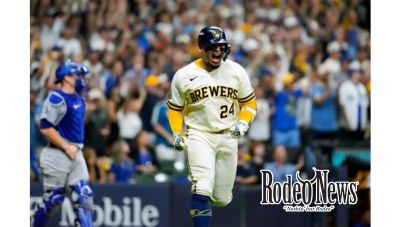
Milwaukee overcame multiple momentum swings at American Family Field, with catcher William Contreras delivering the decisive offensive performance. His game-tying home run in the fifth inning and go-ahead RBI single in the sixth helped the Brewers turn a competitive contest into another significant postseason victory.
The result put the Brewers ahead 2-0 in the best-of-seven National League Championship Series. After winning Game 1 by a narrow 2-1 margin, Milwaukee demonstrated that it could prevail in a higher-scoring matchup against one of baseball’s most formidable lineups.
For Los Angeles, the defeat raised fresh questions about its pitching depth and ability to convert offensive opportunities into consistent production. The Dodgers entered Game 2 hoping that Yoshinobu Yamamoto could stabilize the series, but the right-hander struggled to contain Milwaukee’s hitters and exited before completing three innings.
The Brewers, meanwhile, received timely contributions throughout their lineup and another strong performance from their relief corps. With the series now shifting to Los Angeles, Milwaukee has created an opportunity to put the defending champions under enormous pressure.
William Contreras Delivers the Defining Performance
Contreras was central to Milwaukee’s comeback, contributing three hits and driving in three runs in a performance that repeatedly changed the direction of the game.
The Dodgers initially looked capable of taking control. Teoscar Hernández drove in Mookie Betts with a sacrifice fly in the first inning, giving Los Angeles an early 1-0 advantage.
Milwaukee responded quickly. Contreras delivered an RBI single in the bottom half of the inning, bringing the Brewers level and preventing the Dodgers from building early momentum.
The contest then developed into a back-and-forth battle. Los Angeles moved ahead again in the third inning, taking advantage of a throwing error by Milwaukee starter Logan Henderson that allowed Tommy Edman to score.
However, the Brewers answered with a major rally in their half of the inning.
Christian Yelich delivered a two-run single to center field, putting Milwaukee ahead 3-2 and forcing Los Angeles to reconsider its pitching strategy. The hit came after Jake Bauers worked a lengthy walk against Yamamoto to help load the bases.
Milwaukee’s ability to capitalize on defensive mistakes and extended plate appearances became an important theme of the night.
The Dodgers managed to regain the lead in the fifth inning, but Contreras had another answer. He launched a solo home run to center field against reliever Kris Bubic, tying the score at 4-4 and energizing the home crowd.
His biggest contribution followed in the sixth. Contreras singled against Brock Stewart, driving home David Hamilton to give Milwaukee a 5-4 lead.
The Brewers never surrendered that advantage.
Contreras’ combination of contact hitting, power and timely run production illustrated why offensive contributions from the middle of the lineup can become especially valuable during the postseason. His performance also gave Milwaukee the spark it needed after Los Angeles briefly appeared to have seized control.
Dodgers vs Brewers Game 2: How the Scoring Unfolded
The final score did not fully capture the number of turning points that shaped the matchup. Both teams generated opportunities, but Milwaukee proved more effective at turning key moments into a lasting advantage.
Final score

Los Angeles Dodgers
Away team
4

Milwaukee Brewers
Home team · Winner
7
Series: Milwaukee leads 2-0.
First inning: Both teams strike early
Los Angeles opened the scoring when Hernández’s sacrifice fly brought Betts home. Milwaukee responded in the bottom of the inning as Contreras drove in the tying run.
The quick exchange established the competitive tone of the game, although the offensive production would increase significantly in the middle innings.
Third inning: Defensive mistakes and Yelich’s big hit
The Dodgers regained the lead after Henderson’s throwing error allowed Edman to score from third base.
Milwaukee responded with a rally of its own. After Bauers drew a 12-pitch walk against Yamamoto, Yelich lined a two-run single to center field, putting the Brewers ahead 3-2.
The rally proved costly for Los Angeles because it forced the team to use its starting pitcher heavily while Milwaukee continued applying pressure.
Fifth inning: Los Angeles moves ahead, Contreras answers
Milwaukee’s defensive problems helped the Dodgers tie the game when Henderson made a throwing error on an Edman bunt, allowing Kyle Tucker to score.
Freeman then added a sacrifice fly, giving Los Angeles a 4-3 lead.
The advantage did not last. Contreras hit a solo home run in the bottom half of the inning, leveling the score and restoring Milwaukee’s momentum.
Sixth inning: The decisive breakthrough
Contreras continued his outstanding night with an RBI single that brought home Hamilton and put Milwaukee ahead 5-4.
That hit became the winning run as the Brewers’ bullpen shut down Los Angeles over the remaining innings. Milwaukee added insurance in the eighth when Brice Turang and Bauers delivered RBI singles, extending the lead to 7-4.
The final innings belonged to the Brewers, who prevented the Dodgers from mounting another comeback.
Yoshinobu Yamamoto’s Early Exit Creates Problems for Los Angeles
Yamamoto entered Game 2 as one of Los Angeles’ most important postseason weapons. The Dodgers needed a strong start after losing the opening game, and his previous playoff performances offered reasons for optimism.
Instead, Milwaukee forced him into difficult situations and ended his outing in the third inning.
Yamamoto allowed three runs on four hits, walked two batters and recorded one strikeout across 2⅔ innings. He threw 75 pitches before leaving the game.
The damage extended beyond the runs themselves. His early departure placed additional demands on the Dodgers’ bullpen, requiring the coaching staff to manage multiple relief appearances well before the end of the contest.
Milwaukee’s hitters contributed to that pressure by extending at-bats and making the pitcher work. Bauers’ 12-pitch walk was particularly significant because it helped create the situation in which Yelich delivered his two-run single.
For a team attempting to recover from an opening-game defeat, an abbreviated start from a frontline pitcher can make an already challenging series more difficult.
Yamamoto’s outing does not erase his previous postseason achievements, but it highlights the narrow margins separating success and disappointment in October baseball. The Dodgers will need a more effective combination of starting pitching, bullpen management and defensive execution in Game 3.
Brewers’ Bullpen Delivers When It Matters Most
Although Contreras supplied the headline performance, Milwaukee’s relief pitchers were equally important to the victory.
The Brewers’ bullpen retired all 15 batters it faced over the final five innings, according to Reuters’ game report. That stretch prevented Los Angeles from putting runners on base and gave Milwaukee’s offense time to build a more comfortable lead.
JoJo Romero earned the win after pitching a scoreless sixth inning. Aaron Ashby recorded his first postseason save, completing 1⅔ scoreless innings to close out the game.
The relief corps also accounted for seven of Milwaukee’s nine strikeouts, helping the team finish strongly after a contest in which both starting pitchers experienced difficulties.
Henderson, meanwhile, allowed four runs, two earned, on three hits and two walks across four innings. Although the Dodgers managed to score against him, Milwaukee’s relievers ensured that the team’s early defensive mistakes did not become fatal.
That response could prove crucial as the series progresses. A strong bullpen gives manager Pat Murphy additional options in close games, particularly when the opposition has a lineup capable of changing the score with one swing.
The Brewers have now demonstrated two different ways to win. Game 1 was a low-scoring contest decided by timely hitting and pitching execution, while Game 2 required a larger offensive contribution and sustained relief work.
That flexibility makes Milwaukee a dangerous opponent in a series where every game can shift the balance of momentum.
Christian Yelich and Brice Turang Strengthen Milwaukee’s Attack
Contreras was the primary offensive catalyst, but Milwaukee’s supporting hitters also played important roles.
Yelich’s two-run single in the third inning provided the Brewers with their first lead. His hit came at a pivotal moment, turning a bases-loaded opportunity into a meaningful advantage and helping force Yamamoto out of his rhythm.
Turang also contributed at the plate. His RBI single in the eighth inning extended Milwaukee’s lead to 6-4, providing valuable insurance before Bauers added another run.
Bauers contributed both patience and production. His extended walk against Yamamoto helped set up Yelich’s key hit, and his RBI single late in the game pushed the Brewers further ahead.
These contributions showed that Milwaukee did not depend on a single hitter to win. Instead, the team combined disciplined at-bats, timely contact and aggressive baserunning to keep the Dodgers under pressure.
For Los Angeles, the challenge was the opposite. The team had enough opportunities to take the lead but struggled to maintain control once Milwaukee responded.
The Brewers’ ability to generate runs from several positions in the lineup also complicates the Dodgers’ preparation for the remaining games. Pitchers cannot focus exclusively on Contreras if the hitters around him continue to capitalize on scoring opportunities.
Why the 2-0 Series Lead Matters
A two-game advantage in a best-of-seven championship series is significant because it gives the leading team multiple opportunities to finish the job.
Milwaukee entered the NLCS looking to reverse the outcome of the previous season, when the Dodgers swept the Brewers in the championship series. Winning the first two games provides an immediate opportunity to change that narrative.
The Brewers now need two more victories to reach the World Series. Los Angeles, by contrast, must win four of its remaining five games to advance.
That does not make the series over. The Dodgers have considerable postseason experience and the offensive talent to produce a comeback. However, the pressure has increased substantially, especially because Milwaukee has won two games through different combinations of pitching and hitting.
The move to Los Angeles for Game 3 could give the Dodgers a chance to reset in front of their home fans. Playing at home also provides a familiar environment as the team attempts to improve its execution and regain confidence.
Still, the Brewers will arrive with momentum. Their pitchers have shown an ability to limit late-inning opportunities, while their offense has delivered when the game has been on the line.
The next matchup will therefore be important not only for the standings but also for the psychological direction of the series.
What the Dodgers Must Change Before Game 3
Los Angeles faces several priorities as it prepares for the next game.
First, the Dodgers need a stronger starting-pitching performance. Yamamoto’s early exit forced the bullpen to cover more innings than the team would have preferred. A longer outing from the next starter could protect the relief corps and give the offense more time to recover.
Second, Los Angeles must reduce defensive mistakes. Milwaukee repeatedly benefited from throwing errors that allowed runners to advance or score. In postseason baseball, those mistakes can be especially damaging because scoring opportunities are often limited.
Third, the Dodgers need to improve their ability to produce runs through hits rather than relying heavily on sacrifice flies and opposition errors. Although those plays can be valuable, sustained offensive production is essential when facing a team capable of scoring in bunches.
Finally, the Dodgers must find a way to limit Contreras’ impact without allowing other Milwaukee hitters to take advantage. His performance in Game 2 showed how quickly one player can change a contest, but the Brewers’ supporting cast demonstrated that the threat extends throughout the lineup.
The coming game will test whether Los Angeles can make those adjustments under pressure.
What Comes Next in the 2026 NLCS?
The series now shifts to Los Angeles for Game 3 on Wednesday, October 14. The Dodgers will attempt to prevent Milwaukee from moving within one victory of the World Series, while the Brewers will seek to extend their advantage and strengthen their position.
For Milwaukee, the formula is becoming clear: generate pressure early, capitalize on defensive mistakes, deliver timely hits and trust the bullpen to protect a lead.
For Los Angeles, the task is more urgent. The team must improve its pitching efficiency, defend more consistently and find greater offensive production against a Milwaukee club that has shown it can handle different game situations.
Game 2 also demonstrated that the NLCS is unlikely to be decided by star power alone. Yamamoto arrived with an impressive postseason reputation, but Contreras and the Brewers’ supporting players made the decisive contributions when the contest was at its most competitive.
The Dodgers have the experience to respond, yet they can no longer afford to give Milwaukee additional opportunities.
With the Brewers leading 2-0, the pressure now rests firmly on Los Angeles to deliver a response in Game 3.
Final Takeaway
The Dodgers vs Brewers matchup has developed into a compelling NLCS battle, with Milwaukee taking a commanding position after its 7-4 victory in Game 2.
William Contreras led the way with three hits, three RBIs and a crucial home run, while Yelich supplied the go-ahead momentum in the third inning. Milwaukee’s bullpen then closed the door, retiring every batter it faced over the final five innings.
Los Angeles must now regroup after a disappointing outing from Yamamoto and several costly defensive mistakes. The Dodgers still have an opportunity to turn the series around, but the margin for error has narrowed considerably.
Game 3 in Los Angeles will be a major test of whether the Dodgers can halt Milwaukee’s momentum or whether the Brewers can move one step closer to the World Series.