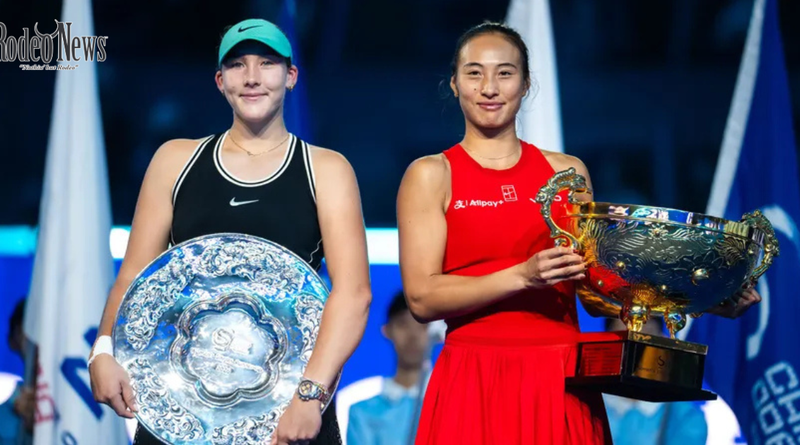
Zheng Qinwen, Mirra Andreeva Withdraw From Wuhan Open
Zheng Qinwen and Mirra Andreeva have withdrawn from the 2026 Wuhan Open following their China Open final in Beijing, delivering a significant change to the women’s tennis tournament in China. Zheng cited a right shoulder injury and physical fatigue, while Andreeva withdrew because of a scheduling change, according to the Women’s Tennis Association (WTA).
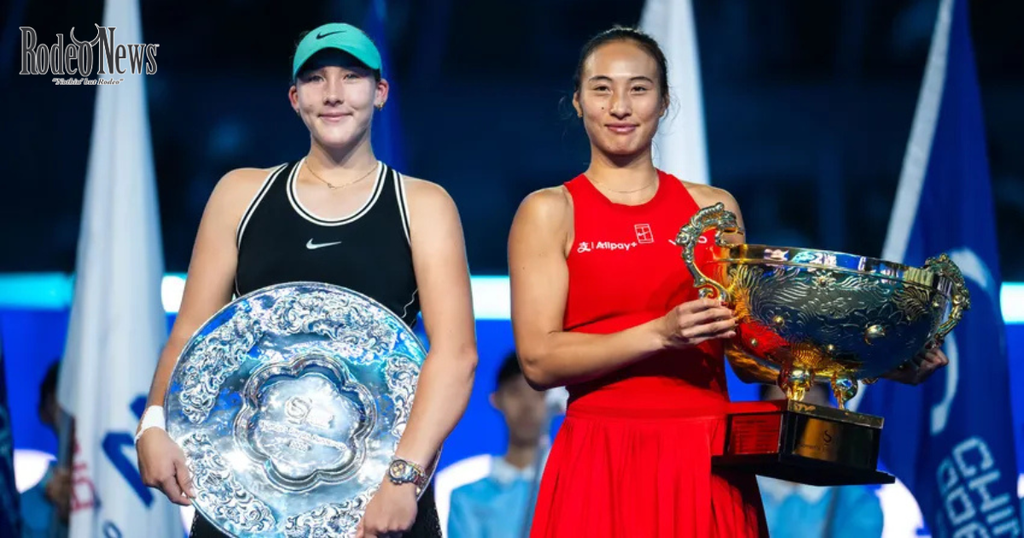
The announcement came one day after Zheng defeated Andreeva 7-5, 6-4 to become the first Chinese player to win the China Open singles title. The victory marked Zheng’s first WTA 1000 championship and her first tour-level title since winning in Tokyo in 2024.
Their withdrawals mean that both finalists will miss the Wuhan event, which runs from October 12 to 18. The tournament’s singles draw has been adjusted, with lucky losers taking the vacant positions and other players benefiting from the changes.
For Zheng, the decision follows a demanding period of competition as she works to rebuild her career after injury. Andreeva, meanwhile, leaves Beijing after reaching another major final in a season that has included several significant results.
Why Zheng Qinwen Withdrew From the Wuhan Open
Zheng confirmed that a right shoulder injury and fatigue had led her to withdraw from the tournament. In a statement reported by the WTA, the Chinese player said she was sorry to miss an event that holds special significance in her tennis career.
Wuhan is Zheng’s hometown, and she has repeatedly described the city as an important part of her development as a player. The Wuhan Open also played a role in her rise at WTA 1000 level, making the withdrawal a difficult decision.
However, Zheng explained that her body was feeling the effects of an intense stretch of competition over the preceding month and a half. Her schedule included the US Open, Billie Jean King Cup competition and the China Open in Beijing.
The right shoulder issue adds another consideration as she manages her return to regular competition following earlier injury problems. Rather than immediately continuing into another demanding tournament, she has opted to step away from the Wuhan event.
The withdrawal does not, by itself, establish how serious the shoulder injury is or how long recovery will take. No specific return date was confirmed in the WTA report.
For Zheng, the priority will be managing her physical condition and determining when she can compete again without unnecessarily increasing the risk of further problems.
Zheng Qinwen’s Historic China Open Victory
Zheng’s withdrawal follows one of the most important victories of her career. On October 11, she defeated fourth-seeded Andreeva 7-5, 6-4 in the China Open final in Beijing.
The result made Zheng the first Chinese woman to win the tournament’s singles title since the event joined the WTA Tour in 2004. She also became the first Chinese player to claim the China Open WTA 1000 championship.
The final was competitive, particularly during the opening set. Zheng saved three set points before recovering to win the first set 7-5. She then maintained her momentum in the second set, securing the championship after one hour and 43 minutes.
The victory was Zheng’s first WTA 1000 title and sixth overall on the WTA Tour. It also represented her first title since winning in Tokyo in late 2024.
Her run in Beijing was especially notable given her recent time away from competition. Zheng had missed significant portions of the previous year and early 2026 because of an elbow injury.
She entered the China Open as a wildcard and defeated a series of difficult opponents on the way to the final. Her performance demonstrated that she could again compete successfully against leading players, but the physical demands of the tournament also contributed to the decision to withdraw from Wuhan.
The combination of a major title and a subsequent withdrawal highlights the challenge of balancing competitive momentum with long-term physical recovery.
Mirra Andreeva Also Pulls Out of Wuhan
Andreeva will also miss the Wuhan Open, but her withdrawal was attributed to a change in schedule rather than the shoulder injury cited by Zheng.
The Russian teenager arrived in Beijing as one of the tournament’s leading contenders and reached the final after a strong run through the draw. Despite losing to Zheng, she continued a season that has included several notable championship appearances.
According to the WTA, Beijing was Andreeva’s fifth final of 2026. She entered the China Open final with three titles already earned during the season: Adelaide, Linz and Roland Garros. She also finished runner-up in Madrid.
The defeat against Zheng left Andreeva with a 3-2 record in finals for the year. Her performance in Beijing nevertheless helped confirm her position among the leading players on the tour.
The WTA reported that Andreeva had qualified for the WTA Finals, scheduled for Indian Wells in mid-November. That event is a major end-of-season competition for the leading singles players and doubles teams.
Her withdrawal from Wuhan means she will have a break in her schedule before her next listed competition. The WTA report identified the WTA Finals as her next scheduled appearance.
Unlike Zheng, Andreeva did not cite a physical injury in the withdrawal announcement covered by the WTA. The distinction is important: the two players are missing the same tournament, but their stated reasons are different.
How the Wuhan Open Draw Has Changed
The withdrawals have required changes to the Wuhan Open singles draw, affecting both the players who were originally scheduled to face Zheng and Andreeva and those waiting for opportunities to enter the main draw.
According to the WTA, Iva Jovic, the next eligible seeded player to receive a bye, will replace Andreeva on line 17 of the draw and advance directly to the second round.
Jovic’s original position will be filled by lucky loser Anna Bondar, who is scheduled to face Mia Pohankova.
Zheng’s vacant place will be taken by lucky loser Camila Osorio. Osorio is scheduled to face Ann Li in the first round on Tuesday.
Lucky losers are players who lose in the qualifying rounds but enter the main draw when a player withdraws. Their participation gives them another opportunity to compete in the tournament, while helping organizers preserve the structure of the draw.
These changes can affect the competitive outlook of an event. A player who receives a bye may avoid an opening-round match, while a lucky loser may suddenly find an opportunity to compete against players who had already prepared for different opponents.
The Wuhan Open remains a major event on the WTA calendar, and the revised draw leaves a strong field competing for the title despite the absence of the two Beijing finalists.
Wuhan Open Remains a Key Stop on the Asian Swing
The Dongfeng Voyah Wuhan Open is a WTA 1000 tournament played on outdoor hard courts in Wuhan, Hubei, China. The 2026 edition runs from October 12 to October 18.
WTA 1000 events are among the most important tournaments outside the Grand Slams and the WTA Finals. They attract many of the leading players and offer significant ranking points, making them important to the season’s overall standings.
The Wuhan event also has a special connection to Zheng. As a hometown tournament, it would have provided an opportunity for the newly crowned China Open champion to compete in front of local supporters immediately after her breakthrough victory.
Her absence is therefore notable both competitively and emotionally. The decision means fans in Wuhan will have to wait to see her return to the event, which she described as a place where her tennis dream began.
For tournament organizers, the withdrawals require adjustments to the draw but do not change the event’s status as one of the principal stops on the Asian swing.
The revised field includes leading players such as Aryna Sabalenka, Jessica Pegula and Iga Swiatek, according to the official tournament overview.
What Zheng’s Withdrawal Means for Her Comeback
Zheng’s decision to miss Wuhan puts her physical recovery at the center of attention after her successful run in Beijing.
The Chinese player has been working her way back from an elbow injury that disrupted her schedule. Her China Open championship was an important sign of progress, but a single successful tournament cannot establish that all physical concerns have been resolved.
Professional tennis places substantial demands on the shoulder, elbow and other parts of the body. Repeated serves, groundstrokes and long matches can place additional stress on players, particularly during a busy sequence of tournaments.
Zheng’s statement indicated that she had played a demanding stretch of tennis over approximately six weeks. That schedule included competition at the US Open, the Billie Jean King Cup and the China Open.
Taking time away from competition can allow a player and her medical team to assess symptoms, manage workload and decide when a return is appropriate. The right course of action depends on the nature of the injury and the individual’s recovery.
At this stage, the WTA report does not establish the precise severity of Zheng’s shoulder problem. It would therefore be premature to predict how long she will be sidelined or whether she will miss additional tournaments.
Zheng is next entered in the main draw of the Kinoshita Group Japan Open in Osaka, scheduled for October 19-25. Her participation will depend on her condition and any subsequent decisions about her schedule.
What Comes Next for Andreeva?
Andreeva’s immediate schedule differs from Zheng’s because her withdrawal was attributed to scheduling rather than a reported injury.
The Beijing runner-up has already enjoyed a productive 2026 campaign, with titles in Adelaide, Linz and at Roland Garros. Her fifth final appearance of the season in Beijing added another strong result, even though she fell short of the championship.
Her qualification for the WTA Finals gives her an important late-season target. The tournament brings together the leading singles players and doubles teams of the year and provides an opportunity to finish the season against elite opposition.
For Andreeva, the break following Beijing offers a chance to prepare for the remaining events on her calendar. Her withdrawal from Wuhan should not be interpreted as evidence of an injury, given the reason stated in the WTA report.
The next phase of her season will depend on her schedule and performance in upcoming competitions.
A Reminder of the Demands of the WTA Tour
The withdrawals of Zheng and Andreeva underline the demands of competing across a crowded international tennis calendar.
Players often move quickly between tournaments in different cities and countries. Travel, training, match preparation and recovery must all be managed alongside the physical intensity of competition.
For a player returning from injury, scheduling decisions can become particularly important. A successful result may create an opportunity to build momentum, but continuing to compete without adequate recovery can also present risks.
Zheng’s decision reflects the need to weigh the significance of a home tournament against her current physical condition. Andreeva’s withdrawal, meanwhile, illustrates that players may adjust their schedules for different reasons.
Neither absence changes the achievement Zheng secured in Beijing. Her historic China Open title remains a major milestone in Chinese tennis, while Andreeva’s run to the final adds to her record of success in 2026.
The Wuhan Open will now proceed without either finalist, creating new opportunities for the remaining competitors.
For Zheng, attention will turn to her recovery and potential return in Osaka. For Andreeva, the next major focus is the closing stretch of the season and the WTA Finals.
Their withdrawals are an important development in the Asian swing, but the longer-term significance will depend on how both players manage the remainder of their seasons.