Bangkok Floodwater: 3-Day Clear-Up Plan Revealed
Bangkok floodwater is expected to clear within two to three days if no additional heavy rain hits the Thai capital, the government said Tuesday, as authorities continue drainage and recovery operations following days of intense rainfall.
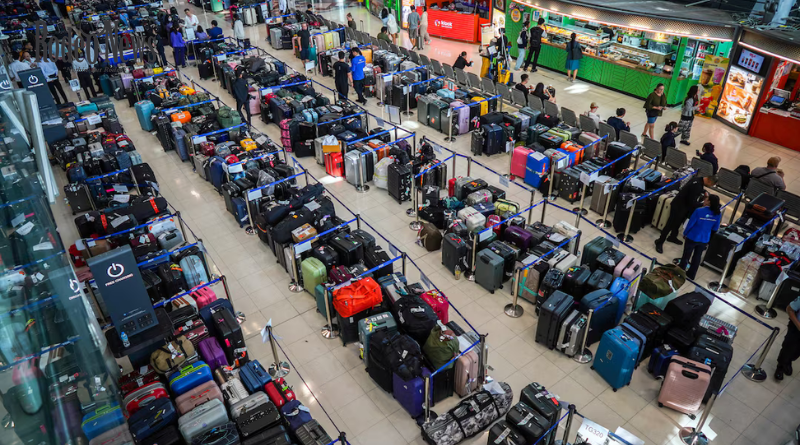
The flooding has disrupted roads, businesses and airport operations across Bangkok, while Thailand’s national carrier Thai Airways has faced significant delays and baggage-handling problems. Officials are now focusing on removing standing water while preparing longer-term measures to reduce the impact of future flooding.
The latest situation comes after Bangkok received about 320 millimeters of rain over two to three days, an amount close to what the city normally receives throughout the entire month of September.
Bangkok Floodwater Expected to Clear in Two to Three Days
Thailand’s government said standing Bangkok floodwater could take between two and three days to disappear, provided there is no additional rainfall that significantly worsens conditions.
Government spokesman Ekkapob Pianpises said authorities expected the situation to improve as drainage operations continued. The forecast provides some relief for residents and businesses that have spent several days dealing with inundated roads and neighborhoods.
However, the two-to-three-day estimate depends heavily on the weather. Bangkok is a low-lying city and large volumes of rain can quickly overwhelm drainage systems, particularly in areas where water levels remain high.
The government is therefore continuing to monitor conditions while local authorities work to drain flooded areas.
Heavy Rain Created Widespread Bangkok Flooding
The current flooding followed several days of intense rainfall across Bangkok and other parts of Thailand.
Thailand’s Meteorological Department said the country experienced widespread rainfall during the week of Sept. 21-27, with heavy to very heavy rain affecting several regions. Bangkok experienced particularly persistent rainfall between Sept. 25 and 27.
The weather system produced significant rainfall across the capital and surrounding areas.
According to Reuters, Bangkok received approximately 320 mm of rain over two to three days, nearly equivalent to the city’s typical rainfall for the entire month of September.
The unusually concentrated rainfall placed pressure on Bangkok’s drainage infrastructure and left numerous roads and communities under water.
The Department of Disaster Prevention and Mitigation reported that flooding was affecting Bangkok and dozens of provinces. As of Sept. 28, authorities reported hundreds of thousands of affected households nationwide.
Bangkok Floodwater Disrupts Travel
One of the most visible consequences of the flooding has been disruption to transportation.
Bangkok’s main airports continued operating despite the severe weather. However, flooding caused major difficulties for ground operations, particularly baggage handling at Suvarnabhumi Airport.
Thai Airways said 34 of its flights were delayed on Sept. 28, while baggage from 52 flights between Sept. 26 and 27 was still being delivered to passengers. The airline subsequently announced additional cancellations linked to the flooding and aircraft rotation problems.
Thai Airways also planned to cut about 30 flights from Bangkok on Tuesday, representing roughly 30% of its planned departures, according to Reuters. The airline’s chief executive, Chai Eamsiri, said the reduction would continue for at least three days.
The disruption illustrates how flooding can affect transportation even when airport runways remain operational.
Getting employees to airports, moving baggage, transporting aircraft crews and maintaining normal ground services can all become more difficult when surrounding roads are flooded.
Baggage Backlog Adds to Airport Problems
The airport disruption became particularly challenging for passengers because of a large baggage backlog.
Reuters reported that hundreds of bags were still lined up inside Suvarnabhumi Airport on Tuesday. Thai authorities responded by bringing in military personnel to assist with ground operations.
The Thai Air Force deployed 69 personnel on Monday to help Thai Airways manage the baggage situation.
For passengers, the problem means that arriving in Bangkok does not necessarily guarantee immediate access to checked luggage.
The baggage delays also demonstrate how a weather emergency can produce secondary disruptions long after an airport itself remains technically open.
Thai Airways has apologized to passengers and said it was working to reunite travelers with their luggage as quickly as possible.
Flooding Has Affected More Than Bangkok
Although Bangkok has received much of the international attention because of its importance as Thailand’s political, economic and transportation center, the flooding is not limited to the capital.
Thailand’s disaster management authorities reported flooding in Bangkok and 27 provinces as of Sept. 28, with hundreds of thousands of households affected. Officials said some provinces were experiencing rising water levels while conditions were improving in others.
The country’s meteorological conditions also contributed to flooding across central, eastern and other parts of Thailand.
The Meteorological Department reported particularly heavy rainfall in several provinces during the week, including substantial rainfall totals in parts of the central and eastern regions.
This broader situation means that Bangkok’s recovery is taking place alongside continued flood-response operations elsewhere in the country.
Government Begins Planning for Long-Term Flood Recovery
While immediate attention remains focused on removing Bangkok floodwater, Thai authorities are also considering longer-term flood management.
The Cabinet was expected to discuss measures addressing flooding and recovery, according to government spokesman Ekkapob Pianpises.
That discussion could become important as authorities assess the economic and infrastructure damage caused by the latest rainfall.
Bangkok has long faced challenges from seasonal rainfall because of its low elevation, dense urban development and extensive network of waterways and drainage infrastructure.
The latest flooding again highlights the importance of maintaining drainage capacity and preparing for periods when unusually large amounts of rain arrive over a short period.
Internal Link Opportunity
Suggested internal link: Bangkok’s Flood Control System Explained: How Thailand’s Capital Manages Heavy Rain
Use this as an internal link to a related article on your website about Bangkok’s drainage infrastructure, flood prevention or Thailand’s monsoon season.
Economic Impact From the Flooding
Flooding can create economic losses well beyond the direct cost of repairing damaged buildings and roads.
Businesses may be unable to open when employees cannot reach workplaces. Deliveries can be delayed, customers may stay away and transportation costs can rise.
The disruption at Suvarnabhumi Airport also creates wider consequences because Bangkok is one of Southeast Asia’s major aviation hubs.
Thailand’s government has estimated significant damage associated with the flooding, while businesses and local communities continue to assess their individual losses.
For small businesses, even several days of flooding can have serious consequences. Shops in affected neighborhoods may lose inventory, experience reduced customer traffic or face cleanup and repair costs.
The effects can also extend into tourism, particularly when travelers encounter canceled flights, delayed baggage or difficulty reaching hotels and transportation hubs.
Residents Still Face Uneven Recovery
The expectation that Bangkok floodwater will clear within two to three days does not necessarily mean every neighborhood will return to normal at the same time.
Flooding is often uneven across the capital. Low-lying communities can remain affected after water has receded from major roads and commercial districts.
Officials have therefore emphasized drainage and continued monitoring.
Bangkok authorities have also been working to assist vulnerable residents and accelerate the removal of water from affected areas.
Earlier reports showed particularly severe flooding in parts of eastern Bangkok, where residents faced substantial water accumulation following the heavy rain.
The recovery process will depend not only on rainfall but also on drainage capacity, canal water levels and conditions in surrounding areas.
Why More Rain Could Change the Timeline
The government’s two-to-three-day estimate comes with an important condition: no significant additional rainfall.
That qualification is critical.
If another period of heavy rain moves over Bangkok before existing water has drained, the recovery timeline could become longer. Additional rainfall would also place further pressure on canals, pumps and drainage systems.
Thailand’s Meteorological Department has continued monitoring weather conditions across the country, with heavy rainfall remaining possible in some regions.
For Bangkok residents, therefore, the forecast of improving conditions should be viewed as an indication of the expected trend rather than a guarantee that every flooded location will immediately become dry.
Thailand’s Flood Response Continues
Thailand’s disaster response agencies have been coordinating with provincial authorities, police, military personnel, volunteers and relief organizations.
The Department of Disaster Prevention and Mitigation said response teams were using mobile pumps and other equipment to accelerate drainage. Authorities were also helping evacuate vulnerable residents and distribute drinking water and other assistance.
These operations will remain important even as water levels begin falling.
Flood recovery does not end when water disappears from roads. Authorities must also inspect infrastructure, remove debris, address sanitation concerns and help affected businesses and households return to normal.
What Happens Next for Bangkok?
The immediate priority is straightforward: remove standing water and restore transportation and daily life.
If rainfall remains limited, officials expect Bangkok floodwater to recede over the next several days.
The next challenge will be assessing the damage and identifying why certain neighborhoods were particularly vulnerable during the latest rainfall event.
Thai officials are also expected to consider longer-term flood management as part of the recovery process.
For residents, businesses and travelers, the coming days will be closely watched. The speed of the recovery will depend on weather conditions and the ability of Bangkok’s drainage system to handle the remaining water.
Bangkok Floodwater Recovery Remains Weather-Dependent
The latest flooding in Bangkok demonstrates how quickly extreme rainfall can disrupt a major metropolitan area.
The capital received roughly 320 mm of rain over two to three days, while flooding affected communities, roads and transportation services.
The Thai government now expects standing water to clear within two to three days if no additional heavy rainfall occurs.
At the same time, airport disruptions show that the effects of flooding can continue even after rain has stopped. Thai Airways is working through flight disruptions and a significant baggage backlog, while military personnel have been brought in to support ground operations.
For Bangkok, the immediate outlook is one of gradual recovery. But the condition attached to the government’s forecast remains crucial: the city needs the rain to stay away long enough for its drainage systems to catch up.
As authorities move from emergency response toward recovery, the latest flooding is likely to renew attention on Bangkok’s long-term ability to manage increasingly intense rainfall events.