EU Energy Demand Warning: 5 Winter Risks Revealed
A new EU energy demand warning is putting Europe’s winter energy outlook under renewed scrutiny as governments confront unusually low gas-storage levels, elevated prices and tighter competition for liquefied natural gas.
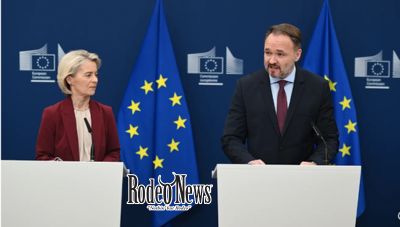
European Energy Commissioner Dan Jørgensen has urged EU governments to continue measures that can reduce gas and electricity consumption while supporting efforts to refill storage facilities. In a letter seen by Euronews, Jørgensen warned that the situation had not improved since his first warning in March.
The warning comes with an important qualification. The European Union is not currently facing an immediate gas-security crisis, according to the European Commission. EU gas supplies remain stable, while officials continue monitoring storage levels, global markets and geopolitical developments.
However, the combination of lower storage, high prices and intense competition for LNG could make the winter more expensive and potentially more difficult if supply conditions deteriorate.
EU energy demand warning focuses on winter preparation
The latest EU energy demand warning reflects growing concern that Europe’s energy challenge is moving beyond prices alone.
Jørgensen’s letter calls on national governments to consider measures that can sustain gas injections into storage or reduce demand for gas and electricity for as long as necessary.
According to Euronews, EU gas storage was around 70% full on September 27, roughly 12 percentage points below the level recorded at the same time last year.
Storage provides an important buffer because European gas consumption generally increases during the colder months.
The European Commission explains that underground gas storage is a major component of EU energy security. Storage typically supplies around 25% to 30% of the gas consumed across the EU during winter, helping the bloc respond to strong demand or supply disruptions.
Lower inventories therefore leave policymakers with less room for unexpected disruptions.
That does not mean that Europe will automatically experience a shortage.
Instead, it means the margin for error could be smaller if winter demand rises sharply or international LNG supplies remain constrained.
Gas prices are adding to the pressure
The latest concern is also closely connected to European gas prices.
Euronews reported that the Dutch TTF benchmark was trading at around €72 per megawatt-hour, about €40 higher than before the US and Israeli attacks on Iran began on February 28. Analysts cited by Euronews warned prices could potentially rise above €100 per megawatt-hour during the winter if Gulf LNG exports do not recover or Norwegian maintenance keeps exports constrained.
A higher gas price does not necessarily mean Europe lacks physical supplies.
It can, however, create significant economic pressure.
Gas-fired power plants can face higher fuel costs. Energy-intensive industries can see production expenses increase. Households can also face higher heating and electricity bills, while governments may come under pressure to provide financial assistance.
This is why the EU is focusing increasingly on demand.
Reducing consumption can potentially ease both the physical demand for gas and the financial pressure created by tight international markets.
Why electricity demand matters
The EU’s strategy is not limited to gas consumption.
Electricity demand is also important because gas-fired power plants are part of Europe’s electricity-generation system.
When electricity demand rises, gas plants may be required to produce additional power. Reducing consumption during periods of peak demand can therefore lower the amount of gas needed for electricity generation.
Euronews reported that Jørgensen pointed to several measures previously used during the 2022 energy crisis.
These included reducing electricity consumption during peak hours, encouraging consumers to shift demand through smart meters and retail tariffs, lowering temperatures in public buildings, restricting outdoor heating and switching off unnecessary public lighting at night.
The approach is not currently based on a new mandatory EU-wide household reduction target.
Instead, Jørgensen is encouraging countries to consider voluntary and carefully planned measures.
That distinction is significant because national governments retain substantial control over how such measures are implemented.
The EU is avoiding panic buying
Another important element of the latest EU energy demand warning is the message about gas storage.
Under normal circumstances, governments want storage facilities to be as full as possible before winter.
The EU’s gas-storage framework generally works around a 90% filling target, although the rules provide flexibility under difficult market conditions. The European Commission says countries can deviate from filling trajectories in certain circumstances, while the Commission can also adjust requirements when unfavorable market conditions persist.
Jørgensen has encouraged governments to use that flexibility.
Euronews reported that he suggested an 80% filling level could be considered rather than pushing aggressively toward 90% in the current environment.
The reasoning is linked to market conditions.
If European countries all attempt to purchase large quantities of gas at the same time, they could intensify competition for limited international supplies.
That competition could push prices higher.
A more gradual purchasing strategy could therefore help prevent a late-season buying rush.
LNG competition remains a major risk
Europe’s dependence on global LNG markets has become increasingly important as the bloc has reduced its reliance on Russian pipeline gas.
Liquefied natural gas allows Europe to obtain supplies from producers around the world.
But LNG is traded in a global market.
Europe therefore competes with Asian buyers and other customers for available cargoes.
If Asian demand increases at the same time that European inventories remain low, competition can become more intense.
The Middle East adds another layer of uncertainty.
Euronews reported that continuing disruption in the region and competition from Asia for LNG cargoes are contributing to higher prices and increasing concerns about supply.
The European Commission has separately noted that the Middle East remains unstable and that Qatari LNG production has been shut down, while geopolitical uncertainty continues to contribute to significant price volatility.
Qatar is a major LNG supplier, making the availability of its exports an important factor for global gas markets.
Norway is another factor to watch
Norwegian pipeline gas is another key component of Europe’s energy system.
Any prolonged maintenance or disruption affecting Norwegian exports could place additional pressure on European buyers.
Euronews cited analysts who warned that prices could rise above €100 per megawatt-hour during the winter if Gulf LNG exports fail to recover or Norwegian maintenance continues to constrain exports.
That remains a potential scenario rather than a confirmed forecast.
Gas prices will depend on multiple variables, including production, shipping, storage, weather, demand and geopolitical developments.
Still, the possibility illustrates why European policymakers are preparing before winter demand reaches its seasonal peak.
Five risks Europe is monitoring
The latest EU energy demand warning can be understood through five major factors.
1. Lower gas storage
European storage is around 70% full, according to the figures cited by Euronews, leaving inventories below the level recorded last year at the same point.
2. LNG competition
Europe must compete internationally for LNG cargoes. Increased Asian demand could make replacement supplies more expensive.
3. Middle East disruptions
Continued instability could affect LNG production, shipping routes and broader energy-market sentiment.
4. Norwegian exports
Maintenance or prolonged restrictions could reduce pipeline supplies at a sensitive point in the European energy calendar.
5. Winter weather
Weather could ultimately determine how quickly stored gas is consumed.
A mild winter would generally reduce heating demand.
A prolonged cold period could have the opposite effect, increasing withdrawals from storage and raising the need for additional imports.
Europe is better prepared than during the 2022 crisis
Despite the latest warning, EU officials say the current situation differs significantly from the energy crisis that followed Russia’s invasion of Ukraine.
The European Commission said in early September that the EU was better prepared because of greater supply diversification, increased LNG import capacity and reduced overall gas demand. It concluded that there was no immediate security-of-supply risk.
That provides important context.
Europe is not entering winter with the same energy structure it had several years ago.
The bloc has expanded LNG infrastructure, diversified suppliers and strengthened connections between national energy systems.
Those changes provide additional options if one source of supply becomes unavailable.
Nevertheless, stronger infrastructure does not eliminate the possibility of high prices.
Europe can have sufficient physical gas while still experiencing substantial financial pressure from expensive imports.
What the EU could do if conditions worsen
The latest warning also points toward national emergency plans.
According to Euronews, those plans can include tools such as interruptible gas contracts and switching some power plants from gas to alternative fuels.
These measures are not currently being described as necessary.
Instead, they form part of the contingency framework available if market conditions deteriorate.
The EU’s preference is to act before a potential crisis becomes acute.
Reducing demand early can be less disruptive than imposing severe restrictions after supplies become critically tight.
That is also why voluntary measures are being emphasized now.
Households could still feel the impact
For European households, the biggest concern may ultimately be the cost of energy rather than physical availability.
If wholesale gas prices remain elevated, electricity and heating costs can remain under pressure.
Governments may respond with subsidies, tax measures or other forms of consumer assistance.
But those measures can also create additional pressure on public finances.
Energy-intensive industries face another challenge.
Manufacturers that rely heavily on natural gas or electricity can see their costs rise when wholesale prices increase. This can affect competitiveness, production decisions and investment.
As a result, the energy issue extends beyond household bills.
It can become an economic policy issue affecting industries across the continent.
No immediate gas shortage has been declared
The distinction between a price crisis and an immediate physical shortage is important.
The European Commission said on September 25 that EU gas supplies remained stable despite lower storage levels and that protected customers, particularly households and essential services, remain covered by the bloc’s gas-supply rules under serious adverse conditions.
The Commission is therefore not describing the current situation as an immediate supply emergency.
Instead, officials are preparing for scenarios in which conditions become less favorable.
That preparation includes monitoring storage, encouraging demand management and maintaining communication between EU countries and energy-market participants.
The next weeks will be important
The European Commission’s Gas Coordination Group is continuing to monitor the market.
The Commission said the group reviewed current gas conditions on September 24 and heard preliminary findings that will contribute to its Winter Preparedness Report, which is scheduled for publication on October 8.
That report could provide a clearer picture of Europe’s ability to manage the winter under different supply and demand scenarios.
Until then, several variables remain uncertain.
The availability of LNG will be important.
So will Norwegian exports.
Weather could become decisive once temperatures begin falling across Europe.
And developments in the Middle East could quickly affect global energy markets.
Europe enters winter with limited room for complacency
The latest EU energy demand warning does not mean Europe is automatically heading toward another 2022-style energy crisis.
The European Commission continues to say that there is no immediate security-of-supply risk, and the bloc’s energy system is more diversified than it was several years ago.
But officials are clearly taking the risks seriously.
Gas storage remains below last year’s level. LNG markets are competitive. Geopolitical uncertainty continues to influence prices, while winter demand has yet to reach its seasonal peak.
For governments, the immediate task is preparation.
For consumers and businesses, the message is that energy efficiency could become increasingly valuable if prices remain elevated.
And for European policymakers, the challenge is to maintain adequate supplies without creating unnecessary additional pressure on already expensive global markets.
The coming weeks will show whether continued storage injections, diversified imports and lower demand can reduce the pressure.
For now, Brussels is trying to prevent a difficult energy market from becoming a much larger winter problem.
The strategy is straightforward: prepare early, reduce unnecessary demand, avoid panic buying and preserve as much flexibility as possible before the coldest months arrive.
Source: Euronews, with additional context from the European Commission’s Gas Coordination Group and EU gas-storage information.