
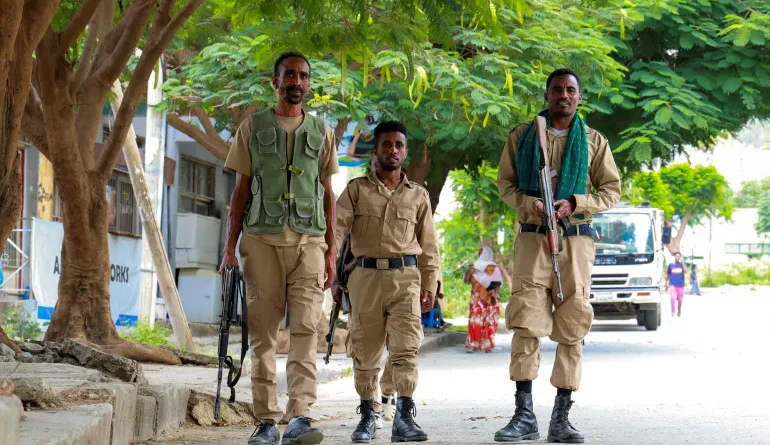
Ethiopia Tigray Conflict: 5 Key Risks Ahead
The Ethiopia Tigray conflict has entered a dangerous new phase after fighting erupted across Tigray and spread into neighbouring parts of northern Ethiopia. The renewed clashes have shattered the relative calm that followed the 2022 Pretoria peace agreement and raised fresh concerns about whether Ethiopia could slide back into a much wider war.
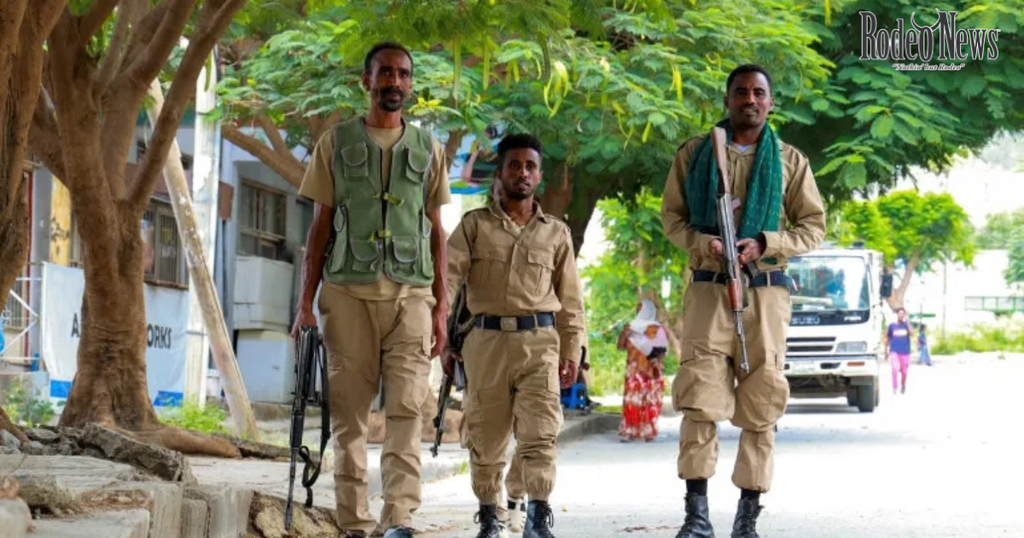
The latest escalation began in September 2026, when Tigrayan forces launched operations against federal positions and seized several airports in Tigray. Fighting was subsequently reported in Tigray, Afar and Amhara, while communications and transport links were disrupted in parts of the north. AAl Jazeera+1
The United Nations has warned that the situation is deteriorating rapidly. UN Secretary-General António Guterres called for restraint, protection of civilians and renewed dialogue under the Pretoria framework. TThe United Nations in Ethiopia
Here are five major risks to watch as the Ethiopia Tigray conflict develops.
1. Ethiopia Tigray Conflict Could Expand Beyond Tigray
The most immediate concern is geographical expansion.
The latest fighting has not remained confined to Tigray. Reuters reported clashes in neighbouring Afar and Amhara regions, while Al Jazeera reported that armed groups were confronting federal forces across several parts of northern Ethiopia. RReuters+1
That matters because Ethiopia’s previous Tigray war also spread beyond the region.
The 2020–2022 conflict involved federal forces, Tigrayan forces and regional actors. Eritrean forces also became involved, while Amhara forces fought alongside the federal side. The conflict eventually became one of the most destructive wars in Ethiopia’s recent history.
The current situation has a different political and military configuration, but the geographic connections remain important.
Tigray borders Eritrea to the north, while Afar provides routes toward Djibouti and the Red Sea. Amhara lies to the south and west. Fighting in any of these areas could therefore have consequences well beyond the immediate battlefield.
The United Nations has specifically warned against actions that could lead to a broader and more devastating conflict. TThe United Nations in Ethiopia
2. A New Alliance Has Changed the Political Landscape
Another major development is the formation of an alliance involving seven Ethiopian armed groups.
Reuters reported that the Ethiopian Peoples’ Forces Alliance for Survival includes the Tigray People’s Liberation Front, the Amhara Fano National Movement and armed groups from several other regions. The groups have declared opposition to Prime Minister Abiy Ahmed’s government. RReuters
The alliance is significant because some of its members have previously been enemies.
The TPLF and Amhara Fano forces, for example, fought on opposite sides during the 2020–2022 Tigray war. Their decision to participate in the same broader anti-government alliance represents a major shift in Ethiopia’s political and security environment. RReuters
However, the alliance does not necessarily mean that all seven groups will operate as a unified military force.
Reuters cited International Crisis Group analyst Magnus Taylor, who said geographical distances, the relative strength of individual groups and political differences could make cooperation difficult. RReuters
That distinction is important.
The existence of an alliance demonstrates growing opposition to the federal government, but its ability to coordinate military operations remains uncertain.
For now, the alliance adds another layer of complexity to an already fragmented security environment.
3. The 2022 Peace Agreement Is Under Severe Pressure
The renewed Ethiopia Tigray conflict also puts the Pretoria peace agreement under unprecedented pressure.
The agreement, signed in November 2022 under African Union mediation, ended the previous large-scale war between the Ethiopian federal government and the TPLF.
It established a framework for ending hostilities, humanitarian access, disarmament and a political process.
However, implementation has remained difficult.
Reuters reported that tensions between Tigrayan authorities and the federal government had been increasing for months before the latest escalation. The TPLF had also reasserted control over Tigray’s political administration in May, which Reuters said violated provisions of the 2022 agreement. RReuters
The United Nations has called for the parties to return to negotiations under the Pretoria framework.
UN Secretary-General António Guterres said the African Union’s efforts, including the engagement of former Nigerian President Olusegun Obasanjo, should help reduce tensions and bring the parties back to talks. TThe United Nations in Ethiopia
Whether that diplomatic channel can prevent further escalation is one of the central questions facing Ethiopia.
4. Civilian and Humanitarian Risks Are Rising
The humanitarian consequences could become severe if the fighting continues.
The United Nations said existing humanitarian needs in northern Ethiopia are already substantial, including among people displaced by earlier fighting in Tigray. The latest escalation is making aid operations more difficult. UUnited Nations
Road closures have disrupted humanitarian movements, while insecurity has affected operations in parts of Amhara and other northern areas.
The UN also reported that a drone strike in northwestern Tigray hit a truck carrying food assistance for internally displaced people.
Communications problems are adding another complication.
Phone and internet services have been heavily disrupted in parts of Tigray. Such interruptions make it harder for civilians to communicate with relatives, access financial services and receive information about safe routes or humanitarian assistance. They also make independent verification of events on the ground more difficult. UUnited Nations+1
The UN’s human rights chief, Volker Türk, has separately expressed alarm about the impact of the fighting on civilians and called for an immediate reduction in tensions. UUN Human Rights Office
The humanitarian situation therefore needs to be considered separately from the military question.
Even if fighting remains geographically limited, interruptions to transportation, communications and aid can create serious consequences for civilians.
5. The Horn of Africa Could Face Wider Instability
The fifth risk is regional.
Ethiopia is one of Africa’s most strategically important countries and has borders with Eritrea, Sudan, South Sudan, Kenya, Somalia and Djibouti.
Any prolonged conflict inside Ethiopia could affect neighbouring countries through refugee movements, cross-border security concerns, trade disruptions and political tensions.
Eritrea is particularly important.
During the previous Tigray war, Eritrean forces fought alongside Ethiopian federal forces against the TPLF. Relations between Addis Ababa and Asmara have since deteriorated.
The Ethiopian government has accused Eritrea of supporting armed groups inside Ethiopia, allegations Eritrea has denied. Reuters reported those competing claims when covering the formation of the new armed alliance. RReuters
The possibility of external involvement is therefore one of the issues international observers are watching closely.
At this stage, however, it would be premature to assume that the current fighting will develop into a regional war.
The situation remains fluid, and diplomatic efforts are continuing.
What Happened to the Previous Tigray War?
Understanding the current crisis requires looking back to 2020.
The original Tigray war began after a political confrontation between Ethiopia’s federal government and the TPLF escalated into armed conflict.
The fighting lasted roughly two years.
The conflict caused extensive civilian suffering, displacement and destruction. Communications, banking and humanitarian access were severely affected in Tigray during the war.
The November 2022 Pretoria agreement eventually brought the major fighting to an end.
But the agreement did not resolve every underlying political and territorial dispute.
Issues involving regional autonomy, disputed territories, disarmament, the return of displaced people and the political future of Tigray remained sensitive.
The current fighting demonstrates how unresolved disputes can re-emerge even after a formal peace agreement.
Why the Current Crisis Is Different
It would be misleading to describe the 2026 crisis as simply a repeat of the 2020 war.
The political environment has changed.
The emergence of a seven-group alliance creates a broader anti-government network than existed at the beginning of the previous conflict. At the same time, disagreements among those groups could limit their ability to coordinate.
The Tigrayan political landscape has also experienced internal divisions.
Reuters reported disagreements between TPLF hardliners and more moderate figures, including defections and the creation of a rival armed force by former Tigrayan commanders.
These divisions could influence the direction of the conflict.
They also make the situation harder to predict.
International Pressure Is Growing
International organizations have responded quickly to the latest escalation.
The United Nations has called for restraint, civilian protection and humanitarian access. Its representatives are also engaging with the African Union and other regional actors to support renewed dialogue. TThe United Nations in Ethiopia+1
The UN human rights office has raised particular concern about reports of civilian harm, airstrikes and communications disruptions. UUN Human Rights Office
The international response could become increasingly important if fighting continues.
Diplomatic pressure alone cannot resolve Ethiopia’s political disputes, but outside mediation may provide a channel for the parties to step back from further military escalation.
The African Union is particularly relevant because the Pretoria agreement itself emerged from an AU-led peace process.
Is Ethiopia Heading Back to Civil War?
The latest evidence shows that Ethiopia is experiencing a serious military escalation, but it does not establish with certainty that the country is already in another nationwide civil war.
There are, however, several warning signs.
Fighting has returned to Tigray. Hostilities have spread into neighbouring regions. A new alliance has brought together several armed groups opposed to the federal government. Communications have been disrupted, and humanitarian operations are becoming more difficult. AAl Jazeera+2
At the same time, the groups involved have different interests, and the extent of their military coordination remains unclear.
Diplomatic efforts are also still active.
That means the trajectory of the Ethiopia Tigray conflict remains uncertain.
The immediate question is not simply whether fighting has resumed. It is whether the parties can prevent the current clashes from developing into a sustained, multi-front conflict.
What Happens Next?
Several developments will be especially important to monitor.
First, observers will watch whether fighting remains concentrated in Tigray and neighbouring northern regions or expands further.
Second, the ability of the seven-group alliance to coordinate will matter.
Third, the response of Eritrea and other regional actors could affect the security environment.
Fourth, humanitarian access will be critical as communications and transport networks remain disrupted.
Finally, the future of the Pretoria peace framework could determine whether the latest escalation becomes a temporary crisis or the beginning of a much longer conflict.
For civilians in northern Ethiopia, the immediate priority is protection and access to essential services.
For diplomats, the challenge is to prevent the military escalation from closing the remaining political space for negotiation.
The Ethiopia Tigray conflict has entered a dangerous period, but the outcome is not predetermined. The coming days and weeks will show whether the latest fighting can be contained or whether Ethiopia moves toward another prolonged period of armed conflict.