
DR Congo Ebola Outbreak: 2 New Zones Hit
The DR Congo Ebola outbreak has expanded into two additional health zones, raising concern among health authorities as responders struggle to contain the spread of the Bundibugyo virus. The World Health Organization said the latest expansion includes Bulu health zone in Sud-Ubangi province and Dungu health zone in Haut-Uélé province, bringing the total number of affected health zones to 63 across seven provinces.
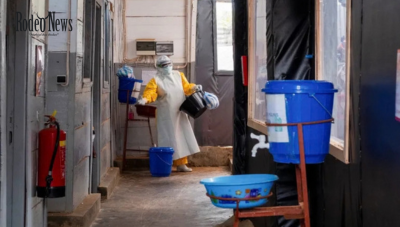
The latest WHO figures, covering the situation through September 23, show that the Democratic Republic of the Congo has recorded 7,890 confirmed cases and 3,799 deaths. That represents a crude case-fatality ratio of about 48.1 percent among confirmed cases. WHO said the number of new cases reported each day remains high, although transmission levels differ substantially between provinces and individual health zones.
The geographic expansion is particularly concerning because both newly affected areas are close to international borders. Bulu is in Sud-Ubangi, in northwestern DRC, while Dungu is in Haut-Uélé near South Sudan. WHO said the expansion increases the risk of cross-border transmission.
DR Congo Ebola outbreak reaches 63 health zones
The latest development marks another step in the rapid geographic expansion of the outbreak.
According to WHO, cases are now confirmed in 63 health zones across seven provinces: Ituri, North Kivu, South Kivu, Haut-Uélé, Bas-Uélé, Tshopo and Sud-Ubangi. Forty-eight of those health zones across six provinces had reported at least one case during the previous 21 days as of September 23.
The outbreak was initially detected in Ituri province in May. Since then, transmission has moved into multiple provinces, creating a complex network of affected communities that health teams must monitor.
WHO has described the current outbreak as the largest Ebola disease outbreak ever recorded in the DRC when all Ebola virus species are considered. The current outbreak is caused by the Bundibugyo virus, a different Ebola species from the Zaire virus responsible for several earlier outbreaks in the country.
The distinction is important because vaccines and treatments developed for other forms of Ebola cannot automatically be assumed to work against Bundibugyo virus.
Ituri remains the center of the outbreak
Despite the expansion into new regions, Ituri remains the main epicenter of the outbreak.
WHO reported that 28 of Ituri’s 36 health zones have recorded cases. The province has accumulated the largest number of confirmed infections since the outbreak began, although transmission patterns have changed as the disease has spread into other parts of the country.
North Kivu is another major area of concern. Sixteen of its 34 health zones have reported cases, and WHO said the province continues to experience substantial transmission.
The movement of people between communities makes containment more difficult. In several affected areas, conflict, displacement and limited access to health services have complicated surveillance, case investigation and contact tracing.
WHO has warned that humanitarian conditions can make it harder for response teams to reach communities quickly. Remote locations, insecurity and population movement can all delay the identification of patients and people who may have been exposed.
New cases raise cross-border concerns
The latest affected locations have increased attention on DRC’s international borders.
Bulu health zone is in Sud-Ubangi, which borders the Central African Republic and the Republic of the Congo. Dungu, meanwhile, is located in Haut-Uélé near South Sudan.
The region has significant population movement, including travel through official and informal border crossings. WHO has previously warned that informal crossings can make surveillance and early detection more difficult.
Earlier in the outbreak, cases linked to the Bundibugyo virus were also reported outside DRC. WHO’s August and September updates noted cases associated with Uganda and an imported case treated in France, demonstrating why international surveillance remains part of the response.
The existence of cross-border risks does not mean widespread international transmission is inevitable. Instead, health authorities are focusing on surveillance, rapid diagnosis, information sharing and preparedness in neighboring countries.
WHO has emphasized the importance of coordinated action between countries sharing borders with affected areas.
Why the Bundibugyo virus is difficult to control
Bundibugyo virus disease is caused by the Bundibugyo species of orthovirus. It is a severe form of Ebola disease and can produce serious illness and death.
The virus is thought to have a zoonotic origin, with fruit bats suspected as a natural reservoir. Human infections can occur through contact with infected animals and then spread between people through direct contact with infected blood, bodily fluids, organs or contaminated materials.
Healthcare facilities can become important points of transmission when infection-prevention measures are inadequate. Unsafe burial practices can also create additional transmission opportunities because people may come into direct contact with the body of someone who died from the disease.
The incubation period can range from two to 21 days. Early symptoms, including fever, fatigue, muscle pain, headache and sore throat, are not specific to Ebola. They can resemble more common illnesses, including malaria, making early clinical recognition difficult without laboratory testing.
That diagnostic challenge is particularly important in regions where malaria and other infectious diseases are already common.
Contact tracing remains a major challenge
One of the biggest obstacles in the DR Congo Ebola outbreak is identifying and monitoring people who may have been exposed.
Africa CDC Director-General Jean Kaseya told Reuters that the number of contacts being tracked was far below the estimated number that would normally be expected from the number of confirmed cases. Al Jazeera reported that authorities had about 30,000 people on the contact list, compared with an estimate of roughly 420,000 potential contacts.
Contact tracing allows health teams to monitor exposed people during the incubation period and identify symptoms early.
When contacts cannot be found or followed, health authorities have less information about where the virus may be spreading. That can allow chains of transmission to continue undetected.
Conflict and displacement make the challenge more difficult. People may move between communities, temporarily settle in crowded areas or become difficult for response teams to reach.
No licensed Bundibugyo vaccine is currently available
Another major challenge is the lack of a licensed vaccine specifically approved for Bundibugyo virus disease.
WHO says Ervebo, the licensed Ebola vaccine, is specifically approved for Ebola virus disease caused by the Zaire species. There is currently no licensed vaccine specifically for Bundibugyo virus disease.
However, research into the potential use of Ervebo against Bundibugyo virus is underway.
WHO said that evidence is currently insufficient to determine whether Ervebo protects people against Bundibugyo virus disease. Therefore, the organization recommends that its use against Bundibugyo virus remain within research protocols.
In August, the DRC requested doses of Ervebo from the global Ebola vaccine stockpile. WHO and Africa CDC said the International Coordinating Group authorized an initial release of 70,000 doses, including doses intended for a clinical trial and vaccination of frontline and healthcare workers under the applicable recommendations.
The vaccination effort is therefore also part of scientific research aimed at determining whether the vaccine can provide meaningful protection against this particular Ebola species.
Scientists are testing potential treatments
Researchers are also working to identify effective treatments specifically for Bundibugyo virus disease.
The PARTNERS clinical trial began enrolling patients in DRC in July. The study is evaluating potential antiviral therapies, including the monoclonal antibody MBP134 and remdesivir, as well as combinations of treatments.
WHO said in its September update that the trial had expanded to five clinical management facilities in Ituri and had enrolled more than 300 confirmed cases as of the September 10 update.
For patients outside clinical trials, supportive medical care remains essential.
WHO’s clinical guidance for filovirus diseases includes measures such as fluid management, monitoring for complications, oxygen support when required, management of blood pressure and treatment of other medical problems.
Early detection and timely supportive treatment can improve outcomes.
Response teams face insecurity and displacement
Containing the outbreak is not simply a medical challenge.
The DRC has faced prolonged insecurity in several areas affected by the outbreak. Conflict can restrict travel, disrupt healthcare services and prevent response teams from reaching communities.
Displacement can also increase the difficulty of tracking contacts. People who leave affected areas may be difficult to monitor, while crowded living conditions can make infection prevention more challenging.
WHO has highlighted the importance of community engagement alongside medical interventions. Public-health workers need cooperation from residents to identify suspected cases, trace contacts, encourage safe care-seeking and support safe burial procedures.
Trust can therefore be as important as laboratory capacity.
If people delay seeking medical care because they fear isolation or treatment facilities, cases may be identified later in the course of illness. That can make treatment more difficult and create additional opportunities for transmission.
What happens next
The latest expansion into Bulu and Dungu means health authorities must respond on an increasingly broad geographic front.
WHO continues to support surveillance, laboratory testing, contact tracing, infection prevention and control, clinical care and cross-border preparedness. The organization has also maintained international emergency measures because of the potential for regional spread.
The immediate priorities are clear: find cases quickly, identify their contacts, provide timely care and prevent infections in households and healthcare facilities.
At the same time, researchers are working to establish whether existing Ebola vaccines or experimental treatments can help against Bundibugyo virus disease.
For now, the latest WHO figures show that the DR Congo Ebola outbreak remains a large and active public-health emergency, with transmission continuing across multiple provinces. The addition of two more health zones demonstrates the difficulty of containing the virus in areas affected by insecurity, displacement and high population movement.
With 63 health zones affected and nearly 3,800 confirmed deaths reported by September 23, the response remains focused on slowing transmission while improving early diagnosis, patient care, contact tracing and cross-border preparedness.