
Nepal Flood Recovery Effort Faces Major Funding Challenge
Nepal is asking the international community to provide grant-based support for its flood recovery, rather than relying primarily on new loans, after a devastating glacier-related disaster killed at least 1,450 people and left more than 6,000 others missing.
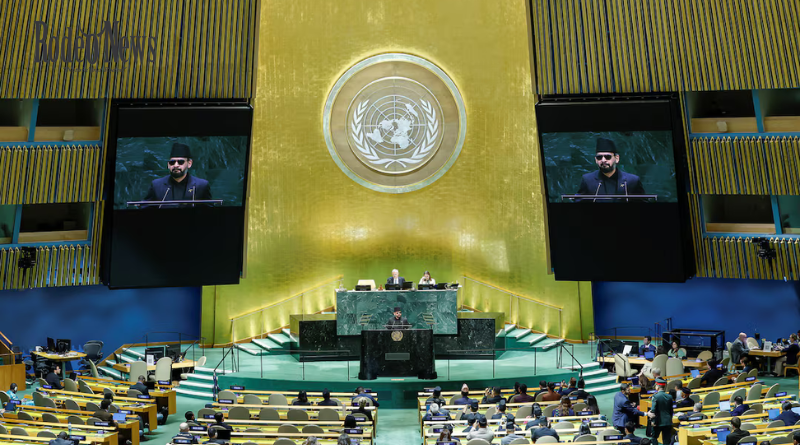
Prime Minister Balendra Shah made the appeal during his address to the United Nations General Assembly in New York on Thursday, September 24. He said Nepal’s recovery and reconstruction requirements could reach roughly 10% of the country’s gross domestic product after the disaster devastated communities in the Himalayan nation.
The appeal places Nepal flood recovery at the center of a broader debate over how vulnerable countries should finance reconstruction after increasingly severe climate-related disasters.
Shah argued that countries facing catastrophic climate events should not have to take on large amounts of additional debt simply to rebuild infrastructure and restore livelihoods.
“When a climate-driven disaster destroys infrastructure of a poor country,” Shah said, “the answer cannot simply be another mega loan or a patchwork of small grants.”
Nepal Flood Recovery Needs Grow After Glacier Disaster
The disaster struck in late August after a glacier collapsed near the border between Nepal and China’s Tibet Autonomous Region.
The collapse triggered landslides and a powerful flash flood that moved through downstream valleys, destroying homes, roads, bridges, schools and other infrastructure. Hydropower facilities were also heavily affected.
The scale of the disaster has complicated rescue and reconstruction efforts. Reuters reported on September 25 that search and recovery operations were still continuing weeks after the event, with more than 6,000 people remaining missing in the affected area.
The disaster has also created challenges beyond immediate humanitarian relief. Nepal now faces the task of restoring transportation links, electricity infrastructure, homes and economic activity while preparing communities for future hazards.
The World Bank said the August 26 Rasuwa-Bhotekoshi flood caused extensive loss of life and destruction and confirmed that it had made up to $170 million in emergency financing available to support the government’s immediate response and begin restoring critical infrastructure and services.
That financing provides an important source of support, but Nepal’s government is seeking broader grant-based assistance for the longer reconstruction effort.
Why Nepal Is Asking for Grants Instead of Loans
The distinction between grants and loans is central to Nepal’s request.
Loans can provide governments with substantial capital for reconstruction, but they also create repayment obligations. Grants, by contrast, do not generally require repayment and can therefore reduce the additional debt burden associated with rebuilding after a disaster.
Shah’s argument is that a country already vulnerable to climate-related shocks should not have to increase its debt load each time a major disaster destroys public infrastructure.
The issue is particularly important for Nepal because the country’s economy and infrastructure are exposed to multiple natural hazards, including floods, landslides, earthquakes and glacier-related events.
The prime minister said Nepal’s recovery and reconstruction needs were estimated at around 10% of GDP. That figure illustrates the potentially enormous economic consequences of the disaster relative to the size of the country’s economy.
At the same time, international assistance is already coming through several channels.
The World Bank’s emergency financing is intended to help Nepal respond immediately and begin repairing critical infrastructure. The bank also said it was working with the Asian Development Bank and the United Nations on a rapid post-disaster damage assessment to help identify recovery priorities and additional financing requirements.
Nepal Flood Recovery Includes Critical Infrastructure
Rebuilding after the disaster will involve much more than replacing damaged homes.
Roads and bridges are vital to connecting remote Himalayan communities with markets, hospitals and government services. Their destruction can isolate communities long after floodwaters have disappeared.
Schools also need to be repaired or rebuilt so children can return to education. Water systems, electricity networks and other public services will require investment as well.
The hydropower sector is another major concern.
Nepal has invested heavily in hydropower as part of its economic development strategy. Damage to facilities along the affected river systems therefore has implications for both local communities and the wider economy.
The World Bank said the Upper Trishuli-1 hydropower project was directly affected by the flood and that it was working with the project company and contractors to assist affected workers and their families while damage continued to be assessed.
The disaster demonstrates how a single extreme event can affect several parts of an economy at the same time.
UN Emergency Appeal Shows Scale of Humanitarian Needs
Nepal’s longer-term reconstruction request comes after an international humanitarian response was already launched.
On September 4, the United Nations and humanitarian partners launched a $49.6 million emergency appeal aimed at providing life-saving assistance to more than 84,000 people affected by flash floods and landslides across northern Nepal.
The four-month response plan was designed to address urgent needs while preventing additional hardship and disease risks as winter approaches in high-altitude communities.
The United Nations said the disaster affected areas including Rasuwa, Nuwakot and Dhading.
The humanitarian response and reconstruction effort are closely connected, but they serve different purposes. Emergency assistance focuses on immediate survival and essential services, while reconstruction requires larger and longer-term investments in infrastructure, livelihoods and resilience.
For Nepal, both tracks now have to operate simultaneously.
Nepal Calls for Greater Himalayan Cooperation
Shah’s UN address also focused on cooperation among Nepal, India and China.
The prime minister called for an urgent Himalayan mechanism that would allow the three countries to share satellite information, monitor glacial lakes, strengthen early-warning systems and coordinate responses to disasters that cross national borders.
The proposal reflects the geographical reality of the Himalayas.
Mountain systems and river basins do not follow political boundaries. A change in one part of the region can create consequences downstream or across borders.
Better information sharing could help authorities identify hazards earlier and improve the speed of emergency responses.
Satellite monitoring can provide information about changes in glaciers and glacial lakes, while early-warning systems can potentially give communities additional time to move away from dangerous areas.
The practical effectiveness of such cooperation would depend on governments sharing data, coordinating institutions and maintaining systems before disasters occur.
Climate Risk Is Becoming a Major Development Concern
Nepal’s appeal also places the disaster within the wider international discussion over climate change and climate finance.
The United Nations has previously highlighted the scale of damage caused by the August disaster. In September, the UN said the floods affected about 84,270 people and caused extensive destruction to roads, schools, power grids and water systems across northern Nepal.
That means the consequences extend beyond the immediate death toll.
When critical infrastructure is destroyed, years of development investment can be lost in a matter of hours. Communities can also face prolonged disruptions to employment, education, transportation and access to basic services.
For countries with limited fiscal resources, rebuilding can create difficult choices between disaster recovery and existing development priorities.
That is one reason Nepal is emphasizing grants and resilience financing rather than focusing solely on conventional borrowing.
Nepal Flood Recovery Could Reshape Future Disaster Planning
The current reconstruction effort may also influence how Nepal prepares for future disasters.
The World Bank said that, beyond immediate relief, it was prepared to support restoration of trade, reconstruction and investment programs aimed at more resilient infrastructure. It also said it was exploring ways to strengthen emergency preparedness through international collaboration.
Resilient infrastructure can include stronger bridges, improved drainage systems, better hazard mapping and infrastructure designed to withstand extreme events.
Early-warning systems can also play an important role.
However, technology alone cannot eliminate disaster risk. Warning systems must be connected to communities that know how to respond, while evacuation routes and emergency services need to be available when warnings are issued.
That makes preparedness a long-term investment rather than a one-time emergency expense.
The Debate Over Climate Finance
Nepal’s request also highlights a continuing international debate over how climate-related losses should be financed.
Developing countries frequently argue that they face serious consequences from global climate change despite having contributed relatively little to historical greenhouse gas emissions.
Supporters of greater climate finance argue that vulnerable countries need predictable funding to prepare for climate risks and recover when disasters cause unavoidable losses.
The opposing challenge is how international financing should be structured, who should provide it and how governments can ensure that funds are used effectively.
Nepal’s current disaster is therefore not only a domestic recovery issue. It has become part of a broader discussion about international disaster financing and climate resilience.
What Happens Next for Nepal Flood Recovery?
The immediate priority remains the search for missing people and assistance to communities affected by the disaster.
At the same time, authorities and international partners must assess damaged infrastructure and determine which projects need urgent repair or complete reconstruction.
The World Bank’s $170 million emergency financing provides one significant source of funding, while the UN’s humanitarian appeal addresses immediate relief needs.
But Nepal’s government says the broader reconstruction challenge is much larger.
Shah’s appeal at the UN now puts the question of grant-based international support directly before governments and international institutions.
Whether Nepal receives the level and type of assistance it is seeking will depend on decisions by donors, financial institutions and other international partners.
For Nepal, the objective is not simply to rebuild what the flood destroyed. The government is also seeking to strengthen infrastructure and warning systems so that future disasters do not erase years of economic and social progress.
A Test for Himalayan Climate Resilience
The August disaster has become a major test of Nepal’s ability to recover from an extreme event while continuing its longer-term development plans.
The country’s request for grants rather than additional debt reflects the financial pressures created when catastrophic disasters strike economies with limited resources.
International assistance is already flowing through emergency financing and humanitarian programs. The remaining challenge is determining how much additional funding will be required, how quickly it can reach affected communities and how reconstruction can be designed to reduce future risks.
Nepal’s call for stronger cooperation with India and China adds another dimension to the recovery effort. Monitoring glaciers, sharing satellite data and improving early warnings could become increasingly important components of Himalayan disaster preparedness.
For now, the humanitarian situation remains severe, with thousands still missing and large areas facing reconstruction needs.
The coming months will determine how quickly Nepal can restore essential services, rebuild damaged infrastructure and help affected communities recover their livelihoods.
The country’s appeal at the United Nations has also raised a broader question for the international community: how should vulnerable nations finance recovery when a climate-related disaster threatens to wipe out years of development?
That question is now central to Nepal flood recovery and to the wider global debate over climate resilience and disaster finance.