
Olive Ridley Turtles Make Historic California Nesting
Olive ridley turtles California sightings have taken an extraordinary turn, with two tropical sea turtles documented nesting on Southern California beaches in what officials describe as the first recorded natural sea turtle nesting on the U.S. West Coast.
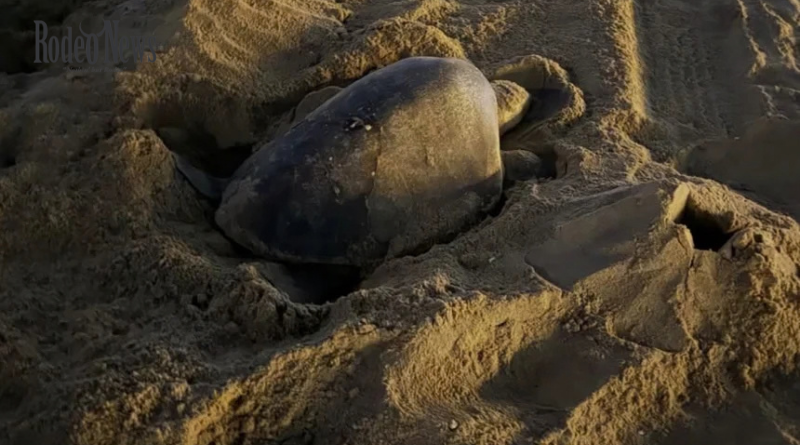
The unusual discovery happened in Orange County, where one olive ridley turtle was seen digging a nest near Seal Beach and another was later found nesting near Huntington Beach. Scientists are now investigating what brought the normally tropical species so far north and whether the event represents a rare anomaly or an early sign of a broader shift in the turtles’ range.
The discovery comes as ocean temperatures off the West Coast remain unusually warm and a strong El Niño pattern is affecting Pacific conditions. Scientists say several environmental factors could have contributed to the turtles’ unexpected journey.
Olive Ridley Turtles California: A Historic First
According to information reported by CNN and corroborated by wildlife officials, an olive ridley turtle came ashore near the Seal Beach National Wildlife Refuge in northwest Orange County in September. The turtle dug into the sand and laid eggs before returning to the ocean.
Several days later, another olive ridley was observed nesting near the Huntington Beach Pier.
At first, researchers considered whether both sightings involved the same animal. However, an examination of body shapes and distinctive shell patterns indicated that the turtles were two separate individuals.
The sightings are significant because olive ridleys normally nest much farther south. Their major Pacific nesting populations are concentrated in Mexico and Central America, including Costa Rica, Nicaragua and Panama. NOAA describes the species as primarily tropical, although olive ridleys can range widely through the Pacific.
NOAA has said the California nesting represents the first-ever documented natural sea turtle nesting on the U.S. West Coast, making the event notable not only for California but also for researchers studying how marine species respond to changing environmental conditions.
Why Did the Olive Ridley Turtles Come North?
Scientists do not yet have a single explanation for why the two turtles nested in Southern California.
One of the leading possibilities involves unusually warm ocean conditions associated with the current El Niño pattern.
NOAA has been monitoring signs of El Niño along the West Coast, including unusually warm water off Southern and Central California. The agency reported earlier this month that ocean conditions in the region were already warmer than normal as scientists watched for additional indicators of the developing climate pattern.
Jeffrey Seminoff, leader of NOAA’s Marine Turtle Ecology & Assessment Program, told CNN that the turtles’ movements may have been influenced by a combination of sustained warm water and other environmental signals.
Sea turtles are highly capable navigators. They use multiple environmental cues during their migrations, including temperature, wave direction, seasonal timing and internal navigational mechanisms.
That means the turtles’ arrival in California cannot necessarily be attributed to one factor.
Researchers have also raised the possibility that Pacific storm activity could have played a role in moving turtles farther north than usual.
In other words, the California nests may have resulted from several unusual conditions occurring at the same time.
A Tropical Species on Southern California Beaches
Olive ridley turtles are among the smallest sea turtles in the world. Adults generally measure about 2 to 2.5 feet long and can weigh up to roughly 100 pounds, according to NOAA Fisheries.
Their name comes from their distinctive olive-green, heart-shaped shells. They are widespread in tropical waters and are known for undertaking long migrations between feeding and nesting areas.
The species has two primary nesting strategies.
Some females nest individually, while others participate in spectacular mass nesting events known as arribadas. During an arribada, hundreds or thousands of females can come ashore within a relatively short period to lay their eggs.
The California turtles appear to have nested individually rather than as part of an arribada.
That distinction is important because researchers are not describing California as a newly established mass nesting site. Instead, they are documenting two extraordinary individual nesting events and watching closely to determine whether additional turtles appear.
Each Nest Could Contain About 100 Eggs
Olive ridley females typically lay approximately 100 eggs in a clutch, and females can nest more than once during a season.
The eggs are then left in the sand for an incubation period that can last several weeks.
The California nests are being protected and monitored by an interagency team. Officials expect incubation to last roughly 45 to 60 days.
The nests have been fenced off to keep people away from the eggs and reduce the possibility of accidental disturbance.
That protection will be particularly important if hatchlings emerge.
Sea turtle hatchlings are extremely vulnerable during their early lives. Once they leave their nests, they must make their way toward the ocean while avoiding predators, obstacles and human activity.
Scientists also face another challenge: determining what the unusually northern nesting could mean for the hatchlings themselves.
Warmer Sand Can Change Hatchling Sex
One of the most interesting characteristics of sea turtle reproduction is the relationship between incubation temperature and the sex of hatchlings.
For olive ridleys, warmer sand tends to produce more females. NOAA notes that temperature during incubation influences hatchling sex ratios, making changing environmental conditions an important conservation concern.
CNN reported that temperatures around 87 degrees Fahrenheit or higher can result in almost all olive ridley hatchlings being female.
That does not mean every warmer nest will produce only females, but it demonstrates why rising temperatures could eventually affect sea turtle populations.
Climate change therefore creates a complicated situation for marine turtles.
Warmer water may make previously unsuitable areas more accessible, potentially allowing some animals to expand their range. At the same time, excessive heat, changing beaches, rising seas and altered food availability can create serious risks.
California Could Become Part of a Changing Range
Scientists are cautious about interpreting the two nests as evidence of a permanent northward expansion.
For now, it is simply too early to know.
The California sightings could represent an unusual event caused by this year’s exceptional ocean conditions. Alternatively, they could provide an early glimpse of a longer-term shift in where olive ridleys are able to nest.
Previous research has documented olive ridleys appearing farther north than their primary nesting areas, particularly when warm-water conditions develop.
NOAA has also documented earlier olive ridley sightings in Southern California waters. In 2019, for example, an olive ridley was observed near the Channel Islands during a period of unusually warm ocean conditions. Researchers noted that warm-water anomalies could influence the species’ distribution.
That history makes the 2026 nesting discovery especially interesting.
Seeing a turtle offshore is one thing. Finding a female actually building a nest and depositing eggs is much more significant from a biological perspective.
Why the Discovery Matters for Climate Research
Species movements can provide scientists with valuable information about environmental changes.
Marine animals do not recognize political boundaries or remain within fixed geographic areas. As water temperatures change, prey availability shifts and ocean currents vary, animals can alter their movements in ways that may be difficult to predict.
The olive ridley is particularly interesting because it is already a highly migratory species.
NOAA says the turtles can travel great distances between feeding and breeding grounds. They are primarily open-ocean animals and can also move into coastal waters depending on environmental conditions.
That flexibility may help explain why an olive ridley could eventually reach a beach well north of its normal nesting range.
However, range expansion does not automatically mean that conditions are becoming better for the species.
A turtle may successfully reach a new beach while still facing problems caused by development, artificial lighting, beach erosion, pollution, predators or human activity.
The Threats Facing Olive Ridley Turtles
Olive ridleys remain protected animals despite being relatively widespread compared with some other sea turtle species.
NOAA lists several major threats, including accidental capture in fishing gear, direct harvest, loss of nesting habitat, marine pollution, vessel strikes and changing environmental conditions.
Artificial lighting is another concern on developed beaches.
Sea turtle hatchlings typically use natural light from the ocean horizon to orient themselves toward the water. Bright artificial lights from buildings, roads and other infrastructure can interfere with that process.
Southern California presents a particularly challenging environment because its coastline is heavily developed.
The fact that these turtles chose beaches near major communities makes human cooperation especially important.
What Happens Next?
Wildlife officials will continue monitoring both California nests throughout the incubation period.
The immediate objective is straightforward: protect the eggs and minimize human disturbance.
Researchers will also be watching for signs that additional olive ridleys are arriving along the California coast.
If more females begin nesting in the region, scientists would have an opportunity to investigate whether the behavior is becoming more frequent.
If no additional turtles appear, the 2026 event may ultimately be remembered as a remarkable but isolated occurrence.
Either way, the information gathered from the nests could be valuable.
Researchers can study nesting conditions, incubation temperatures, hatchling success and environmental circumstances surrounding the turtles’ arrival. Those observations could help scientists better understand how sea turtles respond to changing ocean conditions.
A New Chapter for California’s Beaches?
The discovery of olive ridley turtles California nesting on Southern California beaches is remarkable because it challenges the traditional geographic picture of where these tropical sea turtles reproduce.
Yet scientists are emphasizing caution.
Two nests are not enough to establish a new California nesting population, and researchers still do not know precisely why the turtles came ashore so far north.
The strongest explanation currently involves an unusual combination of environmental conditions, including warm Pacific waters and El Niño. Other factors, such as currents, storms and the turtles’ own navigational systems, may also have contributed.
The coming weeks could provide some of the most important clues.
If the eggs hatch successfully, California could witness an event never previously documented on the U.S. West Coast: olive ridley hatchlings entering the Pacific from a California beach.
For scientists, the story is about more than two unusual turtles.
It is an opportunity to observe how a highly migratory marine species responds when the environmental conditions it encounters begin to change.
And for California beach communities, it is a reminder that even heavily developed coastlines can occasionally become part of an unexpected chapter in wildlife history.