
JWST Early Galaxies Reveal a Stunning Cosmic Secret
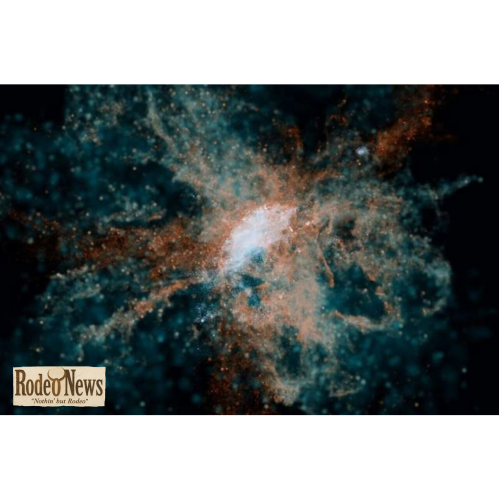
The discovery of JWST early galaxies is giving astronomers a remarkable new view of how the young universe evolved. New observations from NASA’s James Webb Space Telescope indicate that some of the universe’s earliest galaxies were already producing and expelling heavy elements into their surroundings only about 500 million years after the Big Bang.
That finding challenges the long-standing expectation that the gas around the first galaxies should have remained largely pristine, consisting primarily of hydrogen and helium. Instead, the new evidence suggests that galaxies were enriching their cosmic neighborhoods much earlier than previously understood.
The research, led by astronomers at the University of Arizona, was published in Nature Astronomy. Scientists studied three extremely distant galaxies whose light has traveled for more than 13 billion years to reach Earth. Their observations provide evidence that carbon, oxygen and silicon were already being transported away from these young galaxies and into the surrounding intergalactic environment.
JWST Early Galaxies Were Already Changing Their Surroundings
The early universe was dramatically different from the cosmos seen today.
Following the Big Bang, the universe was dominated by the simplest elements, primarily hydrogen and helium, with only tiny amounts of other material. Over time, gravity brought gas together, stars formed, and stellar nuclear processes created heavier elements.
Those elements became increasingly important as the universe developed.
Carbon and oxygen, for example, are essential ingredients in planets, stars and biological chemistry. But astronomers have long faced an important question: When did the first galaxies begin releasing these heavier elements into the space around them?
The new JWST observations provide an important answer.
Researchers found evidence that heavy elements had already escaped from galaxies during a period when the universe was only about 500 million years old — roughly 3% of its present age.
This means early galaxies were not simply isolated collections of stars surrounded by untouched primordial gas.
They were already interacting with their wider environment.
How JWST Detected Heavy Elements in the Early Universe
The discovery was made possible by one of the James Webb Space Telescope’s most important capabilities: infrared spectroscopy.
Instead of simply photographing the distant galaxies, researchers analyzed how light from those galaxies interacted with gas around them.
As light traveled from the ancient galaxies toward Earth, it passed through surrounding material. Different chemical elements absorb particular wavelengths of light, leaving recognizable patterns in the spectrum.
Scientists can therefore use those patterns as chemical fingerprints.
For the new study, researchers examined publicly available JWST spectra from hundreds of galaxies. After manually searching the data, they identified three early galaxies with absorption patterns indicating the presence of heavy elements, including carbon, oxygen and silicon.
The researchers then examined how those absorption features were shifted relative to the galaxies themselves.
The results suggested that the enriched gas was moving outward.
In other words, material produced inside the galaxies appeared to be escaping into the surrounding space.
That observation is central to the study because it provides evidence that chemical enrichment was already taking place during the universe’s first half-billion years.
The First Galaxies Were Not Chemically Isolated
For decades, astronomers have used models to understand how the first stars and galaxies transformed the universe.
The basic picture is straightforward.
The earliest stars formed from gas containing almost exclusively hydrogen and helium. Inside those stars, nuclear reactions produced heavier elements. When massive stars died, particularly in spectacular supernova explosions, they released newly created elements into their surroundings.
That material could then become part of later generations of stars.
The new research suggests this process began spreading beyond individual galaxies remarkably quickly.
The findings indicate that the first galaxies were already participating in a type of cosmic recycling system. Material created by stars could be pushed out of galaxies, mix with surrounding gas and potentially become available to other galaxies.
This process is known as baryon cycling.
It means galaxies should not be viewed as closed systems. Instead, they exchange gas and chemical material with their surroundings.
The discovery of this process so early in cosmic history could change how astronomers understand the development of the first galactic ecosystems.
JWST Early Galaxies and the Mystery of Population III Stars
One of the most intriguing consequences of the finding concerns the universe’s hypothetical first stars, known as Population III stars.
These stars are expected to have formed from extremely pristine material containing mostly hydrogen and helium.
Because they formed before heavy elements were widely available, Population III stars are thought to have been fundamentally different from later generations.
Astronomers have been searching for evidence of them for years.
However, direct observations remain extremely difficult.
The new research could help explain part of that mystery.
If early galaxies were already expelling heavy elements only 500 million years after the Big Bang, then pristine gas may have disappeared more quickly than expected in many regions of the universe.
That would make it increasingly difficult to find environments where Population III stars could form or survive in observable numbers.
The researchers compare the process to adding sprinkles to vanilla ice cream. Once mixing begins, completely untouched vanilla becomes harder and harder to find.
The same principle could apply to the early universe.
Once galaxies began distributing carbon, oxygen and other heavy elements, regions of pristine gas may have become increasingly rare.
Heavy Elements Are the Building Blocks of a More Complex Universe
The significance of the discovery extends beyond the history of galaxies.
Heavy elements are fundamental to the evolution of the universe as we know it.
Hydrogen and helium dominated the early cosmos, but the universe eventually became chemically much richer.
Stars created elements through nuclear fusion and other processes. Stellar deaths then distributed those elements into space.
Over billions of years, this material became incorporated into new stars, planetary systems and increasingly complex environments.
The carbon in living organisms and the oxygen humans breathe ultimately come from earlier generations of stars.
Therefore, understanding when heavy elements first escaped into intergalactic space is also part of understanding how the universe developed the chemical ingredients required for later cosmic structures.
The new observations suggest that this enrichment began surprisingly early.
The Universe Was Already Evolving During Cosmic Dawn
The galaxies examined in the study existed during a period known as the Epoch of Reionization.
This was one of the most important transitions in cosmic history.
Before reionization, much of the universe consisted of neutral hydrogen. As the first stars and galaxies formed, their radiation began stripping electrons from hydrogen atoms.
This gradual transformation allowed ultraviolet light to travel increasingly freely through space.
The process eventually ended the universe’s so-called cosmic dark ages.
Observations of galaxies during this period are therefore extremely valuable because they allow scientists to study the transition from a relatively simple young universe into the structured cosmos that followed.
NASA explains that JWST’s infrared observations are particularly important for studying galaxies from this era because their ancient light has been stretched toward longer wavelengths during its journey across the expanding universe.
The new chemical evidence adds another dimension to that story.
The first galaxies were not merely turning on their stars and producing radiation.
They were also moving material around.
Galaxy Winds May Have Spread the Elements
The outward movement of carbon, oxygen and silicon points toward the role of galactic outflows.
Stars can inject enormous amounts of energy into their surrounding environments. Stellar explosions, radiation and collective activity from young stellar populations can push gas away from galaxies.
These outflows can carry material into the circumgalactic and intergalactic environment.
In the early universe, such processes could have had an enormous influence because galaxies were smaller, closer together and developing rapidly.
The researchers’ observations indicate that these processes were already operating during the first 500 million years of cosmic history.
That does not mean every early galaxy was rapidly polluting the universe.
The study examined three galaxies, so the findings provide important evidence but do not establish that every galaxy behaved identically.
More observations will be needed to determine how widespread the phenomenon was.
Why Three Galaxies Matter
At first glance, three galaxies may seem like a small sample.
However, observing galaxies from this period is extremely difficult.
Their light is incredibly faint, and the universe has expanded substantially since that light was emitted. The galaxies therefore appear extremely distant and their chemical fingerprints are challenging to detect.
The researchers used nearly 30 hours of exposure time to obtain enough signal to identify the faint absorption patterns.
That makes the observations particularly valuable.
The chemical signatures detected in these galaxies also resembled those seen in much more evolved galaxies from later periods of cosmic history. This suggests that some of the mechanisms responsible for chemical enrichment may have already been operating when the universe was remarkably young.
JWST Is Changing the Picture of the Early Universe
The finding is another example of how the James Webb Space Telescope is transforming research into the early cosmos.
Since beginning scientific observations, JWST has revealed unexpectedly bright and developed galaxies from very early periods of cosmic history.
Scientists are now moving beyond simply finding these objects.
They are beginning to investigate their chemistry, gas, structure and interactions in greater detail.
That shift is important.
A distant galaxy is not merely a dot of light. Its spectrum can reveal what elements surround it, how gas is moving and how stars are affecting the galaxy’s environment.
NASA’s Webb program has similarly used spectroscopy to study gas falling into young galaxies and the conditions surrounding early star formation.
The new study adds evidence that material was also flowing outward.
Together, these observations point toward a dynamic early universe in which galaxies were constantly exchanging material with their surroundings.
A New View of Cosmic Recycling
The concept of baryon cycling could become increasingly important as astronomers study the first galaxies.
A galaxy may pull gas inward, transform some of that material into stars, manufacture heavier elements and then push enriched gas outward.
This continuous movement creates a cosmic recycling system that helps determine how galaxies grow and evolve.
The new JWST evidence suggests that such recycling was already occurring when the universe was only about half a billion years old.
That is much earlier than many researchers might have expected.
What Comes Next for JWST Early Galaxies Research?
The next step is to determine whether the three observed galaxies represent a common pattern or an unusual subset of early galaxies.
Future JWST observations could target additional galaxies at comparable distances.
A larger sample would allow astronomers to determine how frequently heavy elements escaped from early galaxies and how far those elements traveled.
Researchers will also need to understand the mechanisms responsible for driving the enriched gas outward.
Were stellar explosions the primary driver?
Did intense star formation create powerful winds?
Did interactions between young galaxies contribute?
Or did several processes work together?
Answering those questions will help refine models of galaxy formation.
It could also provide new clues about the disappearance of pristine gas and the formation of Population III stars.
The Early Universe Was More Dynamic Than Expected
The discovery of JWST early galaxies releasing heavy elements into space provides another reminder that the young universe was not a static, primitive place.
Only 500 million years after the Big Bang, galaxies were already forming stars, producing complex chemical elements and sending those elements beyond their boundaries.
That activity helped shape the environment in which later generations of stars and galaxies would develop.
The finding does not solve every mystery surrounding the first galaxies.
Instead, it gives astronomers another important piece of evidence.
The early universe appears to have transitioned from a simple mixture of hydrogen and helium into a chemically enriched cosmic environment faster than previously assumed. JWST is now allowing scientists to observe that transformation directly.
As more observations accumulate, the telescope could reveal just how quickly the first galaxies transformed their surroundings — and how that early chemical recycling eventually helped create the complex universe observed today.