
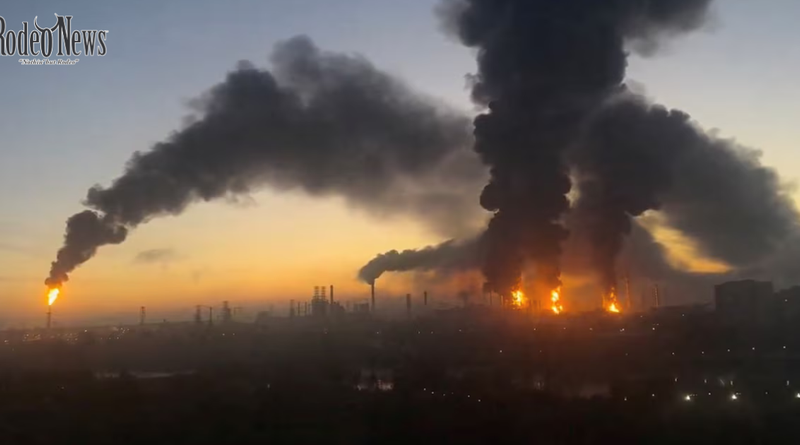
Moscow Oil Refinery Halted After Drone Attack
The Moscow oil refinery has halted crude oil processing following a drone attack that damaged two primary crude distillation units, according to three industry sources cited by Reuters. The incident occurred on September 20, 2026, during a large-scale drone attack targeting Moscow and surrounding areas. RReuters
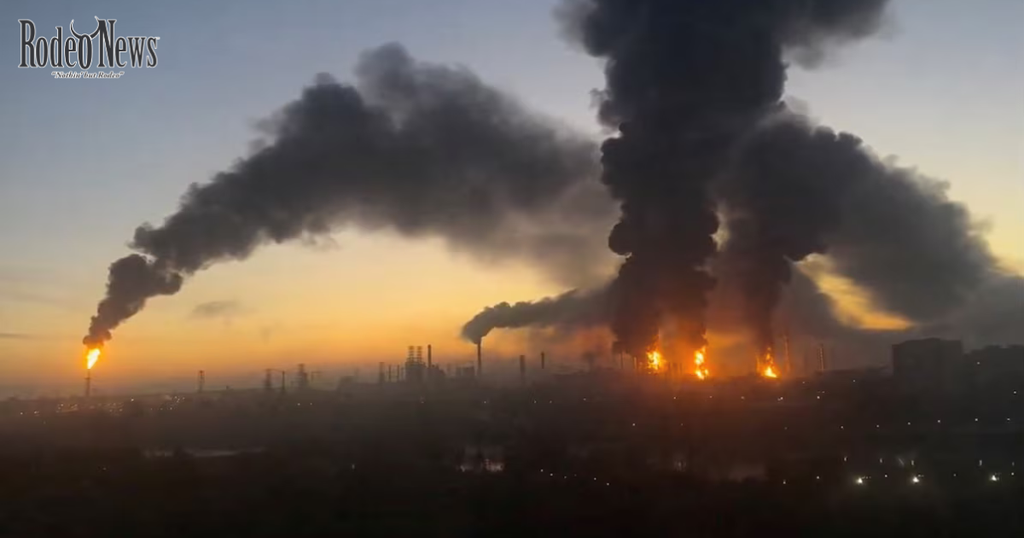
The shutdown places one of Russia’s major fuel-producing facilities out of operation at a time when the country’s refining sector is already facing disruptions following a series of attacks on oil infrastructure.
According to the sources, fires broke out at both primary crude processing units after drones crashed onto the refinery site. Repairs could take several weeks, although the final timeline will depend on the extent of the damage and the work required to restore the equipment. RReuters
Gazprom Neft, the operator of the facility, had not immediately responded to Reuters’ request for comment.
Moscow Oil Refinery Loses Its Primary Processing Capacity
The Moscow oil refinery relies on two major primary processing facilities: the AVT-6 unit and the EURO+ combined crude processing unit.
The AVT-6 unit has a processing capacity of approximately 21,400 metric tons of crude oil per day. That represents about 53% of the refinery’s total capacity.
The EURO+ unit accounts for the remaining 47%, with a processing capacity of approximately 18,800 metric tons per day.
Together, the two facilities represent the refinery’s primary crude processing capacity. Damage to both therefore has a substantial effect on the plant’s ability to process incoming crude oil. RReuters
The shutdown also appears to have affected the refinery’s fuel sales. Reuters reported that fuel produced by the facility had not been offered for sale on the St. Petersburg International Mercantile Exchange since September 21. RReuters
What Happened at the Moscow Oil Refinery?
The damage followed a large drone attack on Moscow on September 20.
Moscow Mayor Sergei Sobyanin said an industrial facility on the refinery’s premises was damaged during the drone raid. Industry sources subsequently told Reuters that both primary crude distillation units caught fire after drones crashed at the facility. RReuters
The attack was part of a broader wave of strikes involving Ukrainian drones against Russian territory.
The Associated Press reported that Russian authorities said more than 1,000 drones were launched toward Russian territory, while Moscow officials described the assault as the largest drone attack on the capital to date. AP reported that the wider Moscow region suffered casualties and that the refinery was among the sites damaged. AAP News
Ukraine has increasingly used long-range drones against Russian energy infrastructure during the war. Russian oil refineries have become recurring targets as Kyiv seeks to disrupt fuel production and other energy-related infrastructure.
How Much Oil Does the Moscow Refinery Process?
The scale of the shutdown becomes clearer when looking at the refinery’s recent production figures.
Reuters sources said the Moscow oil refinery processed approximately 11.6 million metric tons of crude oil in 2024. That is equivalent to roughly 230,000 barrels per day.
During the same year, the facility produced approximately:
- 2.9 million metric tons of gasoline
- 3.2 million metric tons of diesel
- 1.3 million metric tons of bitumen
These figures illustrate the refinery’s role in Russia’s downstream petroleum sector.
A prolonged shutdown could therefore affect the availability of several refined petroleum products, particularly if repairs extend beyond the initial estimate of several weeks.
However, the precise impact on Russian fuel supplies will depend on how quickly the damaged units can be repaired and how much additional production can be provided by other refineries.
Moscow Oil Refinery Shutdown Comes Amid Wider Refinery Disruptions
The latest incident is not an isolated disruption to Russia’s refining network.
Earlier in September, Reuters reported that the Yaroslavl refinery had halted crude processing after a Ukrainian drone attack damaged its primary crude distillation unit. Industry sources said repairs could take time, while regional authorities reported that the facility had sustained damage. RReuters
Reuters also reported on September 16 that the Rosneft-owned Syzran and Saratov refineries had stopped processing following drone attacks. Sources said the disruptions could further complicate domestic fuel shortages in Russia. RReuters
The sequence of incidents has increased attention on the vulnerability of Russia’s refining infrastructure.
Unlike crude oil production, which takes place at oil fields across the country, refining is concentrated in large industrial facilities. Damage to a major refinery can therefore remove significant processing capacity from the market while repairs are underway.
Why the Moscow Refinery Matters for Fuel Supply
The Moscow oil refinery is strategically important because of its location and its role in supplying fuel to the Moscow metropolitan area.
The refinery is operated by Gazprom Neft and is located in Moscow’s Kapotnya district.
Its output includes gasoline and diesel, two products that are essential to transportation and industrial activity. A sustained interruption could require other Russian refineries to increase production or fuel distributors to adjust supply patterns.
That does not necessarily mean an immediate nationwide fuel shortage.
Russia has a large refining system with multiple facilities, and the ultimate effect of one refinery shutdown depends on available inventories, alternative production and transportation capacity.
Nevertheless, the loss of a major processing site adds pressure to a refining network that has already experienced several disruptions.
Fuel Trading Shows Immediate Impact
One early indication of the refinery’s disruption has been its absence from the domestic fuel market.
Reuters sources said fuel produced by the Moscow oil refinery was not offered for sale on the St. Petersburg International Mercantile Exchange beginning September 21. RReuters
The exchange is an important venue for domestic Russian energy trading.
A halt in refinery production can affect market availability even before broader supply statistics become available. Refiners need time to restart processing units, stabilize production and return finished products to distribution channels.
The length of the interruption will therefore be closely watched by fuel traders and industry participants.
Repairs Could Take Several Weeks
The most immediate question surrounding the Moscow oil refinery is how long it will remain offline.
Three industry sources told Reuters that repairs and restoration could take several weeks. RReuters
The estimate is not a definitive restart date.
Industrial refinery equipment is complex, and the repair process can involve inspections, replacement of damaged components, testing and a controlled restart. The actual timeline can change depending on the severity and location of the damage.
Gazprom Neft’s lack of an immediate public response also means that details about the technical condition of the two units remain limited.
Growing Pressure on Russia’s Refining Sector
The Moscow incident comes against a broader backdrop of attacks on Russian energy infrastructure.
The repeated targeting of refineries has raised questions about Russia’s ability to maintain stable domestic supplies while also supporting its wider wartime economy.
Reuters reported earlier this month that disruptions at the Syzran and Saratov refineries were expected to complicate Russian domestic fuel shortages. Russia had also restricted exports of gasoline, diesel and jet fuel amid pressure on domestic supplies. RReuters
The latest Moscow shutdown adds another major facility to the list of refineries affected by attacks.
The cumulative effect will depend on the duration of each shutdown and the ability of unaffected plants to compensate for lost production.
What Comes Next for the Moscow Oil Refinery?
The next stage will be focused on assessing the damage and determining when the two primary processing units can return to service.
Market participants will likely monitor fuel availability, domestic trading volumes and announcements from the refinery operator.
The return of the AVT-6 and EURO+ units would restore a substantial portion of the facility’s processing capability. Until then, other Russian refineries may need to help cover some of the lost production.
The incident also demonstrates the continuing importance of energy infrastructure in the Russia-Ukraine conflict.
Oil refineries have become strategically significant because they connect crude production with the fuels needed by civilian transportation, industry and military logistics.
For Russia, maintaining refinery output is therefore not simply a commercial issue. It is also connected to domestic fuel availability and the broader resilience of its energy system.
Bottom Line
The Moscow oil refinery has stopped crude processing after a drone attack damaged both of its primary crude distillation units, according to three industry sources cited by Reuters.
The affected AVT-6 and EURO+ facilities account for the refinery’s entire primary processing capacity, with combined capacity of about 40,200 metric tons per day. Reuters sources said repairs could take several weeks. RReuters
The refinery processed about 11.6 million metric tons of crude in 2024 and produced millions of tons of gasoline, diesel and other petroleum products.
The shutdown comes as several other Russian refineries have experienced disruptions following drone attacks. Its eventual impact on fuel supplies will depend largely on the duration of the outage, the condition of other Russian refineries and the country’s available fuel inventories.
For now, the key development is clear: a major Russian refining facility has been forced to stop crude processing, adding another disruption to an energy sector already under pressure.