US Airport Chaos as Fiber Cable Failure Disrupts Northeast Flights
Air travel across the northeastern United States was thrown into widespread disruption Monday after a communications failure at a key Federal Aviation Administration facility was compounded by an accidentally severed fiber-optic cable in New Jersey.
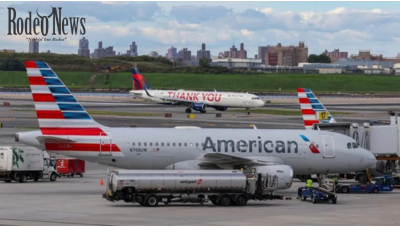
The incident forced the FAA to impose ground stops and other restrictions at several major airports, including Newark Liberty International Airport, John F. Kennedy International Airport, LaGuardia Airport and Philadelphia International Airport. Teterboro Airport in New Jersey was also affected.
The disruption came at a particularly sensitive time for the New York region, with world leaders and government officials arriving for the United Nations General Assembly. The combination of heavy international travel and a failure involving critical air-traffic infrastructure created significant delays for passengers across the region.
What caused the flight disruptions?
According to the FAA, the initial problem involved a primary communications circuit serving the Philadelphia Terminal Radar Approach Control facility, commonly known as Philadelphia TRACON.
TRACON facilities play an important role in managing aircraft approaching and departing airports. They coordinate aircraft through busy airspace using radar, communications systems and other technologies.
When the primary circuit failed Monday morning, the system attempted to switch to a backup connection. Officials then discovered that the backup fiber-optic line had already been damaged.
Verizon said construction contractors working near an Amtrak rail line in New Jersey had accidentally dug up and cut the cable. The company said the damaged line was being repaired with partners as quickly as possible.
Transportation Secretary Sean Duffy described the incident as an example of why the country’s air-traffic infrastructure requires modernization. Reuters reported that the outage affected thousands of flights across the United States, with major disruptions concentrated in the Northeast.
Newark and New York airports among those hit
Newark Liberty International Airport experienced particularly severe disruption, with large numbers of delays and cancellations.
The FAA initially imposed restrictions affecting Newark, Philadelphia and Teterboro before the measures expanded to include JFK and LaGuardia. Some operations later resumed, but accumulated delays continued to affect passengers and aircraft movements.
At one point, incoming flights to several major airports were halted as controllers dealt with the loss of normal communications capability.
Reuters reported that more than 1,000 flights were snarled by the disruption, while later estimates showed the broader nationwide impact reaching thousands of delayed or canceled flights.
Airlines were forced to adjust schedules, while travelers faced long waits and uncertainty over whether their flights would depart.
The FAA advised passengers to check directly with their airlines before traveling to airports because schedules could change as operations recovered.
A backup system was also unavailable
The unusual aspect of Monday’s disruption was the combination of two separate infrastructure problems.
The primary communications circuit serving the Philadelphia air-traffic facility failed first. The backup system should have provided another route for critical communications, but that fiber line had been accidentally severed during construction.
That left controllers dealing with a significantly reduced communications capability at a facility responsible for managing air traffic in one of the country’s busiest aviation regions.
FAA Administrator Bryan Bedford said repairing the damaged fiber line could take many hours. Officials also worked on restoring the primary circuit and finding other ways to stabilize operations.
The incident was not reported as a cyberattack. Instead, the disruption resulted from physical infrastructure failures and the loss of redundancy within the communications network.
Questions over responsibility for the cable damage
The circumstances surrounding the severed cable also prompted disagreement over which organization was responsible.
Verizon said contractors working near the rail line had damaged its fiber-optic cable. Initial statements from federal officials pointed toward work connected with Amtrak, while Amtrak said the incident occurred on New Jersey Transit property and involved a New Jersey Transit contractor.
NJ Transit acknowledged that a crew working on a project had severed a fiber-optic cable, while questions remained over the accuracy of utility markings at the construction site.
The disagreement is separate from the broader issue highlighted by transportation officials: critical aviation systems can be vulnerable when a single physical connection is damaged.
Infrastructure modernization becomes a renewed issue
Monday’s disruption has revived concerns about the age and resilience of the U.S. air-traffic control network.
The FAA has already been pursuing a major modernization effort intended to replace older systems and improve communications, surveillance and data infrastructure.
The primary circuit involved in Monday’s incident was reportedly scheduled for replacement as part of that wider modernization program.
Transportation officials have argued that additional investment is necessary to reduce the risk of similar failures. The incident also follows earlier disruptions involving air-traffic control facilities serving the New York area, adding to concerns about reliability.
The timing has made the problem even more visible.
UN General Assembly adds pressure
The disruption occurred just as New York prepared to host the annual United Nations General Assembly, bringing presidents, prime ministers, diplomats and other senior officials into the region.
About 130 world leaders and numerous ministers were expected in New York for the high-level gathering, increasing demand on airports and transportation networks.
Although the airport disruption was unrelated to the diplomatic event, the timing created additional logistical challenges for travelers arriving in the city.
For ordinary passengers, the immediate concern was whether their flights would operate as scheduled.
For aviation authorities, however, the incident raised a larger question about how resilient the country’s air-traffic communications network is when primary and backup systems fail at the same time.
As repairs continued, airport operations gradually resumed, but officials warned that delays could persist because aircraft and crews were already out of position.
The episode demonstrated how a relatively small infrastructure failure can quickly spread through one of the world’s busiest air-travel systems, affecting thousands of passengers far beyond the location where the original problem occurred.