
Starlink Group 15-27: 27 Satellites Launch
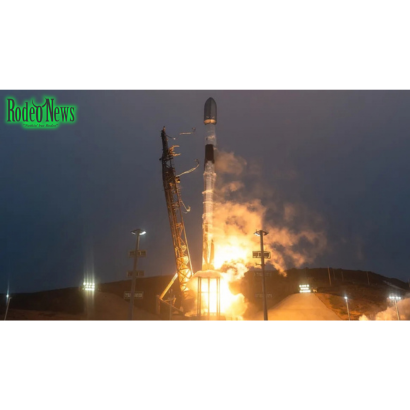
The Starlink Group 15-27 mission successfully launched 27 Starlink satellites into low Earth orbit, extending SpaceX’s rapidly expanding broadband constellation while demonstrating another successful reuse of a Falcon 9 booster. The rocket lifted off from Vandenberg Space Force Base in California on Sept. 19, 2026, before its first stage returned to Earth and landed on SpaceX’s drone ship Of Course I Still Love You in the Pacific Ocean.
The mission was another milestone in an exceptionally busy year for SpaceX. According to Space.com, it marked the company’s 81st Starlink launch of 2026 and the 107th Falcon 9 mission of the year. The figures demonstrate how quickly SpaceX has increased its launch cadence while relying heavily on reusable hardware.
The latest flight also highlights the growing scale of Starlink. With tens of satellites being deployed during individual missions, SpaceX continues to build one of the largest satellite networks ever assembled.
Starlink Group 15-27 Launches From California
The Starlink Group 15-27 mission lifted off from Space Launch Complex 4 East at Vandenberg Space Force Base at 9:47 p.m. EDT on Sept. 19, equivalent to 6:47 p.m. local time in California. The launch occurred during a four-hour window.
The Falcon 9 carried 27 Starlink V2 Mini Optimized satellites toward low Earth orbit.
After leaving the launch site, the rocket’s first stage separated from the upper stage and began its controlled descent toward the Pacific Ocean. Approximately 8.5 minutes after liftoff, the booster touched down on Of Course I Still Love You.
The successful landing allowed SpaceX to recover the expensive first-stage hardware for future missions.
Spaceflight Now reported that the landing was the 225th recovery aboard the Of Course I Still Love You droneship and the 662nd successful Falcon booster landing overall.
The upper stage continued carrying the Starlink satellites into orbit.
Approximately 62 minutes after liftoff, SpaceX deployed the 27 satellites as planned, completing the primary mission objectives.
Falcon 9 Booster B1093 Completes 17th Flight
One of the most notable aspects of Starlink Group 15-27 was the use of a highly experienced Falcon 9 booster.
The first stage, designated B1093, completed its 17th flight.
Before the latest Starlink mission, B1093 had already flown missions for the U.S. Space Force’s Space Development Agency, the Transporter-16 rideshare mission and multiple previous Starlink launches.
Its previous assignments demonstrate how SpaceX’s reusable-rocket program has expanded beyond simple recovery demonstrations. Falcon 9 boosters are now regularly assigned to repeated missions, allowing the company to maintain a high launch frequency without building an entirely new first stage for every flight.
For the Starlink program, that capability is especially important.
SpaceX frequently launches batches of satellites, meaning the company needs a steady supply of reliable rockets. Reusing boosters helps support that operational rhythm while reducing the amount of hardware that must be manufactured for every mission.
27 Starlink Satellites Join the Growing Network
The 27 spacecraft deployed during Starlink Group 15-27 were Starlink V2 Mini Optimized satellites.
These spacecraft form part of SpaceX’s broadband network in low Earth orbit. By operating thousands of satellites relatively close to Earth, Starlink is designed to provide internet connectivity with lower latency than traditional satellite broadband systems that rely on much higher geostationary orbits.
The network has expanded at a remarkable pace.
Space.com reported that more than 11,100 active Starlink spacecraft were already part of the constellation at the time of the latest launch, citing astrophysicist and satellite tracker Jonathan McDowell.
That figure illustrates the enormous scale of SpaceX’s satellite operation.
A single launch adds only a few dozen spacecraft, but repeated missions throughout the year can add hundreds or thousands more. The result is a continuously evolving network that requires frequent launches, orbital deployment and satellite management.
SpaceX Reaches Another Major 2026 Launch Milestone
Starlink Group 15-27 was not simply another satellite deployment.
It was the 107th Falcon 9 mission of 2026, according to Space.com. Of those missions, 81 were dedicated to expanding the Starlink network.
The launch cadence is notable when compared with SpaceX’s performance in 2025.
Space.com reported that Falcon 9 flew 165 times during 2025, including 122 Starlink missions. If SpaceX maintains its 2026 pace, the company could finish the year with approximately 149 Falcon 9 launches, including about 113 Starlink missions.
These numbers remain projections rather than final results.
Nevertheless, the pace shows how important Starlink has become to SpaceX’s launch schedule. Instead of waiting for occasional commercial or government payloads, SpaceX has a large internal customer that can regularly fill Falcon 9 missions.
That gives the company a predictable stream of launches and allows it to test and reuse its hardware at a high frequency.
Why Reusable Rockets Matter to Starlink
The success of Starlink depends on more than satellite manufacturing.
SpaceX must also transport the satellites into orbit efficiently.
Reusable Falcon 9 boosters are central to that process. Rather than discarding the first stage after every launch, SpaceX guides the booster back to a landing site or drone ship.
The Starlink Group 15-27 mission demonstrated this process again.
After stage separation, B1093 performed its landing sequence and reached Of Course I Still Love You in the Pacific. The booster can now potentially be refurbished and assigned to another mission, subject to SpaceX’s inspection and maintenance procedures.
This approach allows the company to spread the cost of a rocket across multiple flights.
It also reduces the amount of time and manufacturing capacity required to support a high launch cadence.
The more frequently a booster can fly, the more important reliability and refurbishment become.
Of Course I Still Love You Plays a Key Role
The successful return of B1093 also highlighted the importance of SpaceX’s autonomous drone ships.
Of Course I Still Love You operates in the Pacific Ocean and provides a landing platform for Falcon 9 boosters returning from missions that are not suitable for a direct landing near the launch site.
Landing on a drone ship allows SpaceX to recover boosters even when the mission profile requires the rocket to travel downrange.
The system has become a routine part of Falcon 9 operations.
The latest landing represented the 225th booster recovery on that particular vessel, according to Spaceflight Now.
That milestone illustrates how recovery operations have moved from experimental technology to a standard part of SpaceX’s launch infrastructure.
Starlink Continues to Drive SpaceX Launch Activity
Starlink has become one of the main reasons SpaceX launches so frequently.
The company needs to replace aging satellites, expand network capacity and deploy spacecraft into different orbital planes. Continuous launches therefore allow SpaceX to maintain and improve coverage as customer demand grows.
The Starlink network also requires ground infrastructure and user terminals, meaning satellite deployment is only one component of the broader system.
Still, the ability to send dozens of satellites into orbit on a single Falcon 9 provides SpaceX with a powerful mechanism for network expansion.
Starlink Group 15-27 shows how that system works.
A single Falcon 9 delivered 27 spacecraft, recovered its first stage and completed the mission in roughly an hour from launch to satellite deployment.
That efficiency is central to the company’s strategy.
A Busy Period for SpaceX
The latest Starlink mission arrived during an especially busy period for SpaceX.
The company has continued conducting Falcon 9 launches while preparing for future Starship activity. Space.com reported that SpaceX had also recently conducted classified missions for the U.S. Space Force from Vandenberg.
The contrast between the missions is significant.
Falcon 9 is now a mature operational system conducting frequent commercial, government and Starlink flights. Starship, by comparison, remains under development as SpaceX works toward increasingly ambitious test objectives.
This means SpaceX is simultaneously operating a high-frequency launch business and developing a next-generation heavy-lift system.
For the moment, Falcon 9 remains the workhorse.
What Starlink Group 15-27 Means for the Satellite Internet Network
The immediate result of the mission is straightforward: 27 additional satellites are now in orbit.
Over time, however, each launch contributes to a much larger system.
More satellites can provide additional network capacity and redundancy. The constellation’s distributed architecture also allows SpaceX to provide service across broad geographic areas.
The company has continued expanding Starlink internationally, while the service has become an increasingly visible part of the commercial satellite communications market.
The scale of the constellation creates its own challenges, however.
Operating thousands of satellites requires continuous tracking, collision avoidance and orbital management. SpaceX must also eventually deorbit satellites at the end of their operational lives to prevent unnecessary long-term accumulation in low Earth orbit.
As the constellation grows, those responsibilities become increasingly important.
SpaceX’s Launch Strategy Is Changing the Industry
The Starlink Group 15-27 mission also demonstrates a broader change in the commercial space industry.
Traditional satellite operators often depended on a relatively small number of launches each year. SpaceX’s approach is different.
The company operates its own satellite constellation and launches many of those spacecraft itself. That combination creates a vertically integrated model in which satellite manufacturing, launch operations and network deployment are closely connected.
Reusable Falcon 9 boosters make the model even more distinctive.
A successful mission does not necessarily mean the rocket’s first stage is retired. Instead, it can become part of the company’s future launch inventory.
B1093’s 17th flight is a clear example.
The booster has now supported government, rideshare and Starlink missions, showing how a single piece of launch hardware can serve multiple roles over its operational lifetime.
Starlink Group 15-27 Adds Momentum to SpaceX’s 2026 Campaign
The successful Starlink Group 15-27 mission adds another major entry to SpaceX’s 2026 launch record.
Twenty-seven Starlink satellites reached orbit, the Falcon 9 upper stage completed its delivery mission and booster B1093 returned safely to Earth after its 17th flight.
The mission also reinforced the importance of reusable launch technology.
With more than 80 Starlink missions already conducted during the year, SpaceX is operating the constellation at a scale that would have been difficult to imagine during the early years of commercial satellite internet.
The latest launch is therefore significant not because it was an isolated breakthrough, but because it represents how routine high-frequency orbital operations have become.
Every successful mission adds another group of satellites to the network while generating another opportunity to reuse proven launch hardware.
As SpaceX continues its 2026 campaign, Starlink Group 15-27 stands as another example of the company’s increasingly rapid launch-and-recovery cycle.
The combination of reusable Falcon 9 rockets, autonomous drone-ship landings and mass satellite deployment has become one of the defining features of modern commercial spaceflight.
With 27 more Starlink satellites now in orbit, that system continues to expand.