China Missile Launch: 5 Key Pacific Concerns
The China missile launch has become a major security concern across the Pacific after regional leaders expressed collective concern over Beijing’s recent ballistic missile test. The issue dominated discussions at the 2026 Pacific Islands Forum in Palau, exposing both growing anxiety about military activity in the region and deep divisions among Pacific nations.
Leaders meeting in Koror agreed that future intercontinental ballistic missile tests should involve greater transparency and advance notification. However, they were unable to reach a completely unanimous condemnation of China’s actions.
The disagreement highlights a difficult reality for Pacific island nations. While many governments want the region to remain focused on climate change, development and economic resilience, increasing military and diplomatic competition between major powers is making that increasingly difficult. AAP News+1
China Missile Launch Raises Regional Security Concerns
The controversy centers on a Chinese ballistic missile test conducted in July that traveled through the Pacific region.
According to reports from the summit, Pacific leaders were concerned that the launch occurred without sufficient advance warning to countries whose territories and surrounding waters were potentially affected.
The leaders subsequently supported language calling for countries conducting such tests to provide at least 24 hours’ notice. The demand was framed more broadly rather than as a direct condemnation of China, allowing the forum to maintain a measure of regional unity despite disagreements over Beijing’s actions. RReuters+1
That distinction is important.
Instead of issuing an uncompromising statement directly naming China, the Pacific Islands Forum emphasized international norms, transparency and respect for sovereignty.
For smaller Pacific countries, those principles carry particular weight. Many island nations have limited military capabilities and depend heavily on diplomacy and international law to protect their interests.
1. Pacific Leaders Wanted Greater Transparency
One of the strongest messages emerging from the summit was the demand for greater transparency surrounding missile testing.
Pacific governments argued that missile launches involving waters near their countries should not take place without adequate warning.
The concern is not simply about whether a missile test is technically legal. It is also about whether smaller nations should have a meaningful opportunity to prepare for potentially dangerous activity occurring close to their territories.
The Pacific is a vast region, but its island nations are geographically dispersed and often have relatively limited infrastructure.
A military test that appears distant on a global map can therefore have much greater significance for an island government located near the missile’s trajectory.
The 24-hour notification proposal was designed to address that concern.
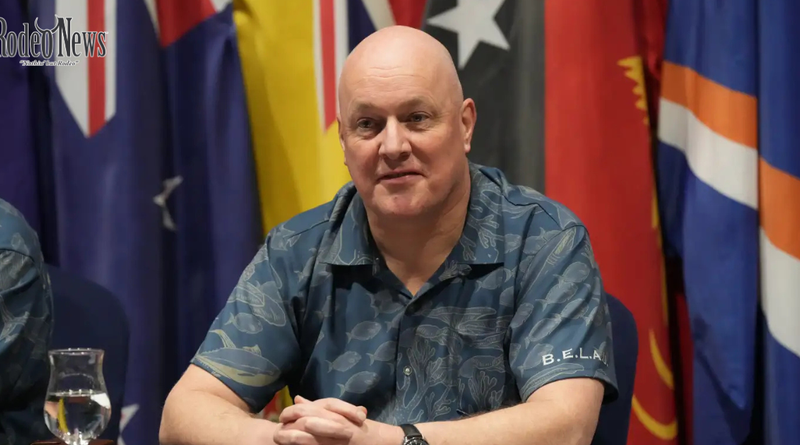
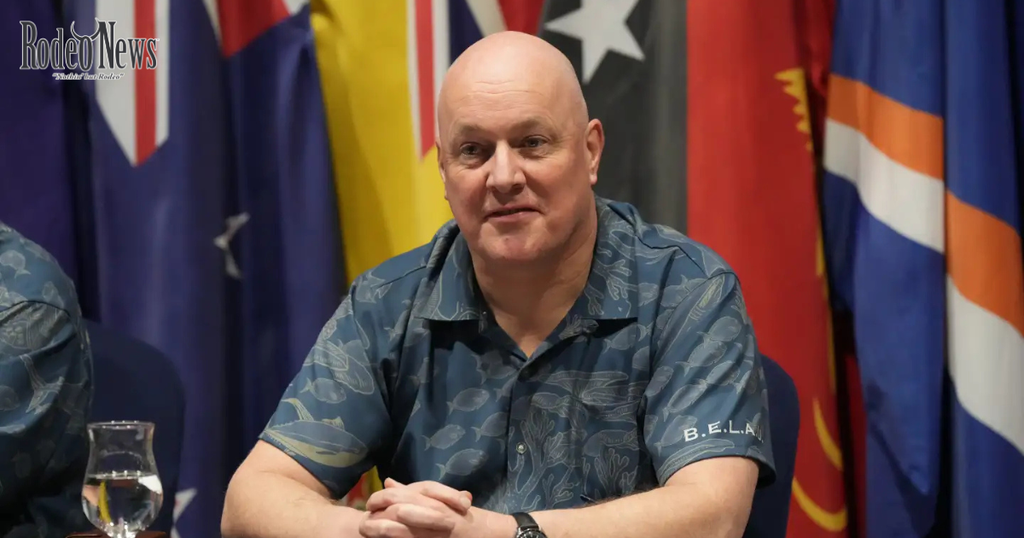
New Zealand Prime Minister Christopher Luxon described the collective expression of concern as important even though the position was not completely unanimous. AAP News+1
The episode demonstrates how the Pacific Islands Forum is attempting to establish its own expectations for military activity in the region.
2. Nauru Refused to Join the Consensus
The biggest obstacle to a stronger statement came from Nauru.
Nauru dissociated itself from the sections of the statement concerning the missile launch, preventing the forum from presenting a completely unified position.
Kiribati also became part of the broader diplomatic debate, although its position differed from Nauru’s. Reports indicated that Kiribati supported calls for transparency while objecting to efforts that could be interpreted as singling out China. RReuters+1
Nauru’s position is significant because the country restored diplomatic relations with Beijing in 2024 after previously recognizing Taiwan.
That diplomatic shift has become part of the wider contest between China and Taiwan for influence among Pacific island states.
Only a small number of Pacific countries continue to maintain formal diplomatic relations with Taiwan, including Palau and Tuvalu. Nauru, by contrast, has chosen Beijing. WWikipedia+1
As a result, the disagreement over the missile statement cannot be viewed entirely as a military issue.
It also reflects the increasingly complicated diplomatic choices facing Pacific governments.
3. Palau Wants a Stronger Response
The summit’s host, Palau, pushed for a stronger response to the Chinese missile test.
Palau President Surangel Whipps Jr. has been particularly outspoken about the importance of sovereignty and the ability of Pacific countries to determine their own security policies.
Palau’s position is also shaped by its relationship with Taiwan.
Palau is among the few Pacific nations that still officially recognize Taiwan rather than Beijing. That makes its government particularly sensitive to China’s growing diplomatic and military presence in the region.
The missile dispute therefore unfolded alongside another major diplomatic disagreement at the summit: Taiwan’s participation.
China strongly objected to Taiwan’s presence and argued that Taiwan should not participate in the forum in the manner arranged by the host country. Beijing also warned that there could be consequences. RReuters+1
Palau rejected the idea that outside powers should dictate who the Pacific Islands Forum can engage with.
That disagreement added another layer of tension to an already difficult summit.
4. China Rejects the Criticism
Beijing has defended its missile activity, describing China’s defense policy as peaceful and emphasizing its commitment to cooperation with Pacific countries.
Chinese officials also criticized what they described as excessive attention being placed on the missile test.
Reuters reported that Beijing accused Palau of creating unnecessary “hype” around the issue while the summit was taking place. RReuters
China’s response reflects the broader diplomatic battle over how its activities in the Pacific are interpreted.
Beijing has significantly expanded its economic, diplomatic and security engagement with Pacific island nations in recent years.
Chinese officials argue that these relationships are based on development and cooperation.
The United States, Australia and New Zealand, however, have increasingly viewed the region through a strategic lens as competition with China intensifies.
Pacific governments themselves have repeatedly emphasized that they do not want their countries reduced to pieces on a geopolitical chessboard.
They want development assistance, climate financing, infrastructure and economic opportunities while maintaining the freedom to choose their own diplomatic relationships.
5. The Pacific Is Becoming a Geopolitical Battleground
The China missile launch dispute is ultimately part of a much larger transformation in the Pacific.
For decades, Pacific island nations have pushed climate change and economic development to the center of regional diplomacy.
Those priorities remain extremely important.
However, competition between China, the United States, Australia, New Zealand and Taiwan has become increasingly difficult to separate from the region’s domestic and foreign-policy decisions.
The 2026 Pacific Islands Forum demonstrated that tension clearly.
The summit was intended to strengthen regional cooperation, yet discussions were heavily influenced by disagreements over China, Taiwan and security.
The absence of several senior Pacific leaders also complicated the gathering and raised questions about how effectively the forum can maintain a common position when major geopolitical interests are involved. AAP News+1
Why the Missile Test Matters
At first glance, a single missile test may seem like a technical military event.
For Pacific island nations, however, the implications are much broader.
Missile testing can raise questions about maritime safety, airspace, sovereignty and communication between governments.
It can also create political pressure.
If a major military power conducts an activity near smaller nations without sufficient warning, those countries may feel that their interests are being overlooked.
That is why Pacific leaders focused heavily on advance notification.
Their demand does not necessarily mean that the region is seeking to prevent all military exercises.
Instead, it establishes a principle that countries carrying out potentially dangerous activities should communicate with governments that could be affected.
This approach allows Pacific nations to defend their interests without necessarily choosing sides in the broader China-U.S. strategic rivalry.
A Delicate Balancing Act for Pacific Nations
The debate also illustrates the difficult balancing act faced by governments across the Pacific.
China is an increasingly important economic partner for many island countries. Beijing has funded infrastructure, provided development assistance and expanded diplomatic relationships.
At the same time, Australia, New Zealand and the United States remain major partners in areas such as security, education, disaster response and development.
Pacific governments therefore have strong reasons to maintain relationships with multiple powers.
But that strategy becomes more difficult when those powers compete directly with one another.
The missile controversy shows how even a relatively specific military issue can quickly become connected to questions about diplomatic recognition, Taiwan and regional influence.
For smaller countries, maintaining independence may require carefully avoiding alignment with any single major power.
The Taiwan Factor Adds More Tension
Taiwan’s participation at the summit made the diplomatic environment even more complicated.
Palau continues to recognize Taiwan, while China regards Taiwan as part of its territory and opposes international activities that could imply recognition of Taipei as a separate state.
Taiwanese Foreign Minister Lin Chia-lung attended events connected with the Pacific Islands Forum and subsequently criticized China’s conduct in the region.
China rejected those accusations and defended its position on Taiwan. RReuters
The dispute illustrates how Pacific island nations are increasingly caught between competing diplomatic agendas.
For governments such as Palau, maintaining relations with Taiwan is a sovereign foreign-policy decision.
For Beijing, Taiwan’s participation in regional diplomatic forums is a challenge to its long-standing position.
That disagreement is unlikely to disappear soon.
What Happens Next?
The Pacific Islands Forum’s decision could establish an important precedent.
If future missile tests occur in or near Pacific waters, regional governments are likely to push for advance notification and greater information sharing.
The precise wording of future statements will matter.
Pacific leaders may prefer broad principles that apply to all countries rather than language targeting China alone. That approach could make it easier for the region to maintain consensus while still expressing concerns about military activities.
At the same time, the disagreement with Nauru demonstrates that complete consensus may become increasingly difficult.
The Pacific Islands Forum operates in an environment where individual countries have different diplomatic relationships and economic interests.
Those differences are likely to become more visible as China and Western countries compete for influence.
The Bigger Picture
The China missile launch has given Pacific leaders another reason to discuss the future of regional security.
But the most important issue may not be the missile itself.
The deeper question is whether Pacific nations can maintain a unified regional voice while major powers compete for strategic influence.
The 2026 summit produced a compromise rather than a forceful condemnation.
Leaders expressed concern. They called for greater transparency. They supported advance notification of missile tests.
Yet Nauru’s dissent showed that the region is not completely united on how to respond to China’s growing role.
That distinction matters.
The Pacific Islands Forum has spent years emphasizing regionalism and the principle that Pacific countries should determine their own priorities.
As geopolitical competition intensifies, that principle will face increasingly difficult tests.
The missile controversy may therefore prove to be more than a dispute over one military exercise.
It is a sign of how rapidly the strategic environment around the Pacific islands is changing.
For countries with small populations, limited military resources and enormous distances between them, diplomacy remains one of their most important tools.
The challenge now is to use that diplomacy to protect sovereignty, maintain regional unity and secure economic opportunities without becoming trapped in the rivalry between larger powers.
The China missile launch has made that challenge impossible to ignore.
Image ALT Text
China missile launch sparks concern at Pacific Islands Forum in Palau
Suggested Image
A photo from the Pacific Islands Forum Leaders Meeting in Koror, Palau, showing Pacific leaders or the forum venue would be appropriate. The AP source contains several relevant summit photographs. AAP News
Suggested Internal Links
Because the target website/domain was not provided, these should be replaced with actual URLs from your site:
- Pacific Islands Forum latest news
- China-Pacific relations
- Taiwan-China tensions
- Pacific security news
- Palau news and politics
External Sources
- Associated Press — Pacific leaders and China missile launch
- Reuters — Pacific summit and China missile test
- Reuters — China, Taiwan and Pacific Islands Forum tensions